The hanok roofs
800 traditional houses.
pictures Jettcom — CC BY 3.0 · Jjw — CC BY 4.0 · Jjw — CC BY 4.0 · Jjw — CC BY 4.0
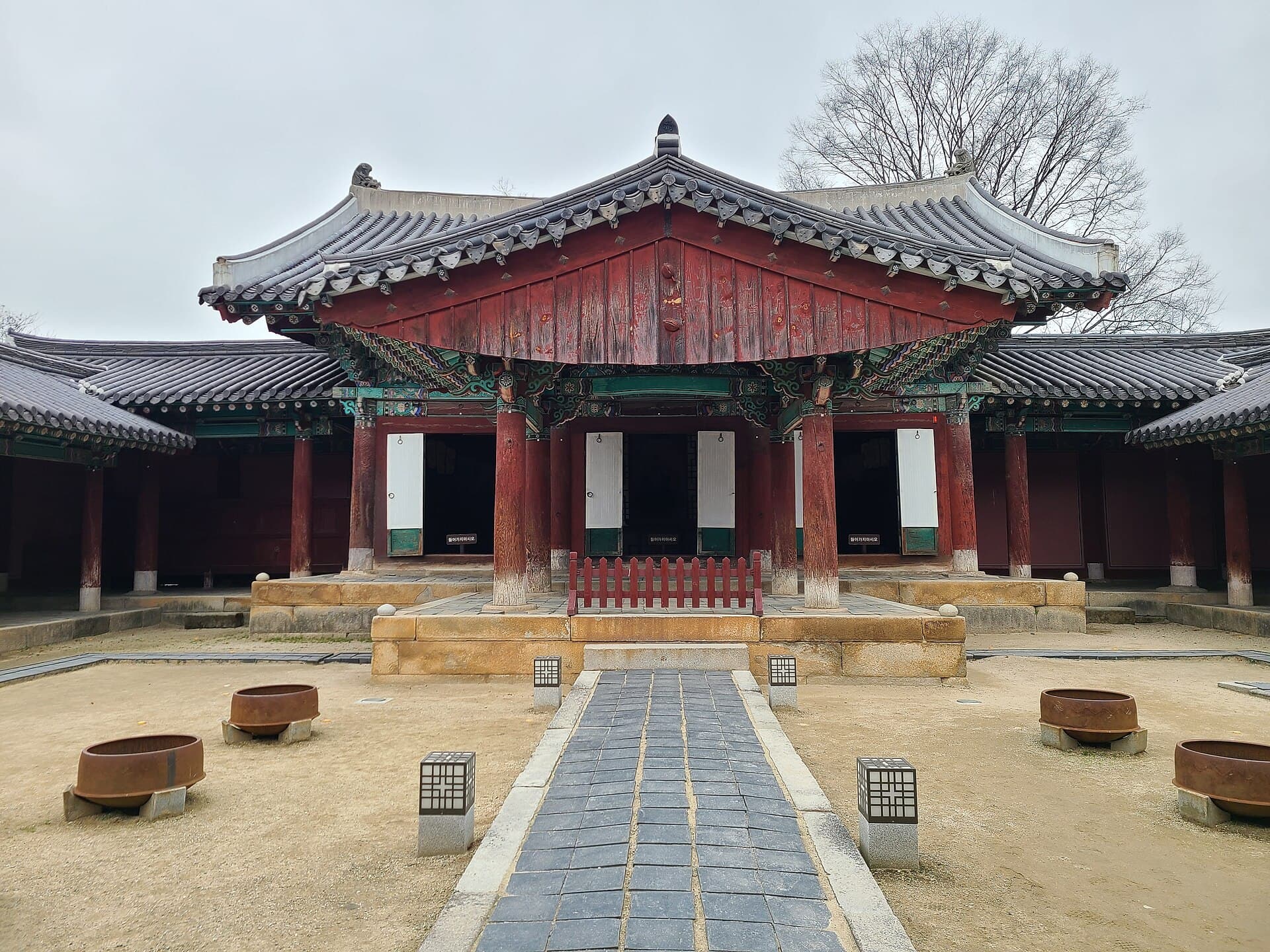
The largest cluster of traditional Korean houses in the country: more than 800 hanok with curved tiled roofs in the middle of modern Jeonju. The quarter took shape in the early twentieth century, when Jeonju's residents built in the traditional style in answer to the new Japanese districts, and it has become the city's emblem; it was named an international Slow City in 2010. The quarter is open to wander in every direction: paved streets and lanes between stone walls, with houses turned into guesthouses, cafés and small museums of paper, rice wine and crafts. Many visitors rent hanbok and stroll in them, so the scene seems to belong to another age. From Omokdae hill at the eastern edge you see all the rooftops at once. Jeonju is famous in Korea for its food, above all bibimbap, rice topped with vegetables, egg yolk and chilli paste, which can be ordered without meat. The main street has many snack stalls; most of them are not halal, so ask about ingredients. The quarter is free and at its best in the morning before the crowds, or in the evening when the lanterns are lit. Gyeonggijeon shrine stands directly opposite.
800 traditional houses.
A view over the quarter.
The city's famous dish.
Pungnam-dong and Gyo-dong, central Jeonju; about an hour and a half by fast train from Seoul
By fast train to Jeonju Station in about an hour and a half, then a quarter of an hour by bus or taxi. Express buses from Seoul take about three hours.