The white wall
Towers with conical roofs.
Vyacheslav Kirillin — CC BY-SA 4.0 · Vyacheslav Kirillin — CC BY-SA 4.0 · Vyacheslav Kirillin — CC BY-SA 4.0 · Vyacheslav Kirillin — CC BY-SA 4.0 · Vyacheslav Kirillin — CC BY-SA 4.0
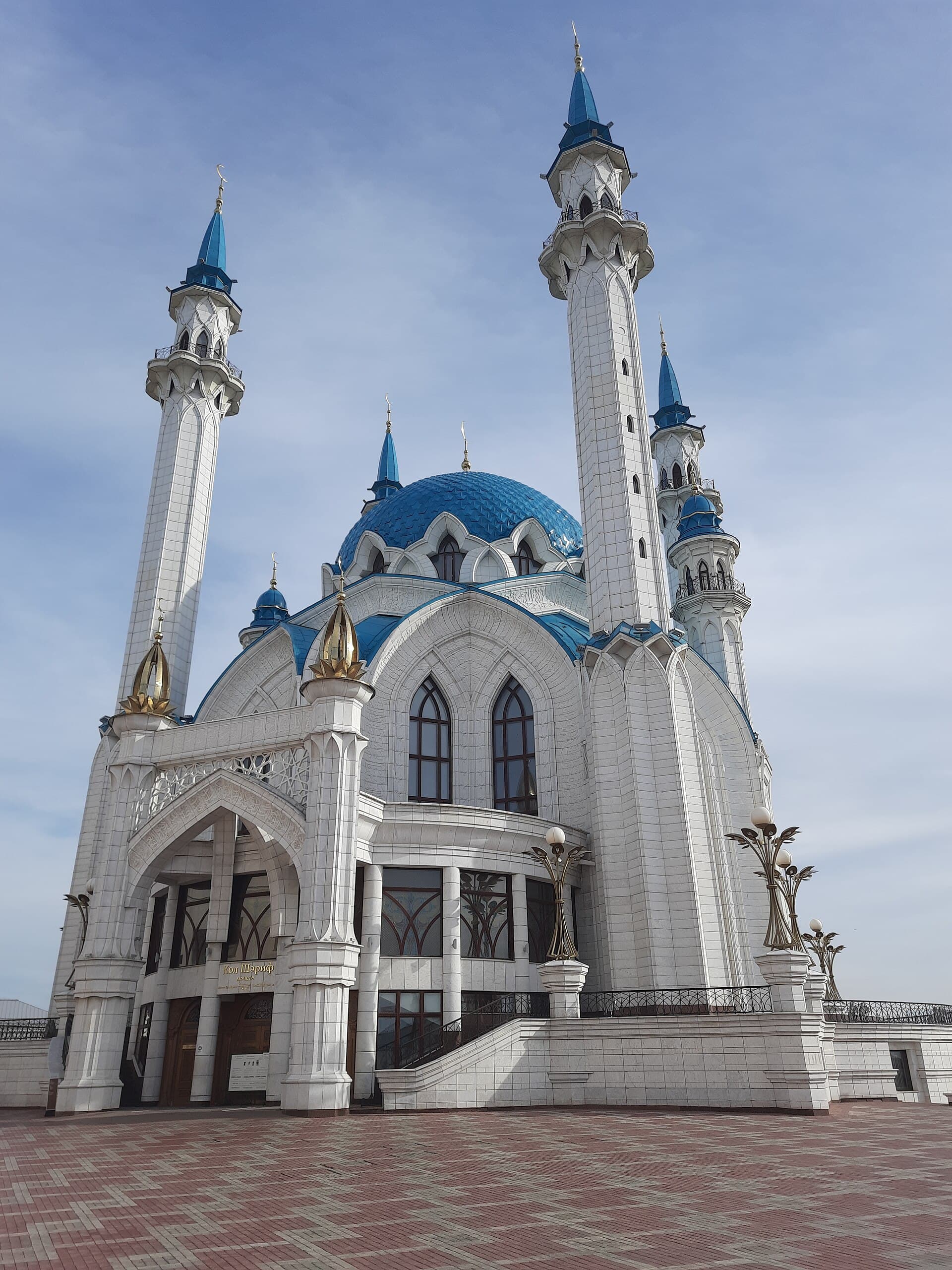
The Kazan Kremlin is the chief historic citadel of Kazan, capital of the Republic of Tatarstan, and it was declared a World Heritage Site in 2000. It was built at the behest of Ivan the Terrible on the ruins of the castle of the Kazan khans. It brings together a great mosque, an old cathedral and a leaning tower in one place, a clear picture of the city's story between Tatar and Russian cultures. The oldest building is the Annunciation Cathedral, from 1554 to 1562, built of local pale sandstone and not of brick. The tsar invited the renowned Pskov architects Postnik Yakovlev and Ivan Shirjay to rebuild the Kremlin in stone. Its best-known landmark is the leaning Söyembikä Tower, which probably goes back to Peter the Great, and a well-known legend ties it to the last queen of the Kazan Khanate. You walk along a long white wall topped by towers with grey conical roofs. Most visitors enter by the Spasskaya Tower, the main entrance at the southern end. Inside stands the white Annunciation Cathedral with blue starred domes, seen from outside, and across from it the Kul Sharif Mosque with its four minarets, then the leaning tower and official buildings. The Kul Sharif Mosque lies inside the same walls, and Bolghar about 92 km away in a straight line. Entry to the yards is usually open, while some museums need tickets. Wear comfortable shoes, as the ground rises. From the walls you get a wide view over the Kazanka River. The UK Foreign Office advises against all travel to Russia, and non-Russian bank cards may not work, so read the current advice before you plan.
Towers with conical roofs.
Leaning, with a legend.
Blue domes from outside.
Central Kazan, Tatarstan, Russia
The yards are usually open, while museums inside charge, so ask at the gate.
Two hours are enough for the walk, the mosque and the walls.