The blue dome
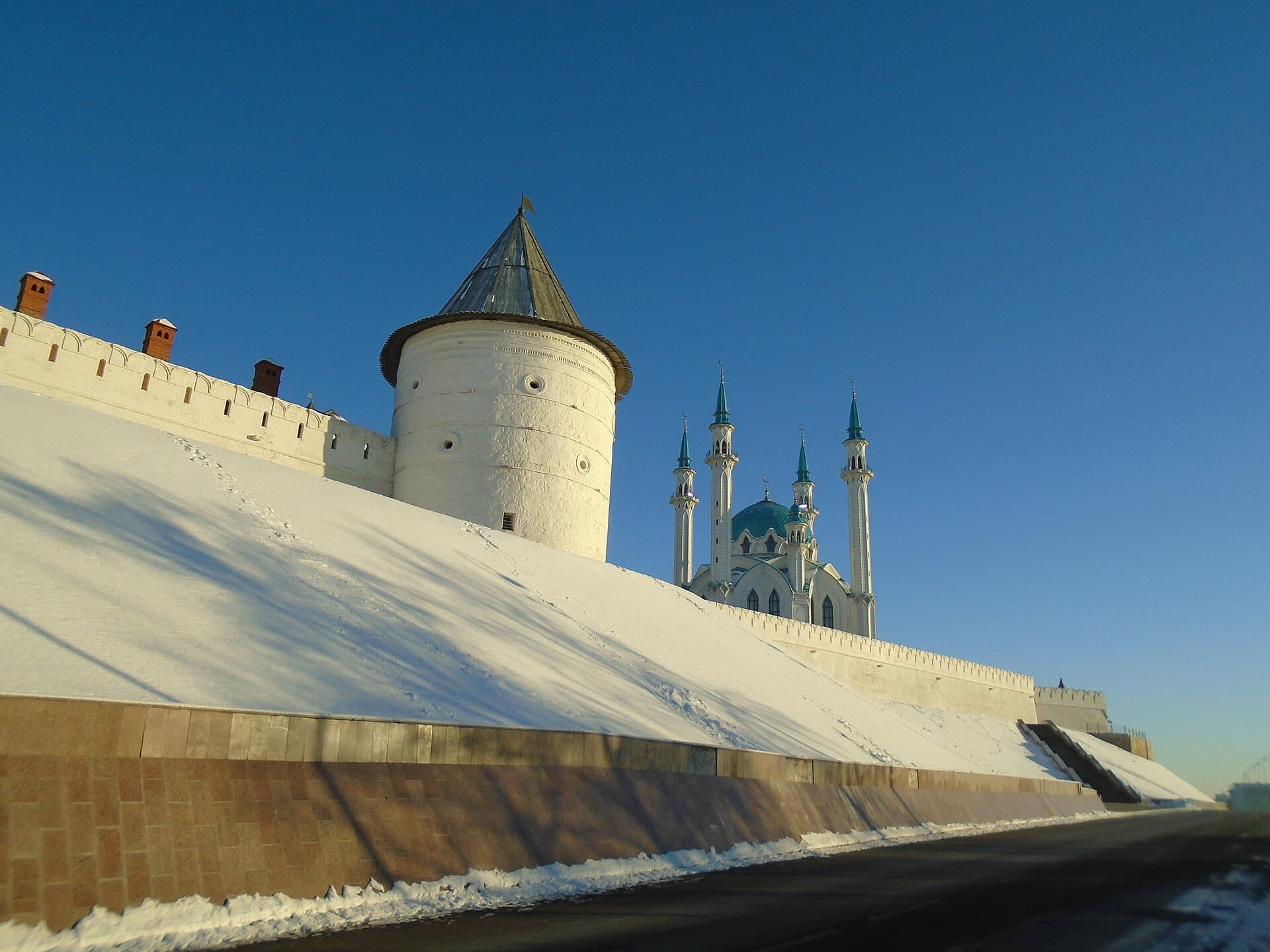
Above the Kremlin walls.
MBH — CC BY 4.0 · MBH — CC BY 4.0 · MBH — CC BY 4.0 · Dmitriy Protsenko from Dubna, Russia — Public domain · MBH — CC BY 4.0
The Kul Sharif Mosque stands inside the Kazan Kremlin, and when it was built it was among the largest mosques in Russia and in Europe outside Istanbul. It is the main sight in the city, with four tall minarets and a blue dome rising above the white Kremlin walls. With the Kremlin it forms Kazan's defining image, and many Arab and Muslim tourists come here. The original mosque stood in the Kremlin in the 16th century, named for Kul Sharif, a religious scholar who served there. He died with many of his students while defending Kazan in 1552 during the siege of the city, and Ivan the Terrible's forces destroyed the mosque. The present building is a modern replacement, built in the first years of this century and completed in 2005. The front is bright white, topped by a turquoise-blue dome and four slender minarets with blue tips, with a broad paved square around it. At the entrance are white columns and a carved wooden door below the mosque's name. Inside is a wide hall with a visitors' gallery, and a small exhibition of Qurans and manuscripts linked to the history of Islam in the region. It lies inside the Kremlin walls, a very short way from the Spasskaya gate. It is both a place of worship and a tourist stop, so dress modestly, and staff usually lend coverings to visitors. Avoid prayer times, and remove your shoes if asked or use shoe covers. The UK Foreign Office advises against all travel to Russia, and non-Russian bank cards may not work, so read the current advice before you plan.
Above the Kremlin walls.
Slim blue tips.
Manuscripts of the region.
Inside the Kazan Kremlin, Tatarstan, Russia
A religious scholar who served in the old Kremlin mosque and died with his students in the 1552 siege.
No, it is a modern replacement completed in 2005, as the original was destroyed.