The clear tent
By Norman Foster.
Korea.net / Korean Culture and Information Service — CC BY-SA 2.0 · jtstewart — CC BY-SA 2.0 · Vyacheslav Bukharov — CC BY-SA 4.0 · jtstewart — CC BY-SA 2.0 · t_y_l — CC BY-SA 2.0 · Bernard Gagnon — CC0 · t_y_l — CC BY-SA 2.0 · jtstewart — CC BY-SA 2.0
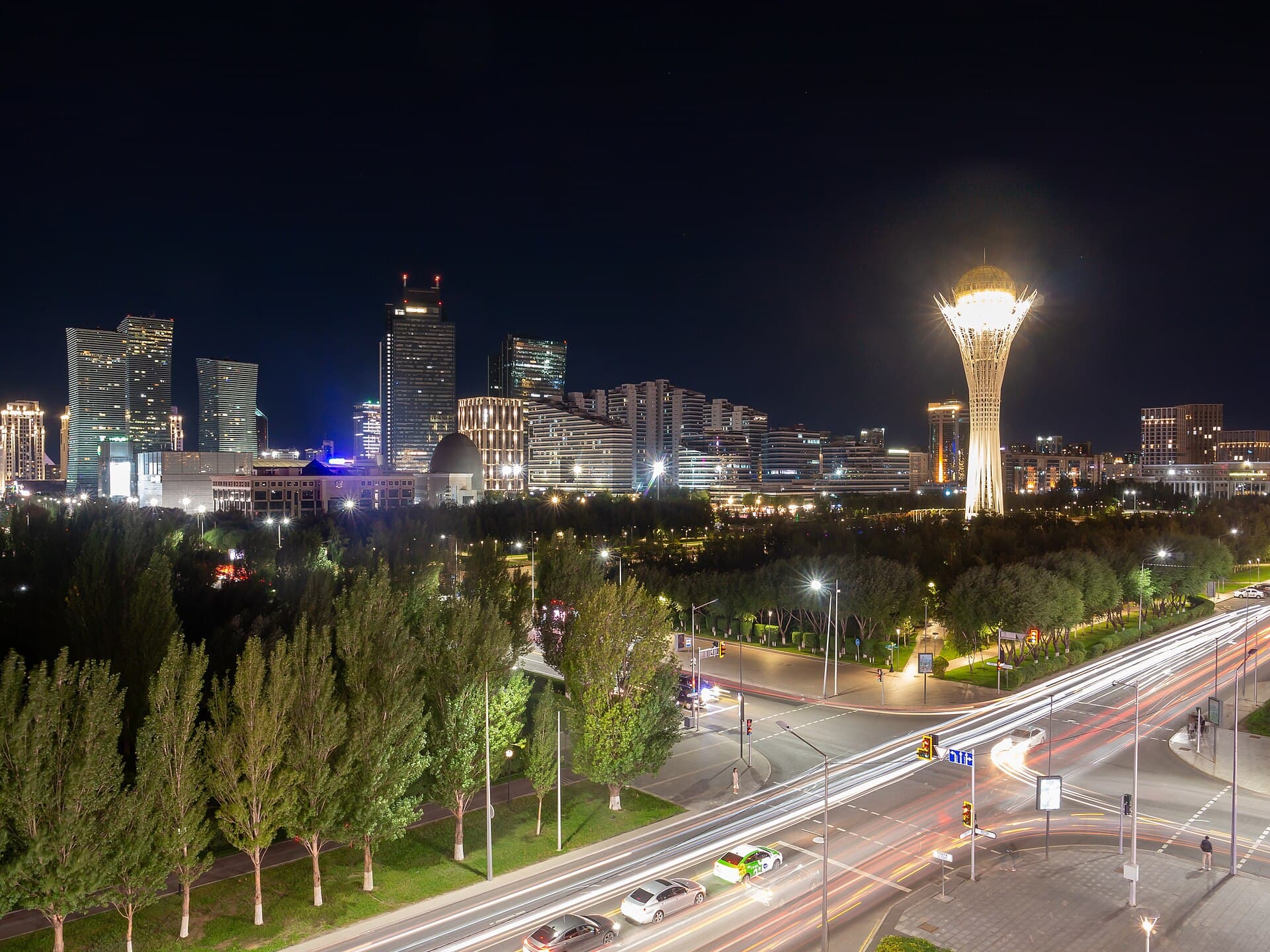
A giant transparent tent at the western end of Nurzhol Boulevard whose name means «the khan's great tent». Designed by the British architect Norman Foster and opened on 5 July 2010, it is one of Astana's best-known modern buildings. The structure rises 90 m, 150 m with its spire, and its elliptical base, 200 by 195 m, covers 14 hectares. The roof is made of transparent plastic cushions hung from a web of cables, letting sunlight in and, with heating and cooling, keeping the inside between 15 and 30°C while outside it swings from -35 to 35°C. Under the tent is a small city of squares, cobbled streets, shops and restaurants, a little river for boats and rides for children, with an indoor «beach» of sand and pools near the top. It is Astana's refuge from its bitter winters. Entry and wandering are free; the indoor beach and rides cost extra, with the beach at about 6,000-8,000 tenge, per visitor guides. The tent is loveliest lit up at night.
By Norman Foster.
In deep winter.
On the tent.
West end of Nurzhol Boulevard, Astana
Yes, entry and wandering are free; the indoor beach and rides cost extra, the beach about 6,000-8,000 tenge, per visitor guides.