The temple-front tomb
The only chamber found in the centre of ancient Edessa with a miniature temple facade, its columns topped by carved Corinthian capitals.
Dosseman — CC BY-SA 4.0 · Dosseman — CC BY-SA 4.0 · Dosseman — CC BY-SA 4.0 · Dosseman — CC BY-SA 4.0
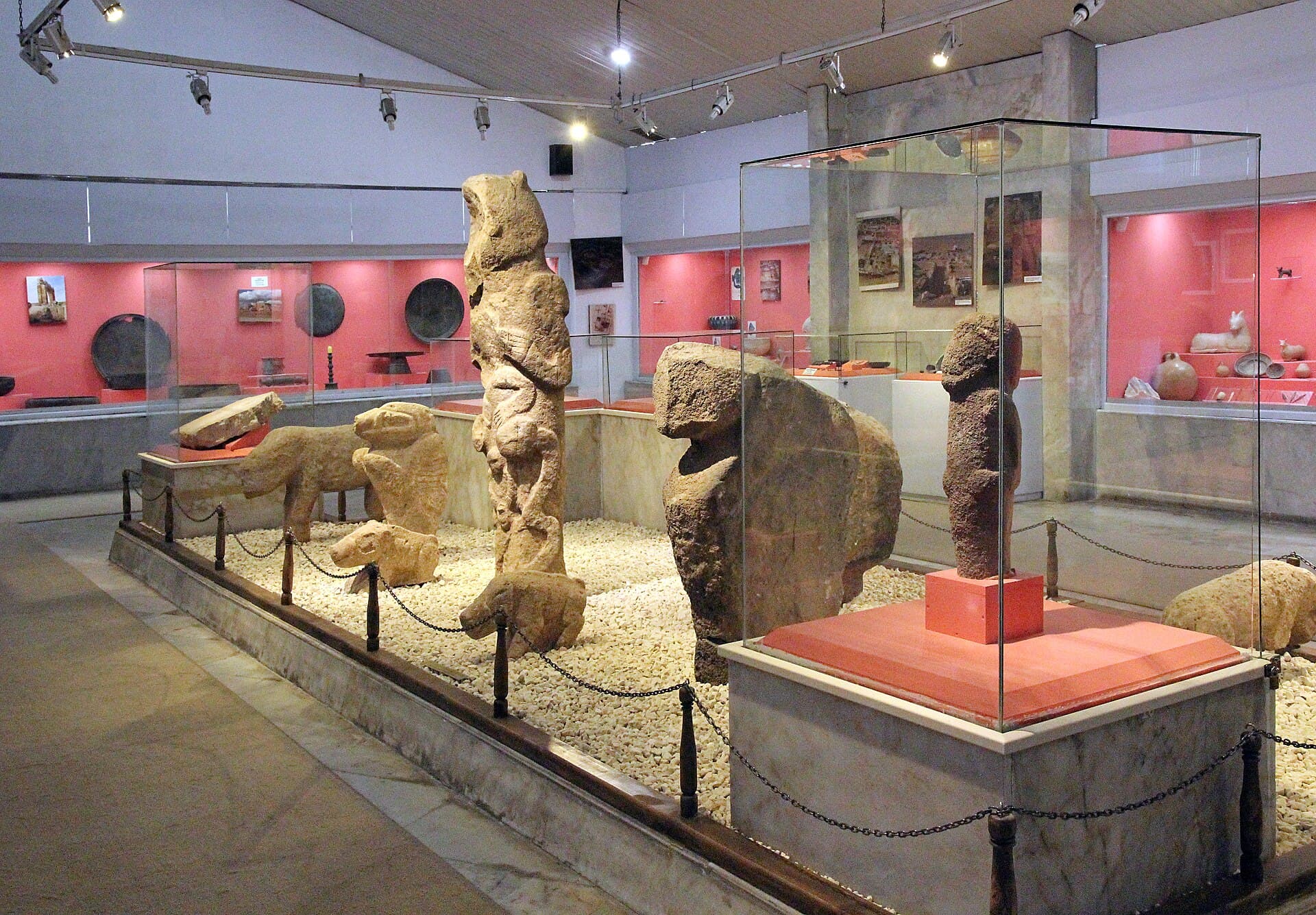
Until 2011 these tombs were bedrooms and storerooms. Squatter housing crept up the hill from the late 1970s, and the families who built it found the rock-cut chambers too convenient to waste: the big ones became living rooms, the small ones stores, and the carved burial troughs made handy cupboards for bedding. When the municipality finally demolished the whole neighbourhood, 72 tombs emerged from underneath it. Excavations in 2017 added about thirty more, buried under silt from a flood that drowned the city in 525 CE, and some appear to have lain undisturbed since they were sealed fifteen centuries earlier. What you see now is the flank of Tılfındır hill, roughly 500 metres north of the Balıklıgöl pools, turned into an open-air archaeological park with paved paths and night lighting. The chambers are mostly square, from about 3 by 3 metres up to 10 by 12, with burial benches and sarcophagi, some hewn from the living rock. The one showpiece is a tomb with a miniature temple front, columns with Corinthian capitals and carved ornament, the only example of its kind found in the centre of ancient Edessa. The city's wealthy were buried here from the 2nd to the 4th century, pagans and then Christians, some on floors of mosaic that named and pictured them. Those mosaics and statues have all gone to the Şanlıurfa Museum, which was built right at the necropolis entrance, so do not expect to find them in place. Entry is free and there is no ticket gate, but there is almost no shade and several chambers are fenced off. In August, after ten in the morning, this is pure suffering under an Urfa sun that nudges 40 degrees. The lower paths are flat and paved; climbing between the rows of tombs means steps and uneven rock. Allow thirty to forty-five minutes. Honest verdict: not a destination in itself, but an excellent free add-on for anyone leaving the Archaeology Museum or the Haleplibahçe Mosaic Museum who wants to see where the pieces came from. Treat it as the link between the museums and the pools, or stroll through in the evening when the chambers are lit, and you will have taken from it exactly what it has to give.
The only chamber found in the centre of ancient Edessa with a miniature temple facade, its columns topped by carved Corinthian capitals.
From 1979 until the clearance of 2011 families lived inside these chambers, using the burial troughs as cupboards and the small rooms as stores.
The 2017 dig freed about thirty chambers buried with their contents; what they held went to the museum next door.
Haleplibahçe Cd., Yeni Mahallesi, Eyyübiye, 63210 Şanlıurfa
The museum first, no question, since that is where the mosaics and statues from these chambers now sit. The tombs themselves are empty rooms, but they are free and a few steps away, so walk through on your way down to Balıklıgöl and give them no more time than that. Skip the climb at midday in summer.