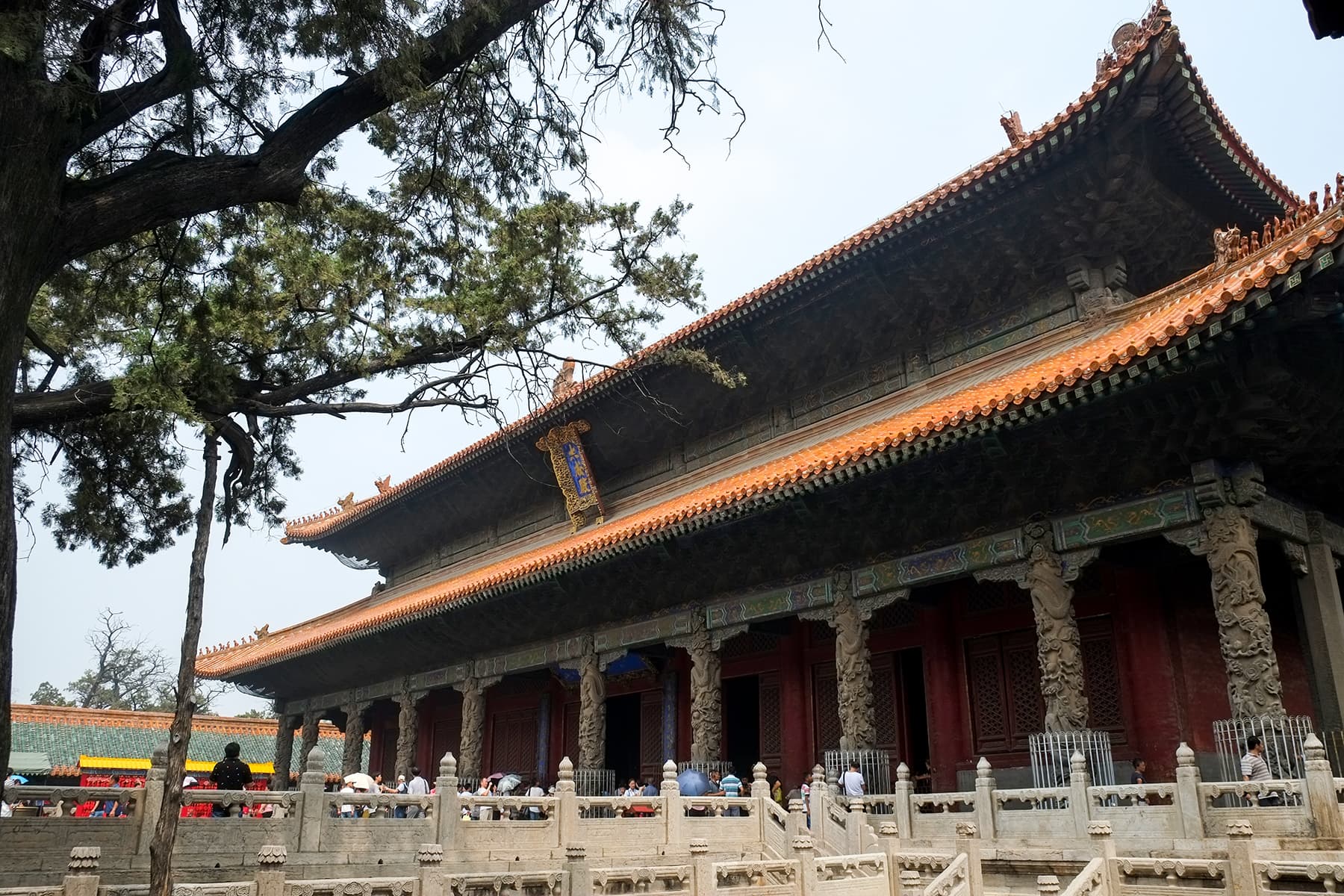
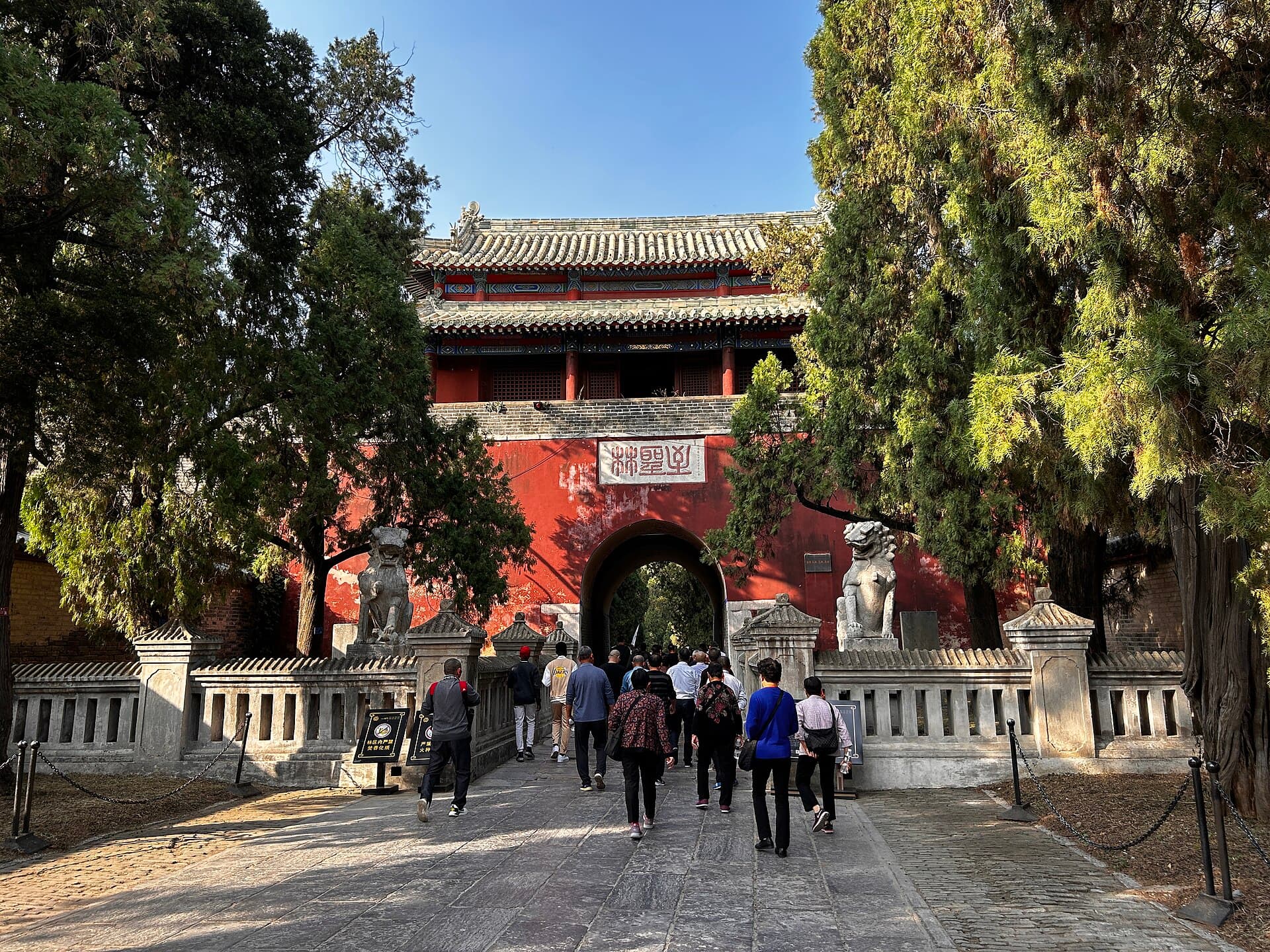
Front offices
Like a magistrate's yamen.
Kyle Magnuson from Los Angeles, United States — CC BY 2.0 · xiquinhosilva — CC BY 2.0 · Scott Edmunds — CC BY 2.0 · Gary Todd from Xinzheng, China — CC0 · Yumeto — CC BY-SA 4.0 · Diego Tirira from Quito, Ecuador — CC BY-SA 2.0 · Gary Todd from Xinzheng, China — CC0 · Shizhao — CC BY-SA 3.0
The residence of Confucius' direct descendants for centuries, set right beside the Temple of Confucius to the east; from here the family looked after the Confucian sites of Qufu, ran the largest private rural estate in China and held ceremonies for planting, harvest and honouring their ancestors. Most of its present buildings date from the Ming and Qing dynasties, and it holds 152 buildings and 480 rooms over 12,470 square metres; a formal front section laid out like a magistrate's office, where the head of the family received guests and officials, leads to the residential quarters behind, whose rooms were assigned by age, gender and rank, reflecting the Confucian principle of order. The complex has a four-storey tower built as a refuge in case of attack but never used, a quiet rear garden and an archive of about 60,000 documents on life in the mansion over four centuries; it is now a museum within the World Heritage site. Tickets cost CNY 60, or CNY 140 for a combined ticket to all three sites, booked online in advance, per visitor guides.
Like a magistrate's yamen.
Never used.
A quiet retreat.
East of the Temple of Confucius, Qufu old town
Confucius' direct descendants lived there for centuries, looking after his temple and cemetery and running the family estates; it is now a museum.