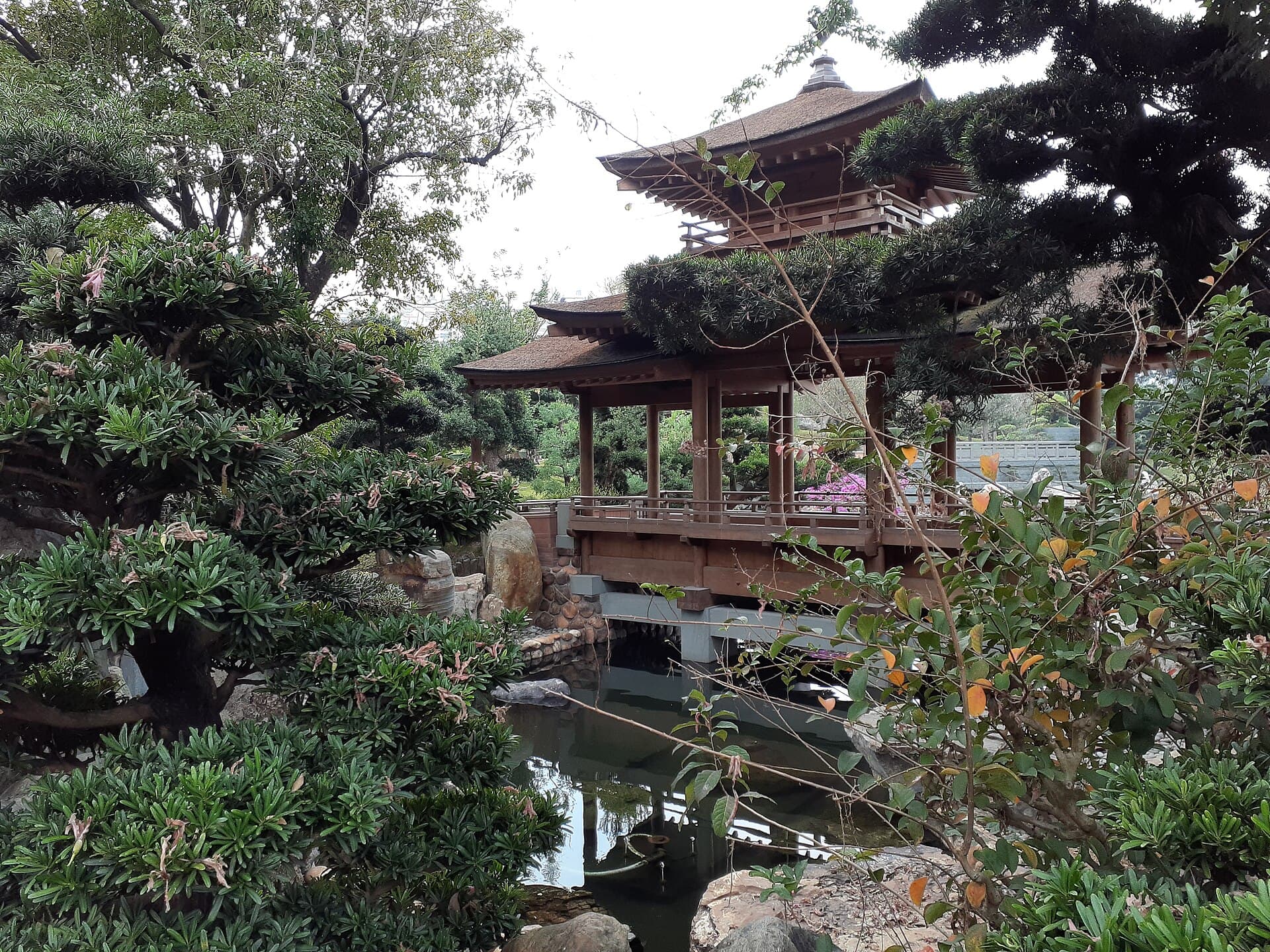
The Yamen
Survived demolition.
Abasaa — Public domain · LN9267 — CC BY-SA 4.0 · Yd712015 — CC BY-SA 4.0 · Yd712015 — CC BY-SA 4.0 · Yd712015 — CC BY-SA 4.0 · Cara Chow (Charlotte1125) — CC BY-SA 2.5 · LN9267 — CC BY-SA 4.0 · Wing1990hk — CC BY 3.0
A quiet Chinese garden in the Jiangnan style of the early Qing dynasty, covering 31,000 square metres on the site of Kowloon Walled City, once one of the most densely populated places on earth before it was torn down. The Walled City was a maze of hundreds of buildings crammed together with no planning, home to tens of thousands in a tiny area, until its demolition was announced in 1987. Its residents were resettled, demolition began in 1993, and by 1995 the site had become a park. The garden is laid out in eight areas, including the old Yamen government office, which survived the demolition, the remains of the South Gate, flower walks, a Chinese chess garden and a bronze model showing what the Walled City looked like. Entry is free and it opens daily 06:30–23:00, per visitor guides. It suits history lovers and photographers, and pairs well with the nearby Nan Lian Garden.
Survived demolition.
Of the old city.
Its remains.
Tung Tau Tsuen Road, Kowloon City
A densely packed enclave of unplanned buildings crammed together; its demolition was announced in 1987 and the site became a Chinese garden by 1995. Entry is free.