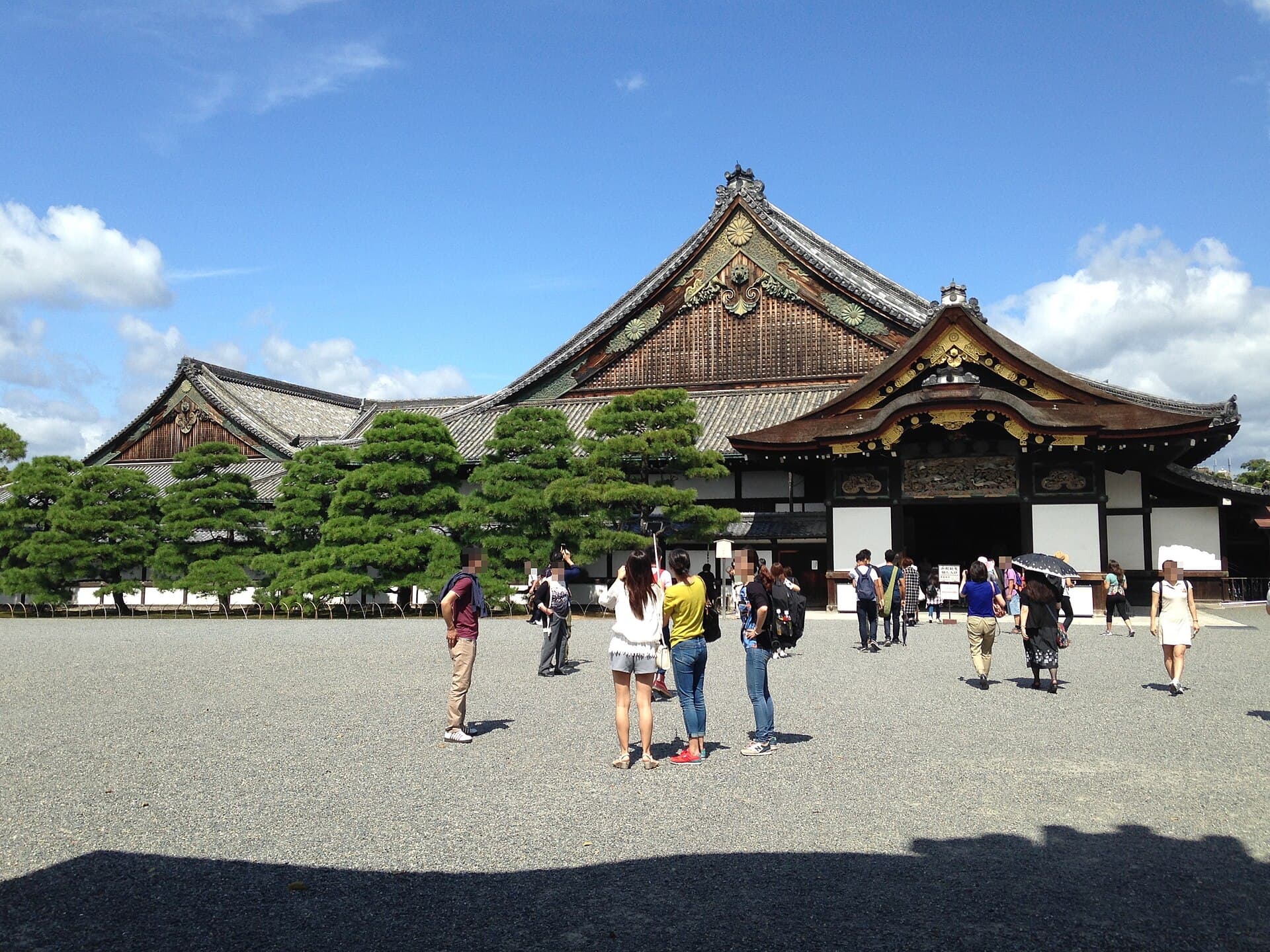
The Shishin-den
A cypress-bark roof.
Saigen Jiro — CC0 · Zairon — CC BY-SA 4.0 · Daniel Gerhard — CC BY-SA 3.0 · LBM1948 — CC BY-SA 4.0 · Photograph by Mike Peel (www.mikepeel.net). — CC BY-SA 4.0 · nobu3withfoxy from Iga,Mie, Japan — CC BY 2.0 · Photograph by Mike Peel (www.mikepeel.net). — CC BY-SA 4.0 · Photograph by Mike Peel (www.mikepeel.net). — CC BY-SA 4.0
The former palace of Japan's emperors from 1331 to 1869, when they moved to Tokyo after the Meiji Restoration. Its preservation was ordered in 1877, and the enthronement ceremonies of Emperors Taishō and Shōwa were still held here. The palace stands inside the broad Kyoto Gyoen, a rectangle stretching about 1,300 metres from north to south, with wide gravel paths, old pines and cherry trees, where locals come to stroll. Visitors pass between walls and traditional gates to the Shishin-den, the main ceremonial hall with its sweeping cypress-bark roof, fronted by a white sand courtyard with its famous cherry and mandarin trees, along with residential halls and Japanese gardens with ponds and bridges. Entry is free with no booking; the palace closes on Mondays and opens from 9:00 until 16:00 or 17:00 depending on the season, according to the Imperial Household Agency. Visitors see the buildings from outside.
A cypress-bark roof.
Orange and traditional.
Pines and cherries.
Kyoto Gyoen National Garden, central Kyoto
No, entry is free with no booking; it closes on Mondays and opens from 9:00 until 16:00 or 17:00 depending on the season, according to the Imperial Household Agency.