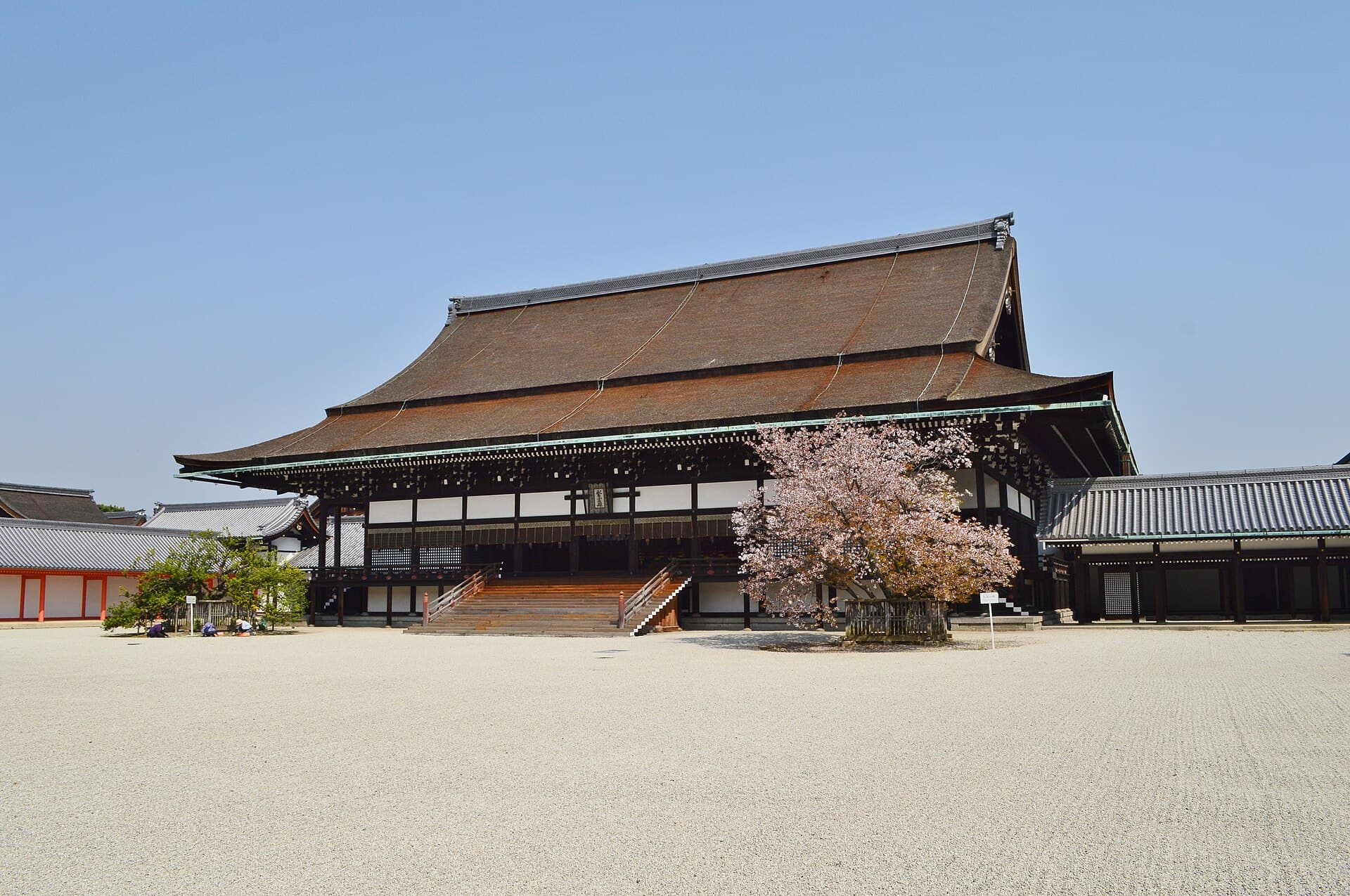
Ninomaru Palace
Gilded doors.
そらみみ (Soramimi) — CC BY-SA 4.0 · Photograph by Mike Peel (www.mikepeel.net). — CC BY-SA 4.0 · Guilhem Vellut from Annecy, France — CC BY 2.0 · そらみみ (Soramimi) — CC BY-SA 4.0 · Zairon — CC BY-SA 4.0 · Hyppolyte de Saint-Rambert — CC BY-SA 4.0 · Guilhem Vellut from Annecy, France — CC BY 2.0 · LBM1948 — CC BY-SA 4.0
A flatland castle in central Kyoto, ordered in 1601 by Tokugawa Ieyasu, founder of the Tokugawa shogunate, and completed under his grandson Iemitsu in 1626 as the shōguns' residence when they visited Kyoto. It is one of the «Historic Monuments of Ancient Kyoto» on UNESCO's list. Two rings of walls and moats surround its 27.5 hectares. Its highlight is the Ninomaru Palace, a sequence of halls with gold-painted sliding doors and wooden «nightingale floors» that chirp like birds underfoot, designed to warn guards of intruders. The castle also has the remains of the Honmaru Palace, broad Japanese gardens with clipped pines and ponds, and groves of cherry and plum that bloom in spring. The 1,300-yen ticket includes the palace; it opens at 8:45 (last entry 16:00) and closes at 17:00, and the Ninomaru Palace closes on Tuesdays in January, July, August and December, according to the official site. Photography is not allowed inside the palace, per visitor guides.
Gilded doors.
They chirp underfoot.
Pines, ponds, cherries.
Central Kyoto
Wooden floors in the Ninomaru Palace that chirp like birds when walked on, designed to warn guards of intruders.