The murals
Street art.
Jorge Láscar from Australia — CC BY 2.0 · Javier Benítez — CC BY-SA 3.0 · Peter Angritt — CC BY-SA 4.0 · Daniel Capilla — CC BY-SA 4.0 · Peter Angritt — CC BY-SA 4.0
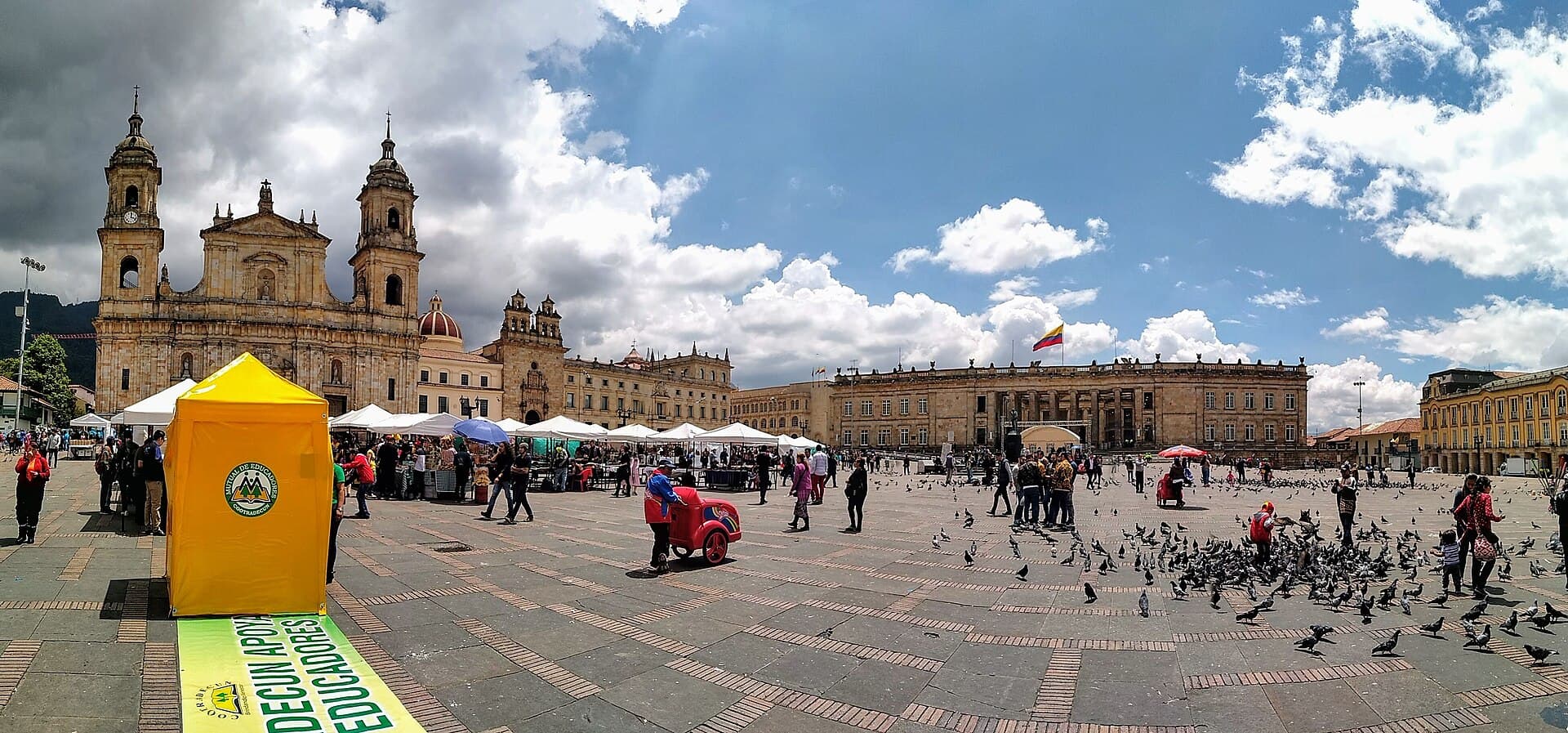
Bogotá's old colonial quarter, where the city began in the sixteenth century, with stone streets climbing toward the mountains and colourful one- and two-storey houses with wooden balconies and red-tiled roofs. It is the capital's cultural heart, full of museums, universities, theatres and cafés. Today it is best known for street art: huge colourful murals covering the walls, painted by local and international artists, making it one of Latin America's best-known street-art districts, with guided tours explaining the works and their stories. In the small Chorro de Quevedo square, where tradition says the city was founded, students, artists and vendors gather. Here you can try Bogotá's famous hot chocolate with a piece of cheese, and «ajiaco», a chicken and potato soup. The area is fairly safe and busy by day, but avoid quiet streets after dark and use taxis at night. Bogotá sits at about 2,600 metres, so take the first day easy and drink plenty of water. Many governments advise caution in Colombia, so check your own government's travel advice and watch for pickpockets in crowded places.
Street art.
The founding square.
A Bogotá habit.
Bogotá's historic centre, east of Plaza de Bolívar up to the foot of the mountains
By day yes, and busy with visitors, but quiet streets are unsafe after dark, so take taxis at night and watch your belongings.