The Lyon Biennale
Among France's most important contemporary art events, held here.
Bourrel — CC BY-SA 3.0 · Guilhem Vellut from Annecy, France — CC BY 2.0 · Guilhem Vellut from Annecy, France — CC BY 2.0 · Jean Housen — CC BY-SA 4.0
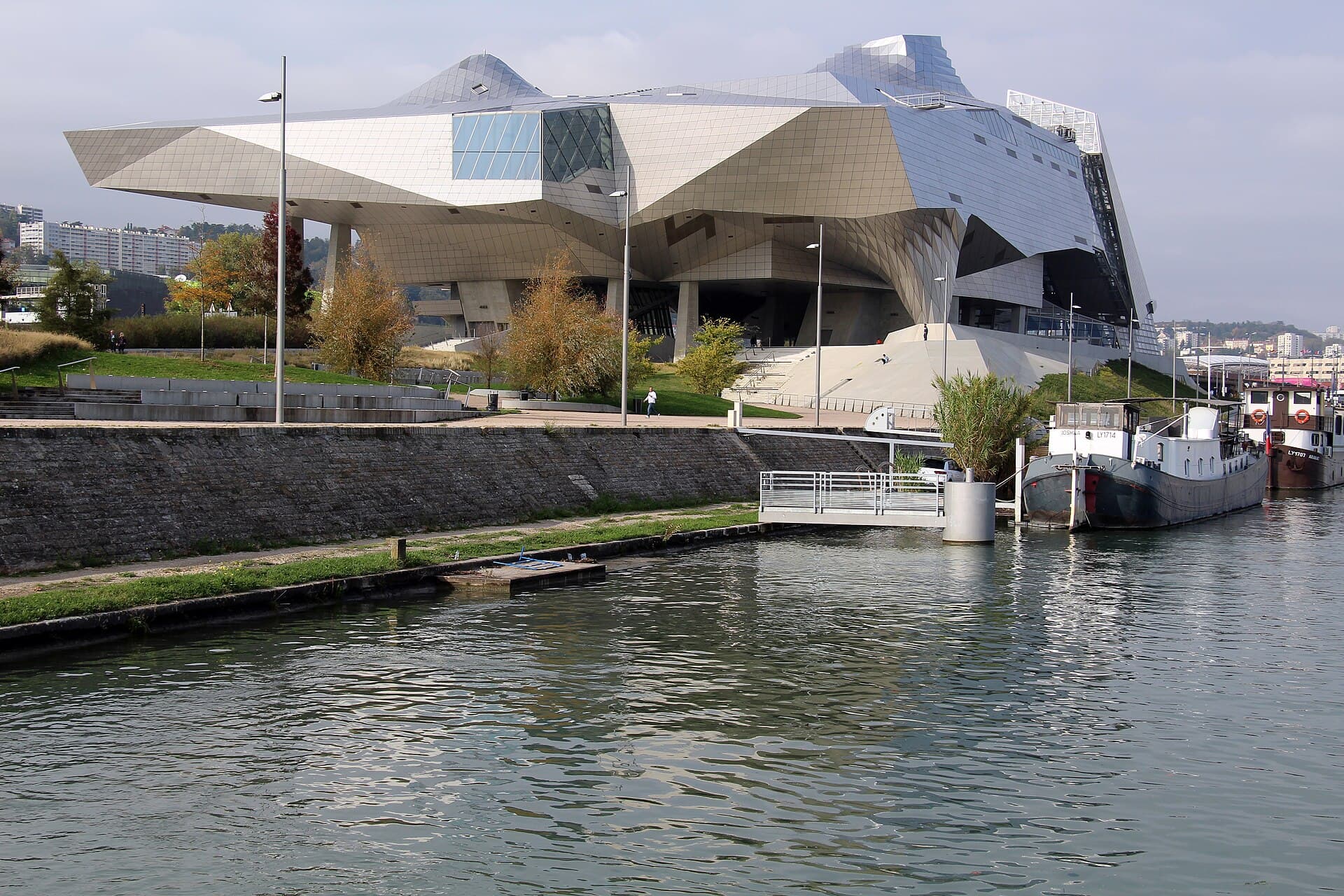
A former sugar warehouse of the 1930s on the bank of the Saône in the Confluence district, converted into a space for major art exhibitions and events. The building is part of the story: it was built to store sugar unloaded from river boats, with massive concrete columns and open floors designed to carry heavy loads. That industrial structure is what makes it a good exhibition space today — wide areas with no internal walls. It hosts the Lyon Biennale of contemporary art, among the most important art events in France, along with major exhibitions and festivals. The programme changes entirely, so there is no permanent collection. The Confluence district around it is itself a reason to come: a former industrial area redeveloped with bold contemporary architecture, with the Musée des Confluences a short walk away. Practical points: it opens only when an exhibition or event is running — check the programme before going, as the building is closed between them. Reach it by tram from the centre.
Among France's most important contemporary art events, held here.
Built to carry the weight of sugar, now the space's signature.
A former industrial zone redeveloped with bold contemporary architecture.
Confluence district, where the rivers meet, Lyon
Check the official site before your trip. The building is not a permanently open museum but a space hired for exhibitions and events, and it stays closed for weeks between them. Arriving without checking usually means a closed door.
The Musée des Confluences a short walk away, among France's most striking contemporary buildings, with a collection on natural and human history. The whole district takes an hour or two to walk and its contemporary architecture rewards looking.