Lead-clad domes
Its namesake.
You may re-use this image under the terms of the license using the following reference: Image: Wikipedia / Tobias Klenze / CC-BY-SA 4.0. The license must be a link! — CC BY 3.0 · You may re-use this image under the terms of the license using the following reference: Image: Wikipedia / Tobias Klenze / CC-BY-SA 4.0. The license must be a link! — CC BY 3.0 · You may re-use this image under the terms of the license using the following reference: Image: Wikipedia / Tobias Klenze / CC-BY-SA 4.0. The license must be a link! — CC BY 3.0 · David Stanley from Nanaimo, Canada — CC BY 2.0 · AntonieDd — CC BY-SA 3.0 · Enrique Íñiguez Rodríguez (Qoan) — CC BY-SA 3.0 · AntonieDd — CC BY-SA 3.0 · Albinfo — CC BY-SA 3.0
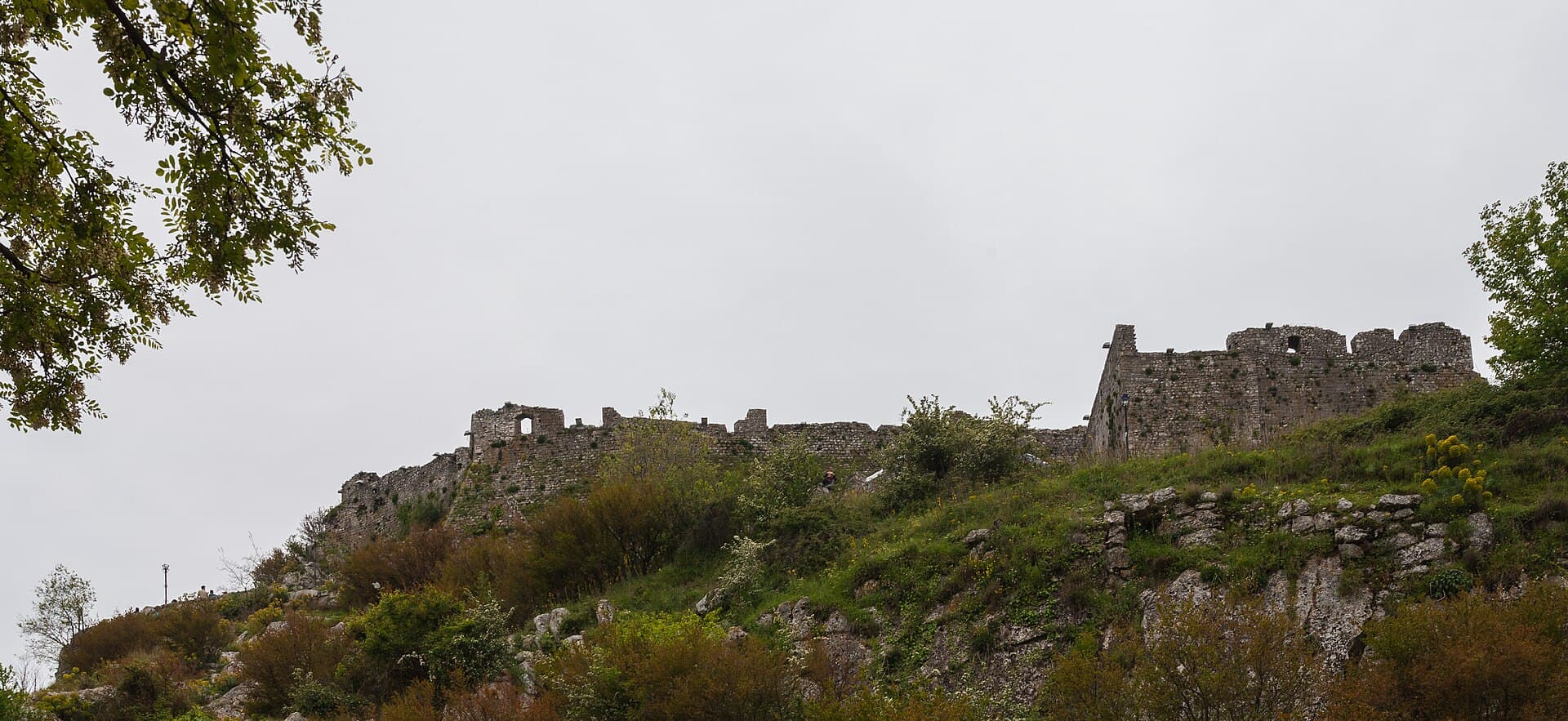
An Ottoman mosque at the foot of Rozafa Castle hill in Shkodër, built in 1773 by the Albanian pasha Mehmed Bushati and also known as the Mehmed Bushati Mosque; it is called the «Lead Mosque» because its domes were covered in lead. Bushati wanted to give his home town the feel of a capital and built the mosque in classical Ottoman style, with a main dome, small domes over the portico and a front courtyard. It was declared a cultural monument in 1948 and survived the destruction of places of worship under communism, though its minaret was pulled down. It sits in a low-lying area that sometimes floods in the wet season, leaving the mosque standing in water. The site is open to visitors outside prayer times, in modest dress. It pairs easily with the climb to Rozafa Castle above it.
Its namesake.
And courtyard.
Behind it.
Foot of Rozafa hill, Shkodër
Because its domes were covered in lead; it was built by Mehmed Pasha Bushati in 1773.