Coast without building
An exception in one of the world's most densely populated countries.
Lagius — CC BY-SA 4.0 · Frank Vincentz — CC BY-SA 3.0 · G.Mannaerts — CC BY-SA 4.0 · AronTanti — CC BY-SA 4.0
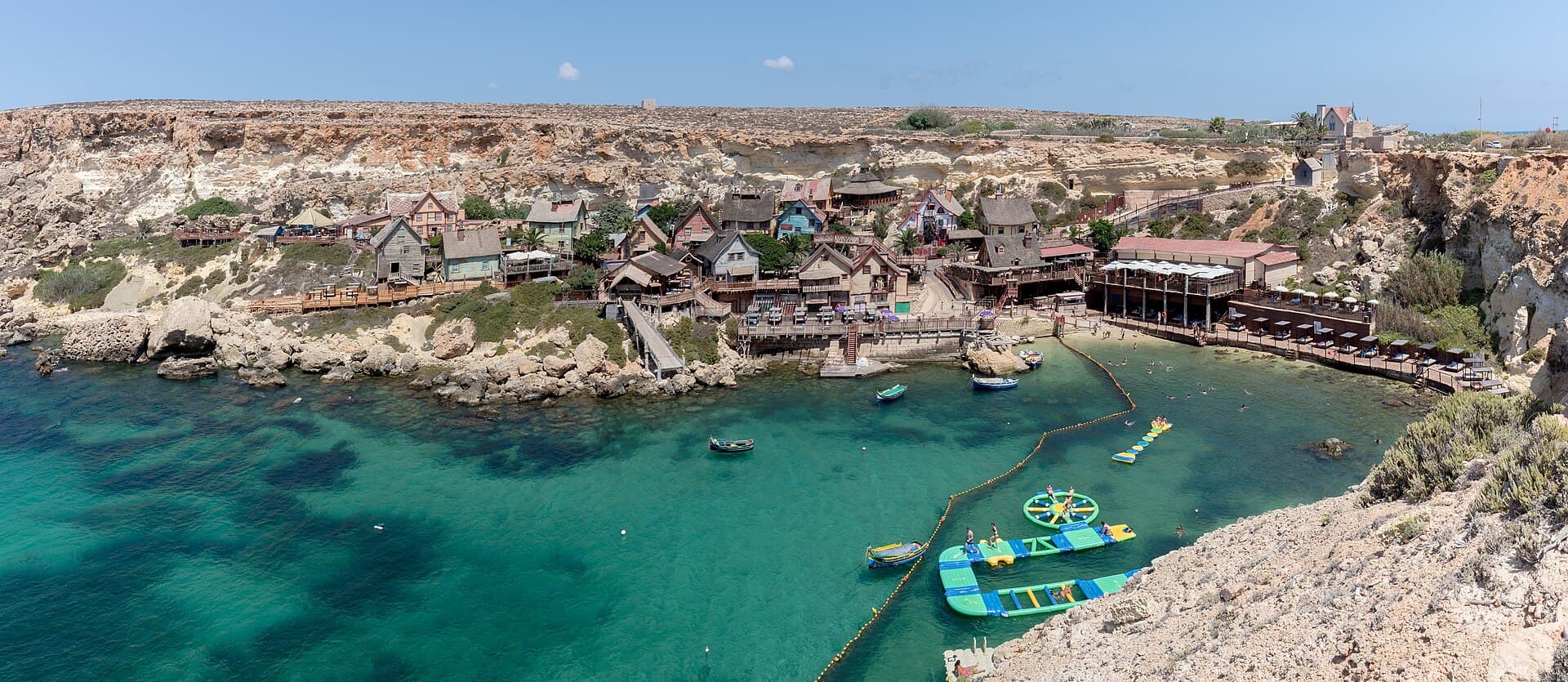
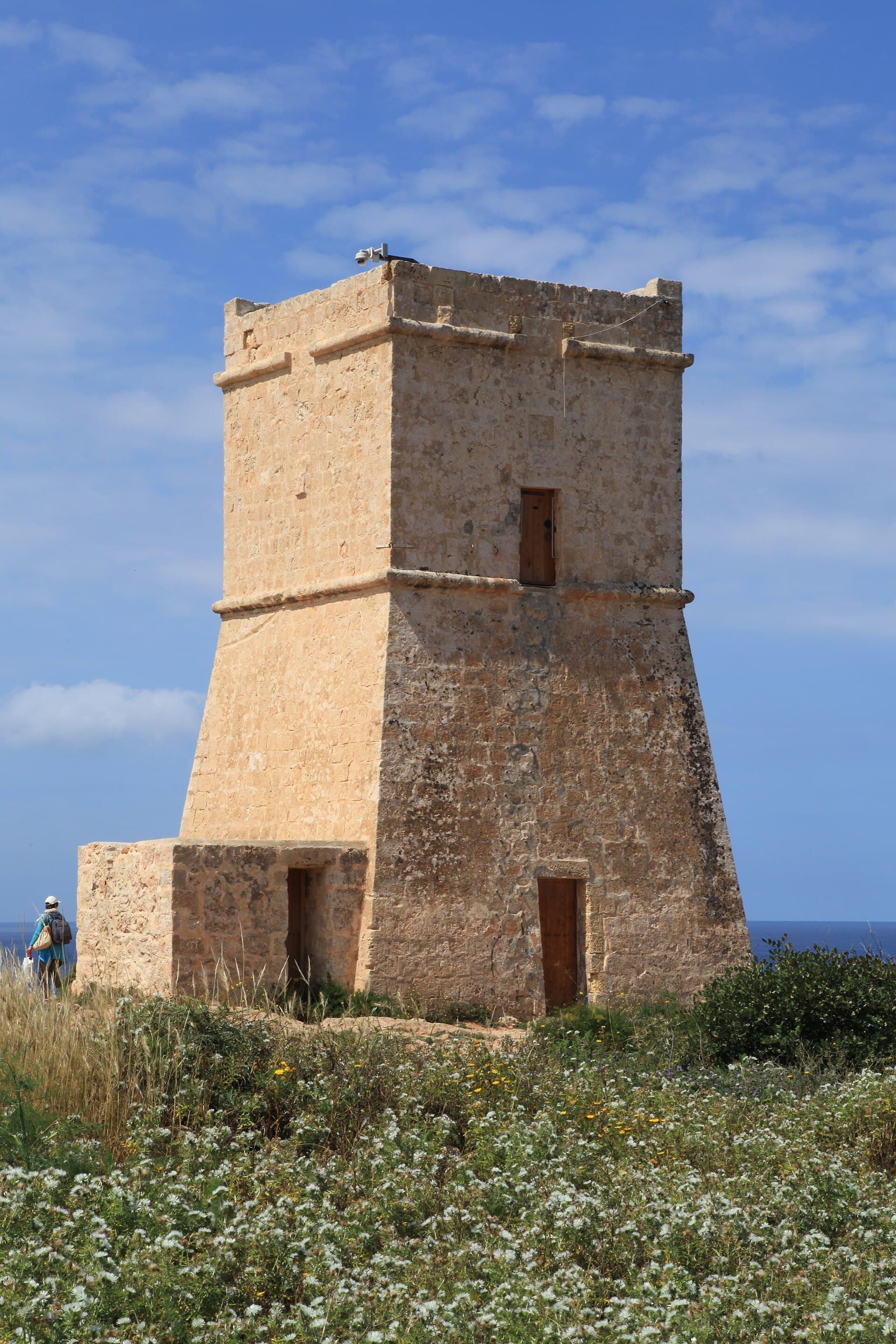
Malta's first national park, declared in 2007, covering a coastal strip in the north-west between Golden Bay and the Anchor Bay area. Its value lies in what is not there. Malta is among the most densely populated countries in the world and building covers most of the island, so a stretch of coast protected from development is an exception rather than a rule. Walking here shows what the Maltese coast was before the hotels went up. The landscape is harsh and beautiful: limestone slopes, thin soil, and plants adapted to drought, salt and wind — wild grasses, thyme and wormwood. In spring the whole area flowers for a few weeks, which is the best time to visit. The park also holds antiquities: cart ruts cut into the rock in prehistory whose origin is still debated, old salt pans, and the remains of coastal watch posts. Decisive practical points: there is almost no shade and no water on the trails. Take more water than you think, take a hat, and avoid the middle of a summer day entirely — the heat here is dangerous rather than merely uncomfortable. The paths are marked but the ground is rocky and uneven.
An exception in one of the world's most densely populated countries.
Grooves cut into the rock in prehistory whose origin is still argued over.
The area flowers completely for a few weeks — by far the best time.
Between Golden Bay and Anchor Bay, north-west Malta
Pairs of parallel grooves cut into the limestone, found at several sites in Malta, the best known nicknamed Clapham Junction. They date to prehistory and their origin is unsettled: most likely they were worn by vehicles with wooden runners passing over soft damp rock across generations, but there is no full agreement. Seeing them in place is far clearer than reading a description.
Serious. The Maltese coast in July and August passes thirty-five degrees with no shade and no water on the route, and the sea breeze masks the strength of the sun so dehydration is not felt until it is advanced. Walk in early morning or before sunset, or visit between October and May when the weather is genuinely ideal.