
The small tower
A view over the town''s roofs, and the best part of the visit.
Neoneo13 — Public domain · Anto (talk) 13:18, 10 March 2009 (UTC) — Public domain · Anto (talk) 13:18, 10 March 2009 (UTC) — Public domain
A narrow stone house in a lane behind the cathedral, presented as **Marco Polo''s birthplace** — and honesty requires stating the following plainly. **There is no historical evidence** that Marco Polo was born in Korčula. Contemporary sources describe him as **Venetian**, which is what he says of himself in his own book. The Korčulan claim rests on two circumstantial points: that the surname **Polo** (locally *Depolo*) was and remains common on the island, and that Korčula was Venetian territory, so a man could be «Venetian» and born here at once. That is **possible and unproven**, and most historians outside Croatia do not accept it. The house itself has a plainer problem: the building is **seventeenth century**, three hundred years after Marco Polo died. Only the foundations are older. The display inside is modest — panels, explanation and reproductions — and the visit is short. Note: the municipality bought it to make a larger museum, and the work has stalled for years; **check whether it is open before going**. What is genuinely worth the climb is the **small tower** above it and its view over the town''s roofs.
A view over the town''s roofs, and the best part of the visit.
One of the town''s narrowest, and named for the Depolo family.
A good example of a local narrative built on circumstantial evidence.
Depolo lane, old town, Korčula
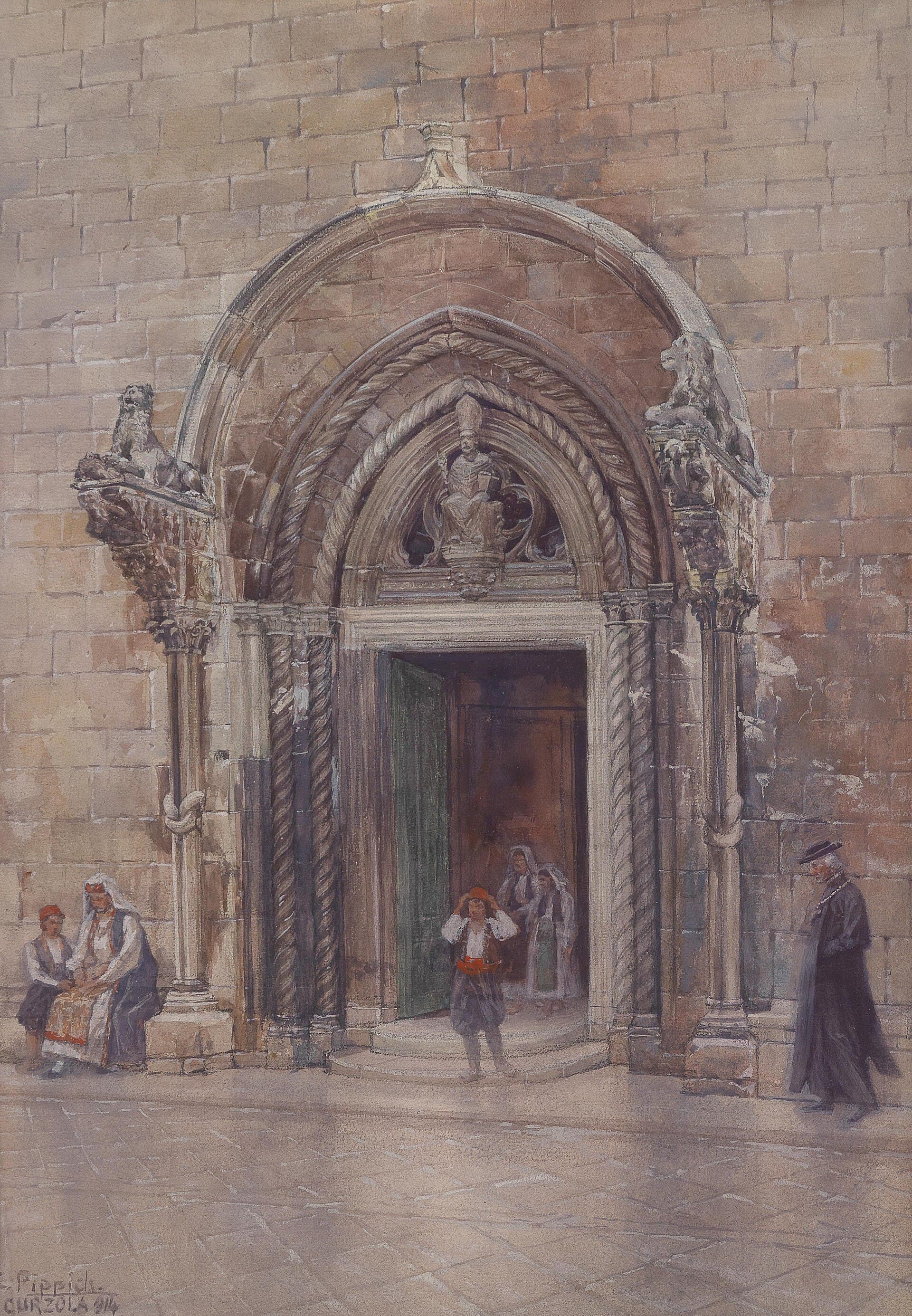 St Mark''s CathedralThe town''s cathedral, standing at the highest point of the peninsula where the 1 minute walk4.8
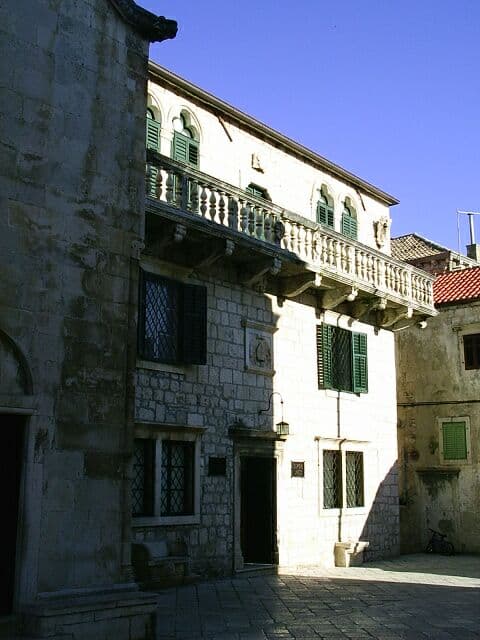 Korčula Town MuseumIt occupies the sixteenth-century **Gabrielis Palace** directly opposite the cat1 minute walk4.4
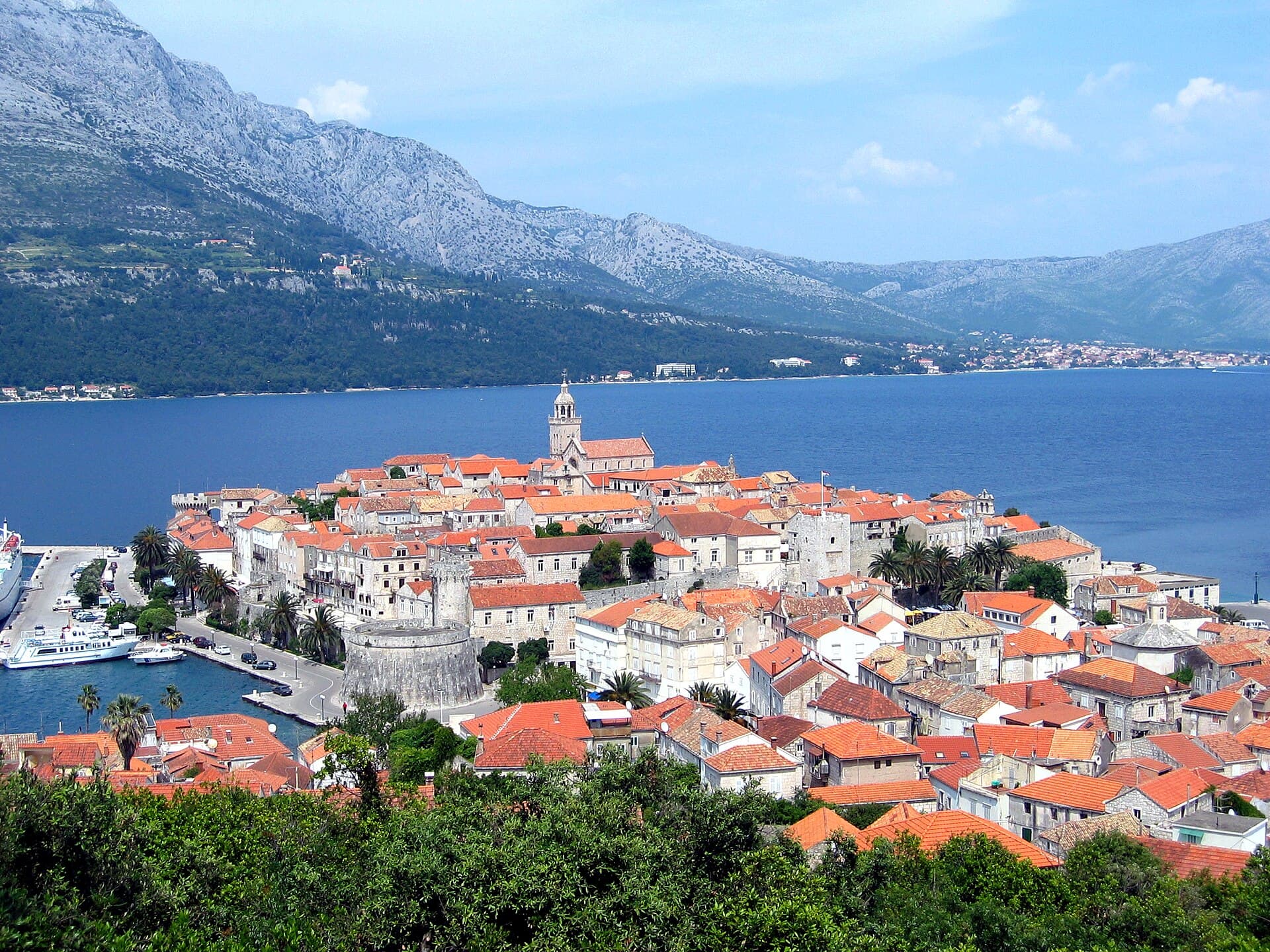 Korčula TownA walled town on a small peninsula projecting into the channel between the islan3 minutes walk
**Probably not, and certainly not proven.** Marco Polo is identified in contemporary sources and in his own book as **Venetian**, and his family''s records are in Venice. The Korčulan claim appeared late and rests on two circumstances: the frequency of the name **Polo/Depolo** on the island, and that Korčula was under Venetian rule, so the two descriptions do not conflict. A third fact muddies it: Marco Polo **was captured in a naval battle off Korčula in 1298** — that is historically true and may be the origin of the confusion, since his captivity is what led him to dictate his book in a Genoese prison. ⚠ Practically: visit the house as **a local story** and a viewpoint, not as a documented historical site.