
Tomb chamber
White marble, gilded dome.
IssamBarhoumi — CC BY-SA 4.0 · Holger Uwe Schmitt — CC BY-SA 4.0 · Sara Boukhari — CC BY-SA 4.0 · Holger Uwe Schmitt — CC BY-SA 4.0 · Petar Milošević This photograph was taken with a Panasonic Lumix DMC-G85/G80 — CC BY-SA 4.0 · IssamBarhoumi — CC BY-SA 4.0 · Avisadehh — CC BY-SA 4.0 · Visions of Domino — CC BY 2.0
A royal mausoleum facing the Hassan Tower, holding the tomb of King Mohammed V, hero of Morocco's independence, and the tombs of his sons, King Hassan II and Prince Moulay Abdallah. Building began after Mohammed V's death in 1961 on the orders of Hassan II, to a design by the Vietnamese architect Vo Toan, and was completed in 1971. The building marries traditional forms with modern materials, with white marble walls and a green-tiled pyramid roof, meant to honour the king and showcase the traditional Moroccan crafts he encouraged. Honour guards in red and white traditional uniforms stand at its doors. Inside, visitors look down from a gallery onto the tomb chamber, where Mohammed V rests in a white marble sarcophagus beneath a gilded dome decorated with zellij, stucco and cedarwood, while a reciter reads the Qur'an in a corner of the hall. Entry is free in modest dress, respecting the calm of the place. It pairs with the Hassan Tower in one visit, both overlooking the Bou Regreg River and the city of Salé.
White marble, gilded dome.
Red and white uniforms.
Zellij, stucco, cedar.
Hassan Tower esplanade, Rabat
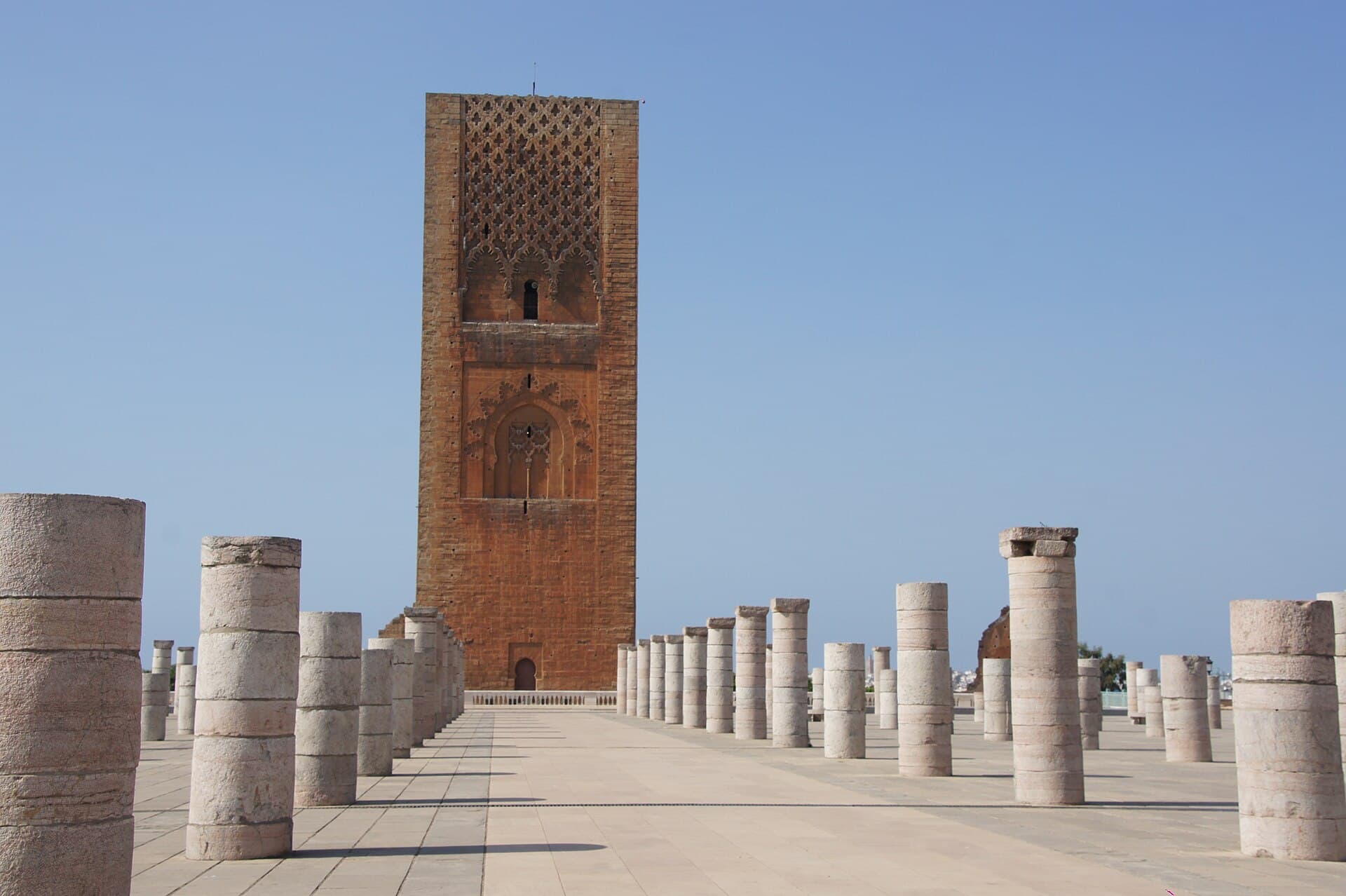 Hassan TowerThe minaret of an unfinished mosque commissioned by the Almohad caliph Yaqub al-3 minutes walk
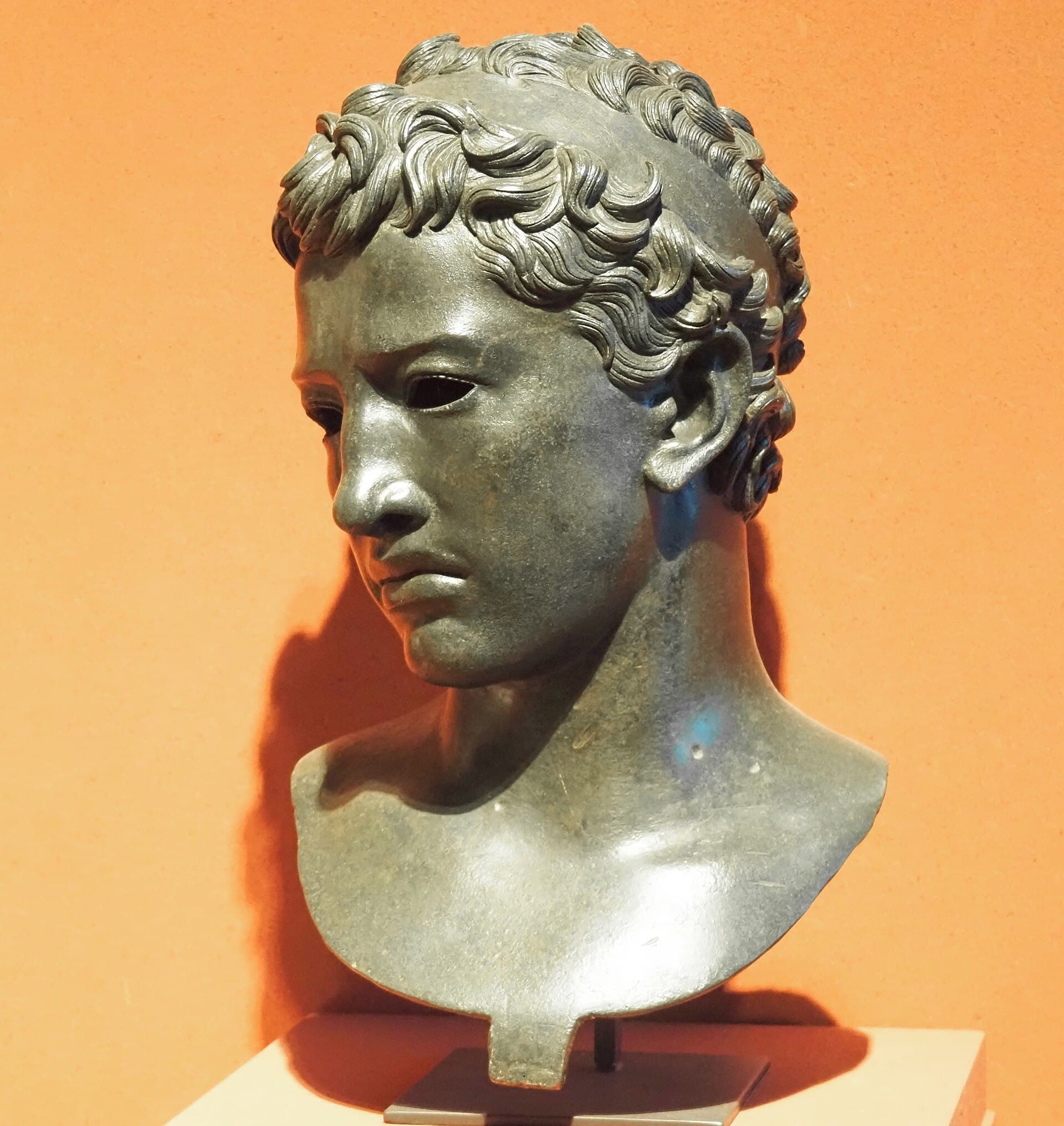 Museum of History and CivilizationsMorocco's national archaeological museum, founded in 1932 as the Rabat Archaeolo17 minutes walk
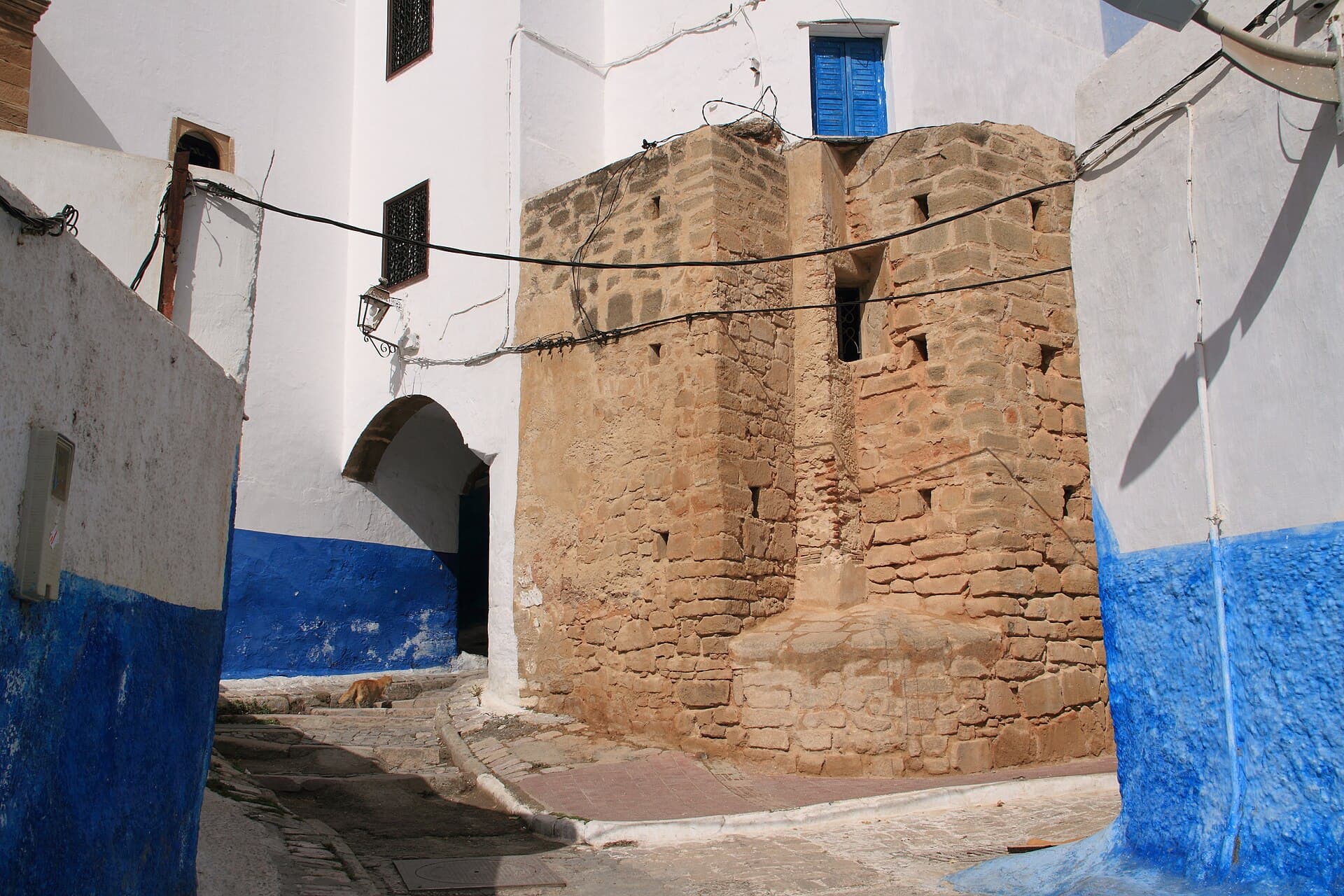 Medina of RabatRabat's old walled town, bounded to the north by the Bou Regreg and the Kasbah o18 minutes walk
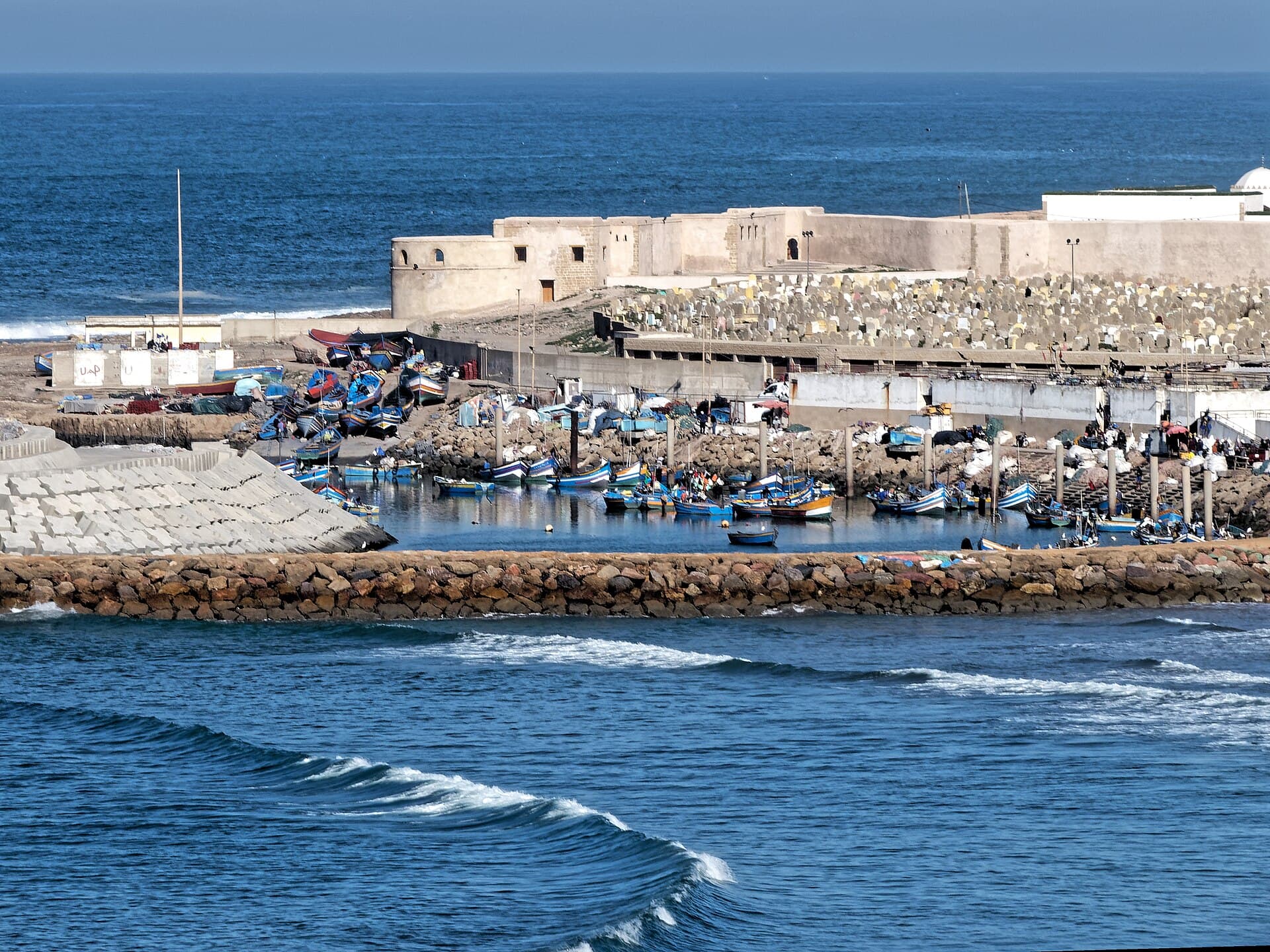 Kasbah of the UdayasA historic citadel on a bluff where the Bou Regreg River meets the Atlantic, fac21 minutes walk
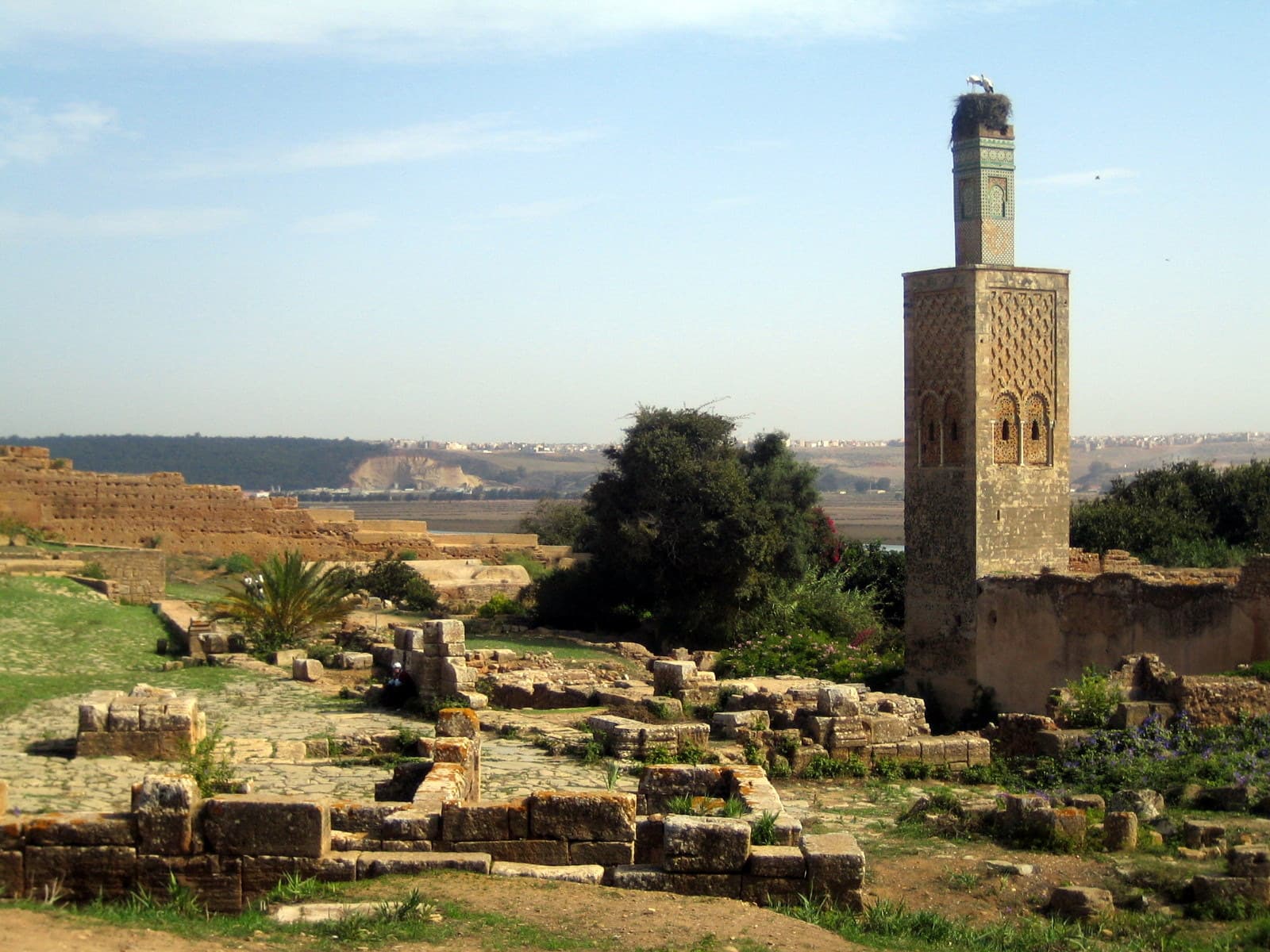 ChellahA walled archaeological site on the south bank of the Bou Regreg River where lay22 minutes walk
Yes, the mausoleum is open to all visitors, who look down on the tombs from the upper gallery, in modest dress and quietly.