The monument
Granite and bronze.
陈霆 — CC BY-SA 2.0 · Cecioka — CC BY-SA 4.0 · Dornicke — CC BY-SA 3.0 · Virginia Lucia Campos Mendonça — CC BY-SA 4.0 · Rodrigo Soldon from Rio de Janeiro, Brazil — CC BY 2.0
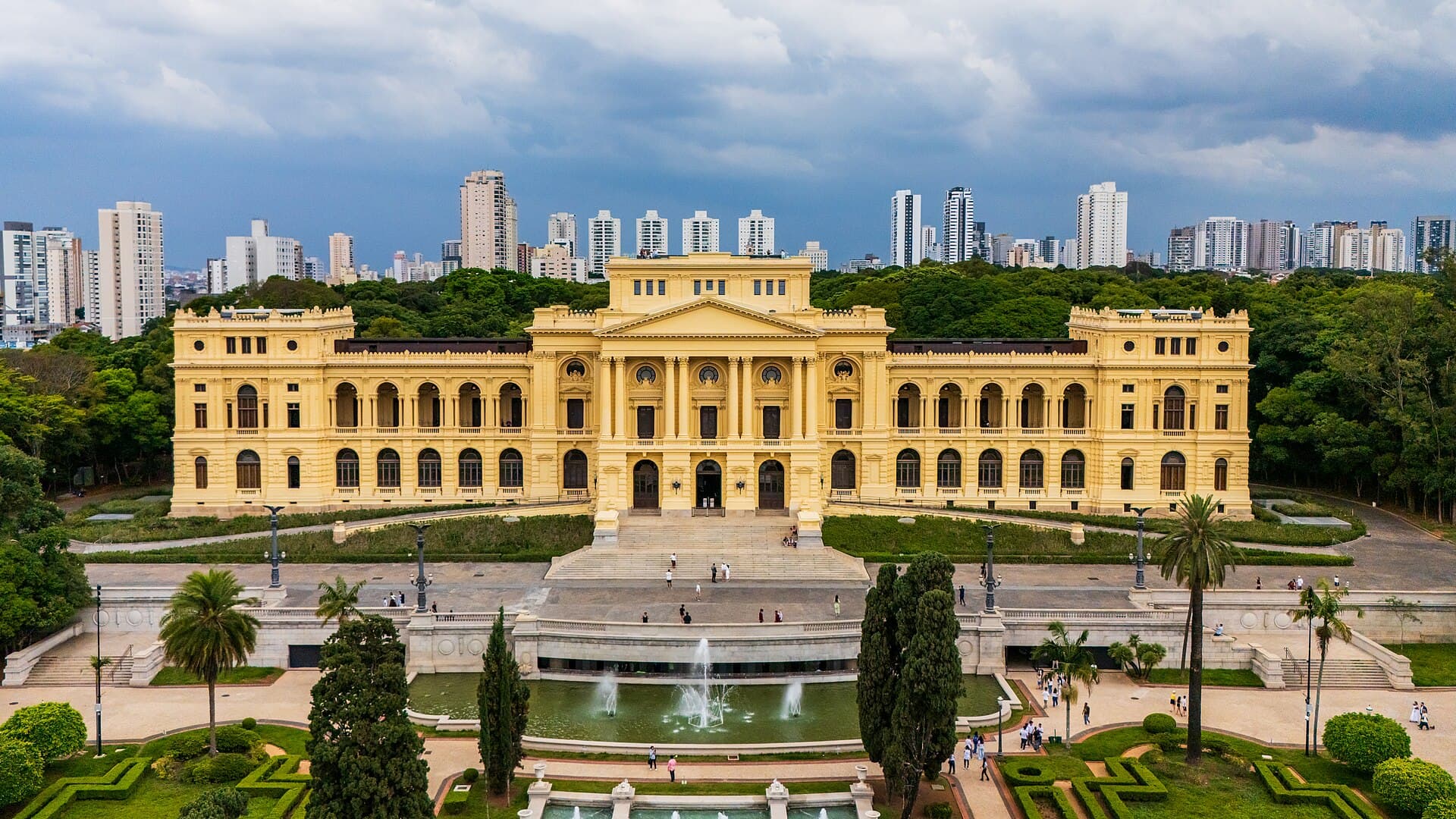
On the banks of the Ipiranga brook, where Prince Regent Pedro proclaimed Brazil's independence on 7 September 1822, stands a granite and bronze monument also known as the «Altar of the Fatherland». The Italian sculptor Ettore Ximenes and architect Manfredo Manfredi designed it for the independence centenary in 1922, and figures of the revolutionaries who came before independence surround the central group. Beneath it lies the Imperial Crypt, built in 1972 to hold the remains of Emperor Pedro I and his wives Maria Leopoldina and Amélie of Leuchtenberg; Pedro I's remains were brought from Lisbon. The crypt closed in 2022 for works costing about R$5.3 million and reopened on 7 September 2026 with new toilets, air conditioning and a temporary exhibition on the monument's history. Entry to the crypt is free with no booking, Tuesday to Sunday 9:00-17:00. The monument looks over the gardens of Independence Park, which rise towards the Museu do Ipiranga, so the two are easily combined in half a day.
Granite and bronze.
Reopened in 2026.
Up to the Museu do Ipiranga.
Parque da Independência, Ipiranga, São Paulo
Yes; it reopened on 7 September 2026, and entry is free with no booking, Tuesday to Sunday 9:00-17:00.