
The full illusion
Stair, houses, residents — all paint on one flat wall.
madras91 — CC BY 2.0 · Romainbehar — CC0 · Davide Mauro — CC BY-SA 4.0 · Frachet — CC BY-SA 3.0
The Mur des Canuts is Europe's largest trompe-l'œil mural: 1,200 square metres of blank wall in Croix-Rousse that Lyon's artists turned into a complete living scene — a stair climbing between houses, shops, residents on their balconies — realistic enough to fool the eye from afar and make it smile up close. The canuts were the silk weavers who made Croix-Rousse's glory in the nineteenth century and rose in its famous workers' revolts; the mural salutes their quarter. Its charm is that it lives: since 1987 it has been repainted every few years, its painted residents ageing, its children growing, the painted quarter changing as the real one does. It is the summit of Lyon's mural art — the city is a world pioneer, with dozens of painted walls — and pairs naturally with exploring Croix-Rousse, its traboules and markets.
Stair, houses, residents — all paint on one flat wall.
Repainted every few years, its painted residents growing older with you.
Memory of the silk weavers and their revolts — Croix-Rousse's soul on its wall.
36 Boulevard des Canuts, 69004 Lyon
 Maison des Canuts (Silk Weavers' House)A museum and working workshop in the Croix-Rousse quarter devoted to the history6 minutes walk4.5
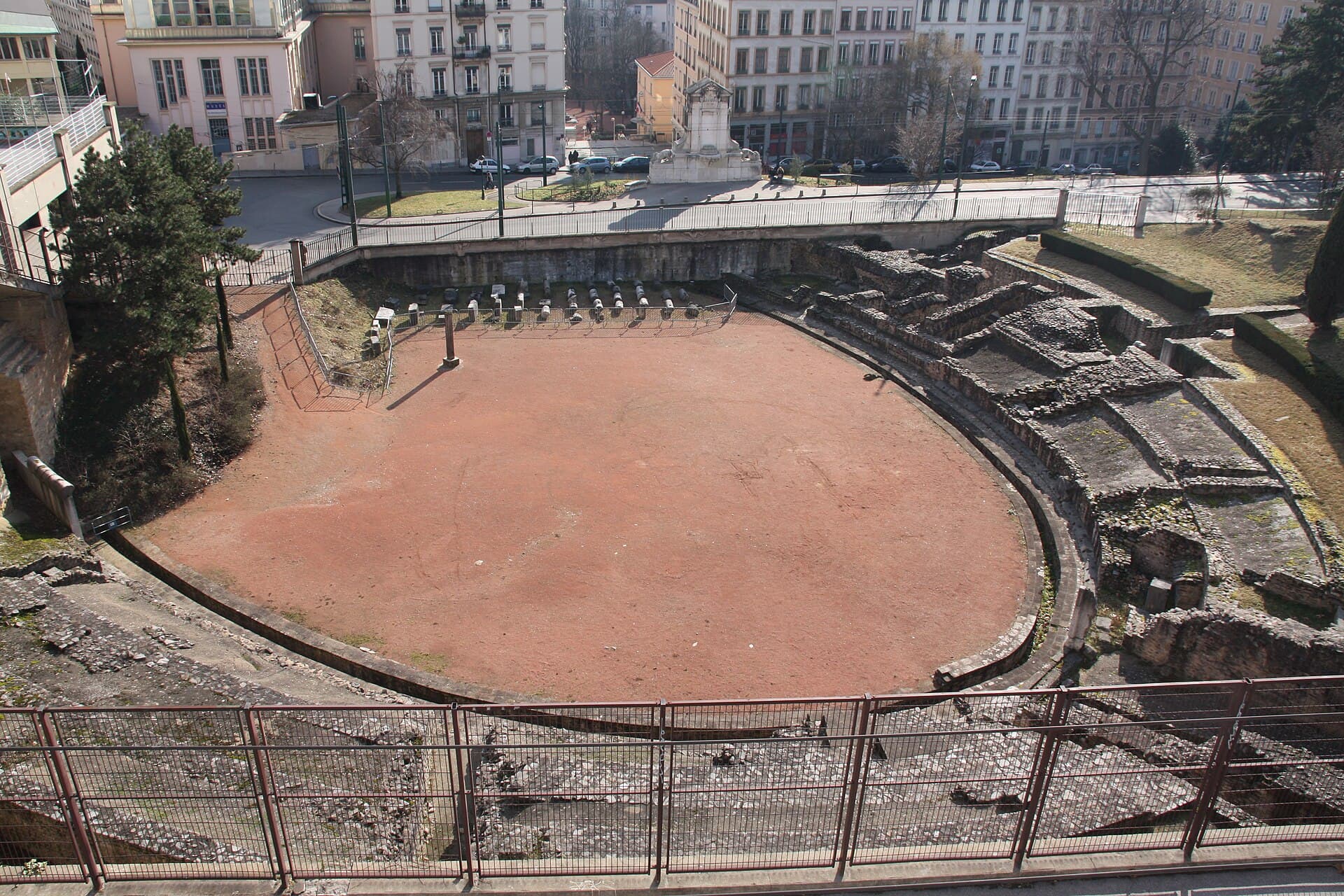 Amphitheatre of the Three GaulsThe remains of a first-century Roman amphitheatre on the slope of the Croix-Rous11 minutes walk3.9
 Fresque des LyonnaisOn a building's corner facing the Saône, Lyon painted its family: twenty-four of14 minutes walk4.7
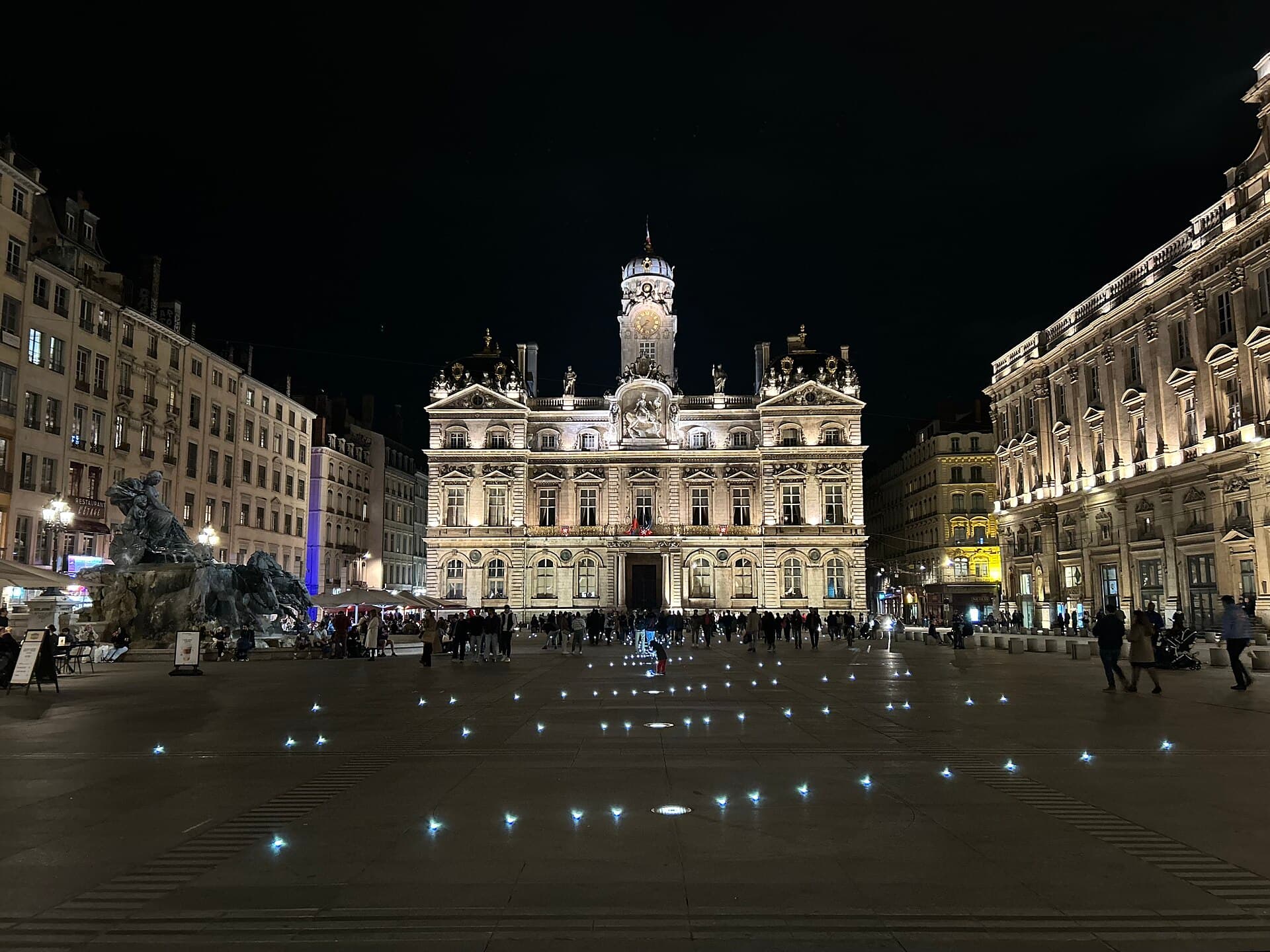 Place des TerreauxThe Terreaux is Lyon's formal salon: the city hall's grand seventeenth-century f15 minutes walk4.4
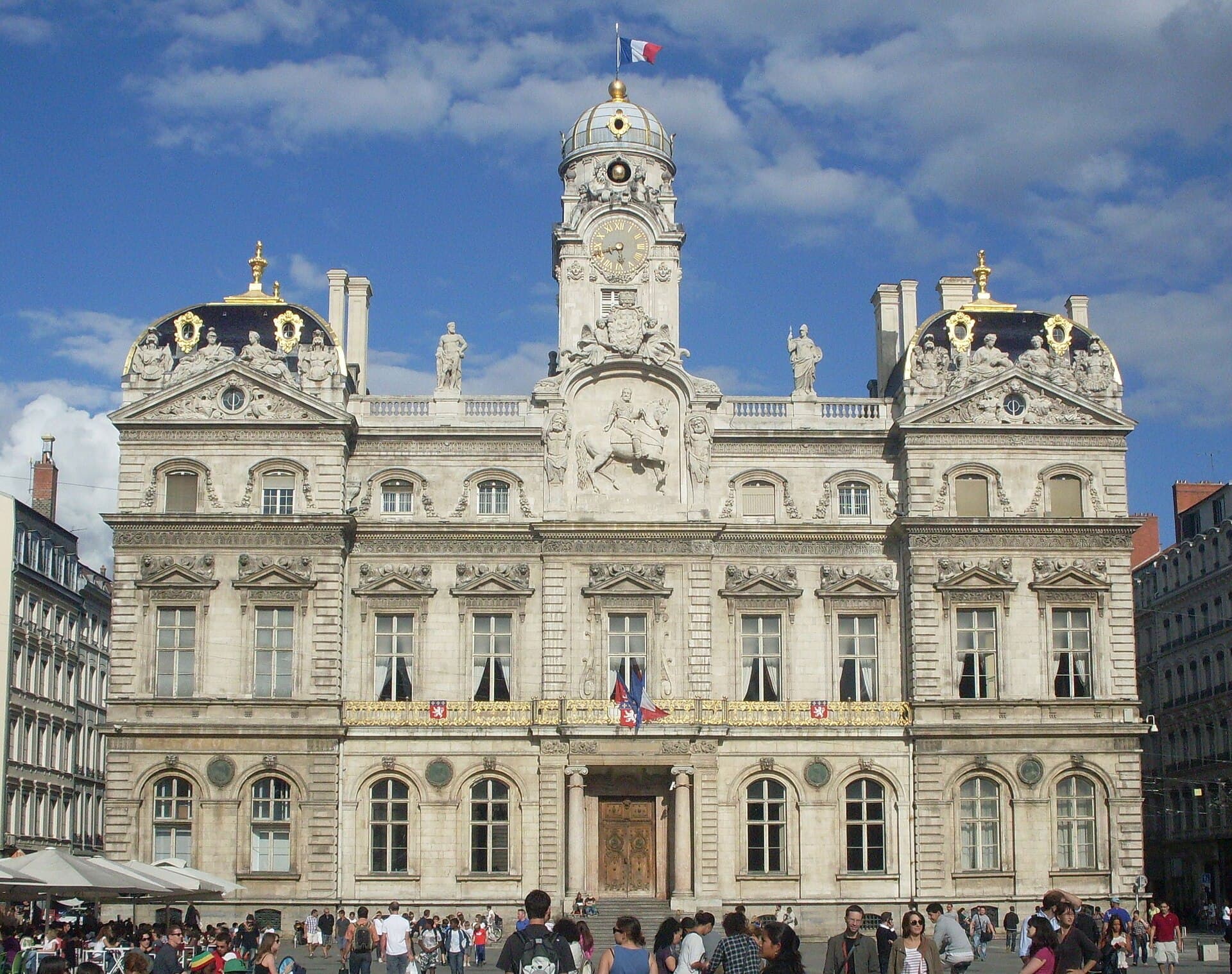 Lyon City HallLyon's city hall on Place des Terreaux, dating from the seventeenth century, amo16 minutes walk4.4
The silk weavers who worked thousands of looms in Croix-Rousse's high-ceilinged flats — and rose in 1831 and 1834 in history's first industrial workers' uprisings, under the cry 'live working or die fighting'. The quarter's whole story is in that word.
Alone, no — with Croix-Rousse, yes: the morning boulevard market, the traboules dropping towards the river, the quarter's village-in-the-city air. Make the mural the peak of a two-hour wander, not a lone target.
Lyon has dozens — most famously the Fresque des Lyonnais on the Saône quay with the city's celebrated faces (you will pass it anyway), plus the cinema and library walls nearby. The mural map is at the tourist office for the addicted.