
Porta San Giacomo
A white marble gate and the city's best-known sunset point.
Ago76 — CC BY-SA 4.0 · Jummyrho — CC BY-SA 4.0 · Jocelyn Erskine-Kellie — CC BY-SA 2.0 · Walkabout 88 — CC BY-SA 4.0
**Six kilometres of defensive walls enclosing the whole Upper Town — and walkable along their entire length** — a World Heritage site. The **Republic of Venice** built them between **1561 and 1588**, when Bergamo was **its westernmost frontier** facing Spanish Milan — **so this is a border fortress**, not an ordinary city wall. ⚠ **The cost to the city was heavy**: **more than six hundred buildings** inside the required perimeter were demolished to build them — **among them the cathedral of Sant'Alessandro**, the city's patron. ✅ **The irony is that they were never attacked**: **not a single defensive shot was ever fired from them** — **which is exactly why they survive complete**; walls that are besieged get demolished. ✅ **Walking them today** is a level promenade circling the city with an open view.
A white marble gate and the city's best-known sunset point.
Six level kilometres right around the Upper Town.
Venetian towers and defensive angles along the route.
Mura Venete, 24129 Bergamo, Italy
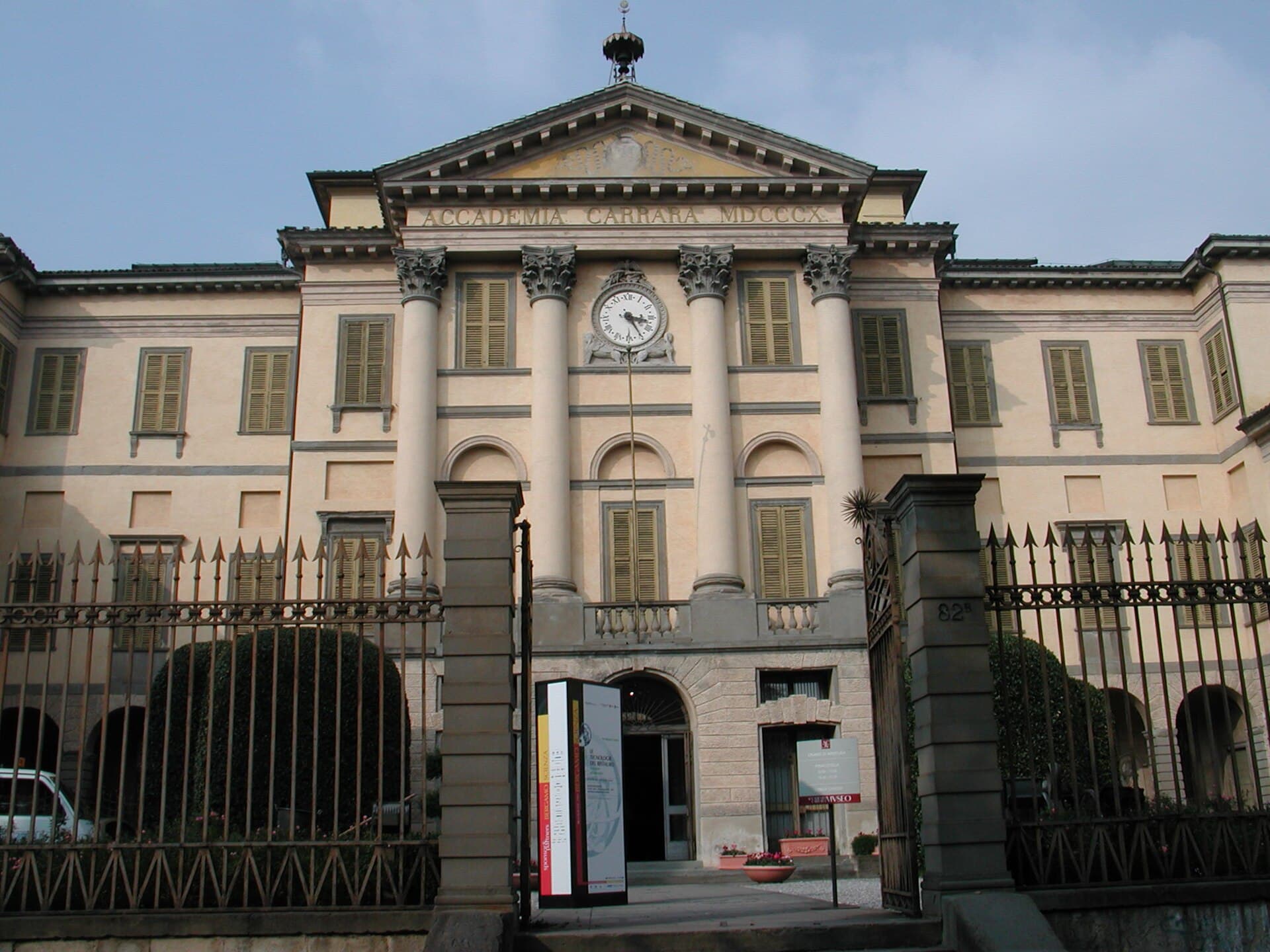 Accademia Carrara**A first-rank picture gallery built by private collectors rather than a state —3 minutes walk4.8
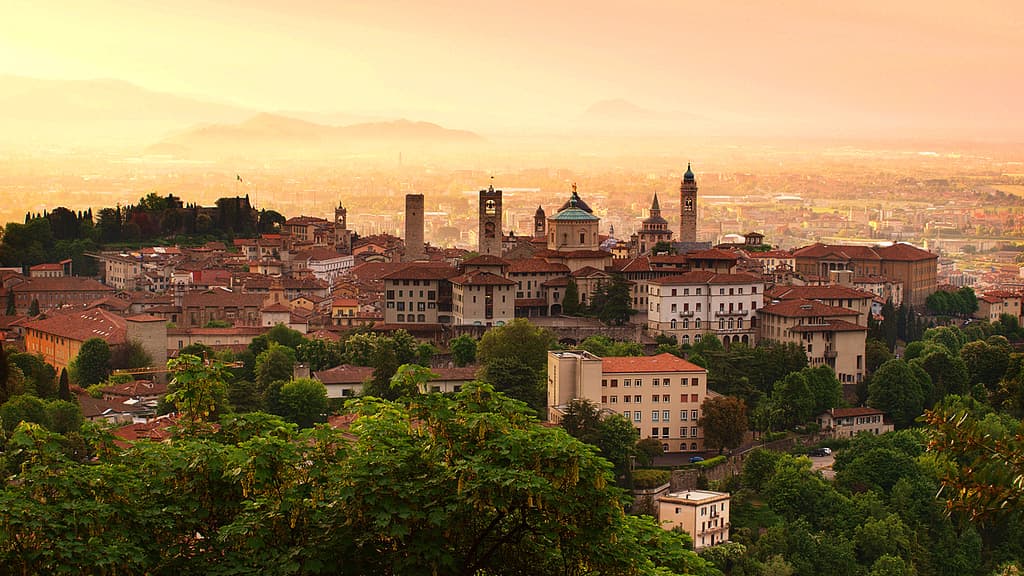 Città Alta**A complete medieval city on a hilltop inside Venetian walls, reached by a funi9 minutes walk
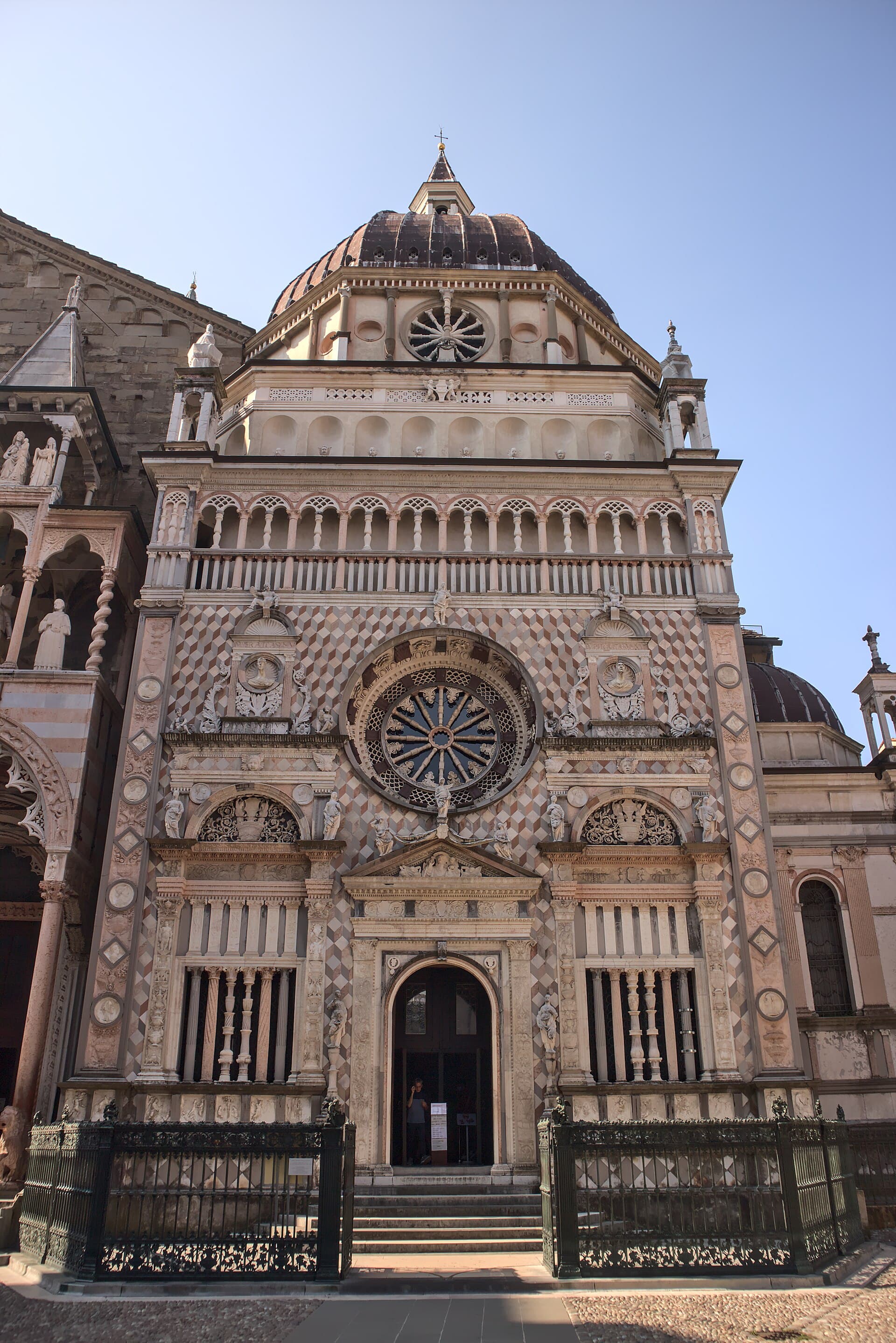 The Colleoni Chapel**A façade of white, pink and black marble carved like a piece of jewellery — bu10 minutes walk4.8
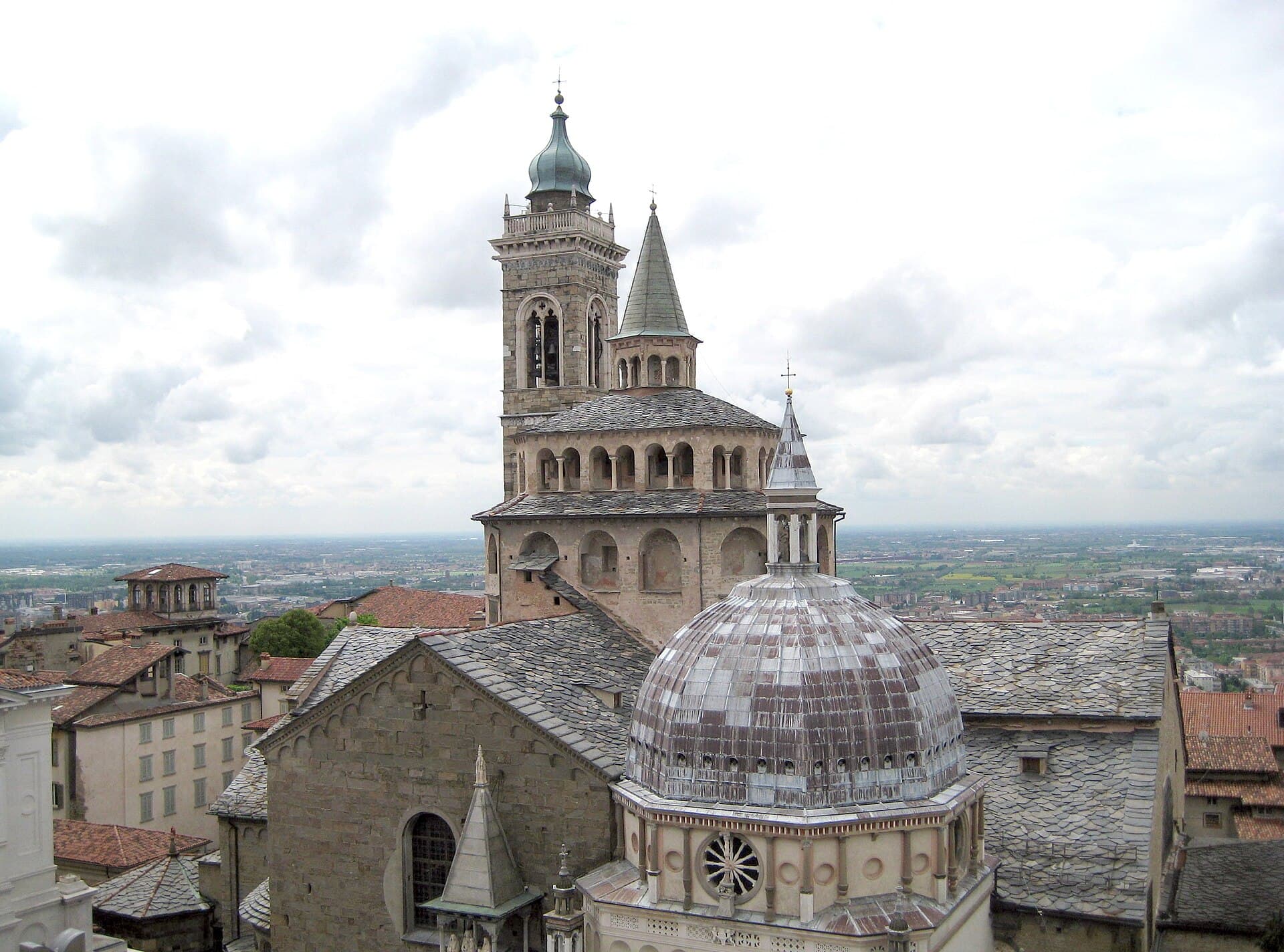 Basilica of Santa Maria Maggiore**Romanesque outside, overwhelming gilded Baroque inside — and with no main faça10 minutes walk4.9
**Because it was the last point of Venetian land before its greatest rival — so they were built to deter, not only to fight.** ✅ **The geopolitics**: the **Republic of Venice** expanded onto the mainland in the 15th century until it ruled the northeast of Italy. **Bergamo was its far west** — **and directly opposite lay the Duchy of Milan under Spain**, then the strongest power in Europe. ✅ **The function**: **these are frontier fortifications**, not a town wall. Hence the **modern bastioned design**: **low, thick, sloping walls** that absorb artillery rather than shatter before it (quite unlike the tall thin walls of the Middle Ages), **and projecting angled bastions** allowing flanking fire on anyone approaching the curtain. ⚠ **The social cost**: **more than 600 buildings** were demolished — including **the cathedral of Sant'Alessandro** and whole quarters, **displacing their inhabitants**; it was a source of lasting bitterness. ✅ **The outcome**: **they were never attacked**. **Which is a defensive success, not a failure** — deterrence that prevents a war is the point; ✅ **and it is also why they stand complete today**.