The camel staircase
Built broad and gently stepped so camels could carry water to the upper floors.
Muna al-Mahdi — CC BY-SA 3.0 · ほっきー — CC0 · Richard Mortel from Riyadh, Saudi Arabia — CC BY 2.0 · Richard Mortel from Riyadh, Saudi Arabia — CC BY 2.0
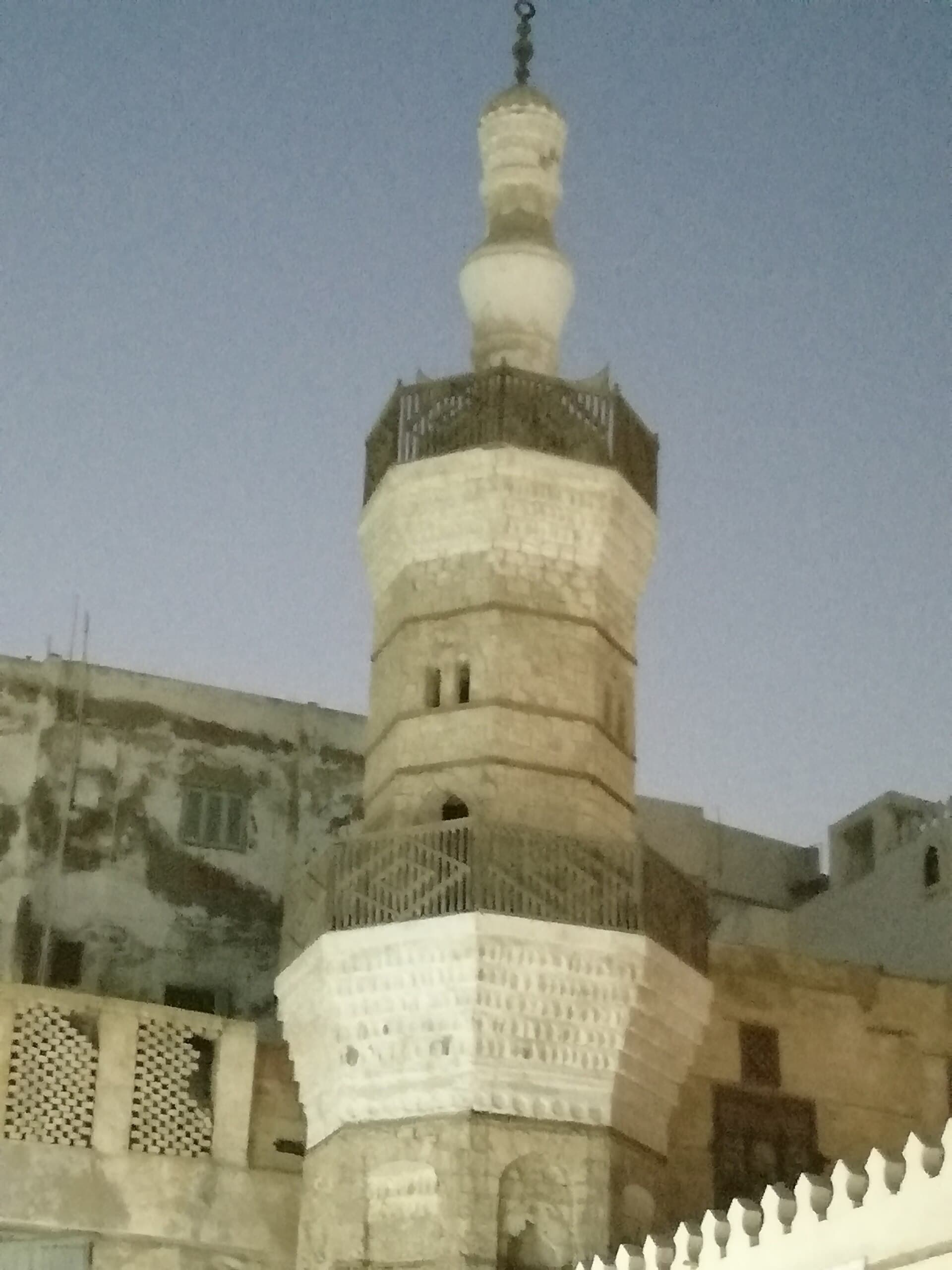
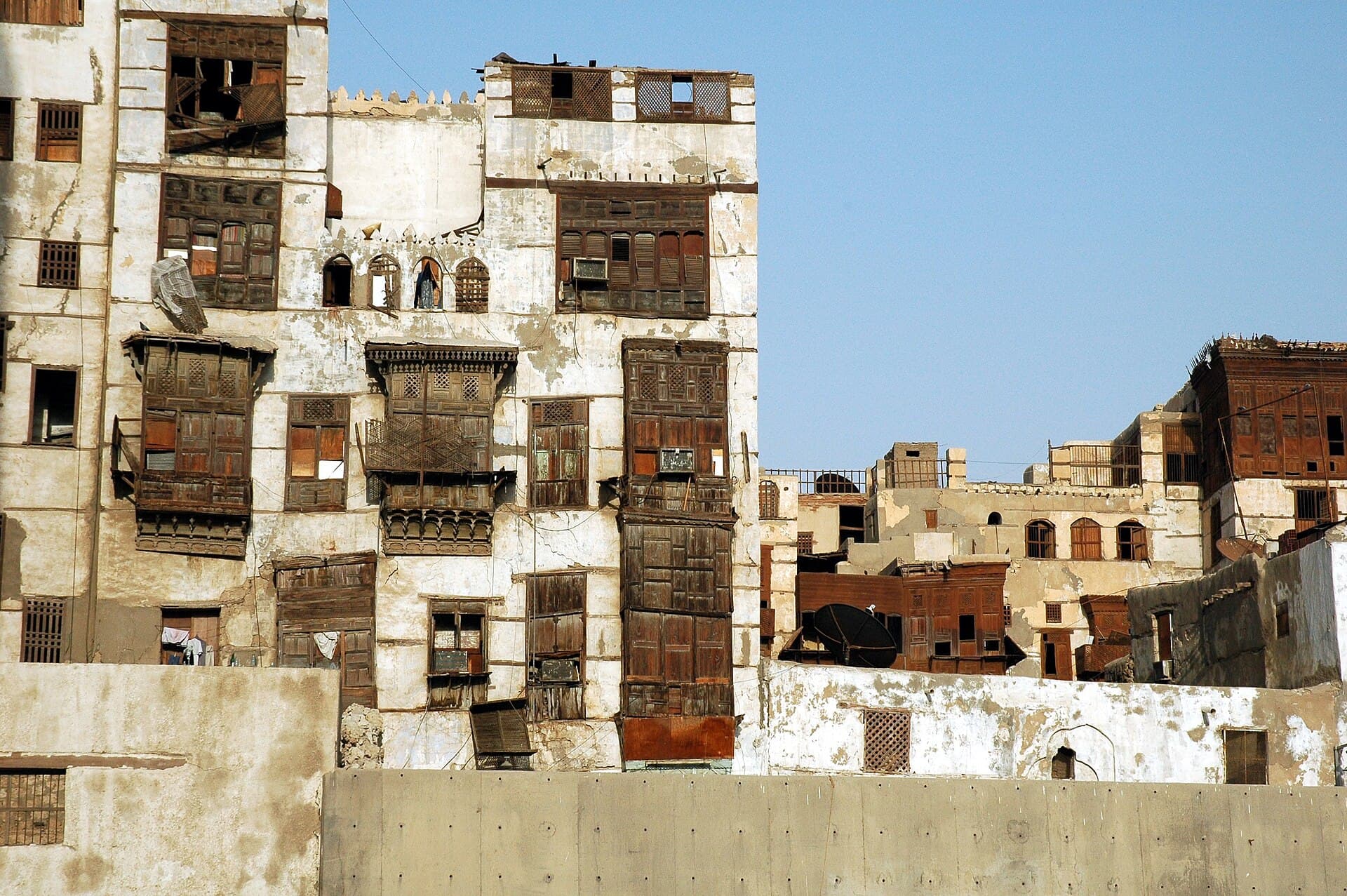
The best-known and historically the most important house in old Jeddah — built by Omar Naseef between 1872 and 1881 as the home of the city's wealthiest merchant, and later the residence of King Abdulaziz when he entered Jeddah in 1925. The story most often told about it is that one of its staircases was built broad and gently stepped so that camels could climb it carrying water and goods to the upper floors. The staircase survives and can be seen, and it convinces anyone standing on it. The house has four storeys and more than a hundred rooms, its façades covered in carved wooden rawashin among the finest surviving in the Hijaz. The timber came from Java and India, the stone is quarried coral from Lake Arbaeen, and gypsum fills between them. The neem tree by the door was for decades the only tree in the whole of Jeddah, to the point that people gave directions by it — the house at the tree. Inside it is now visited as a museum and cultural centre: broad reception rooms, timber ceilings, inner courtyards, a kitchen and narrow passages between rooms, with exhibitions and events held during the Jeddah season. Opening hours are not fixed and depend on events and restoration work in the quarter, which is the key practical point: confirm it is open before making the trip. Three quarters of an hour, and it is in the heart of Al-Balad, walkable from anywhere in the quarter.
Built broad and gently stepped so camels could carry water to the upper floors.
Among the finest surviving carved wooden screens in the whole Hijaz.
For decades the only tree in Jeddah, used to give directions to the house.
Harat Al-Yaman, Historic Jeddah
It is the traditional and widely repeated account, and the staircase really is broad with low, gently graded steps that make it plausible. Scholars differ over whether camels actually climbed it or whether it was simply built for moving heavy loads. Either way the form is unusual and worth pausing on.
Yes, and that is the natural way — the house is inside the historic quarter and there is no sense in coming for it alone. The usual route is walking the lanes and seeing the rawashin from outside, then into Naseef House, then Souq Al-Alawi and Bab Makkah, finishing at a café in the quarter after dark.