
The Court of the Lions
A courtyard with a fountain borne on twelve marble lions, ringed by 124 slender columns.
Martin Furtschegger — CC BY 3.0 · Jebulon — CC BY-SA 4.0 · Harvey Barrison from Massapequa, NY, USA — CC BY-SA 2.0 · Dennis G. Jarvis — CC BY-SA 2.0
The Nasrid Palaces are the heart of the Alhambra and its greatest treasure. Three linked palaces built by Granada's rulers in the fourteenth century: the Mexuar for governing and receiving subjects, the Comares Palace for state receptions, and the Palace of the Lions as the ruling family's residence. What sets them apart is not scale but detail. The walls are covered in carved plaster, coloured tilework and Arabic calligraphy, and the ceilings fill with muqarnas that look like honeycomb. Best known is the Court of the Lions with its fountain carried on twelve marble lions, and the Hall of the Ambassadors, whose wooden ceiling represents the seven heavens of paradise. Entry is at a slot timed to the minute within the Alhambra ticket, and latecomers are not admitted. This is the mistake visitors make most.
A courtyard with a fountain borne on twelve marble lions, ringed by 124 slender columns.
The largest hall, its inlaid wooden ceiling representing the seven heavens of paradise.
A courtyard with a long pool reflecting the Comares tower — the Alhambra's most photographed view.
A muqarnas dome of more than five thousand small cells — among the most intricate work in Islamic architecture.
Inside the Alhambra, 18009 Granada
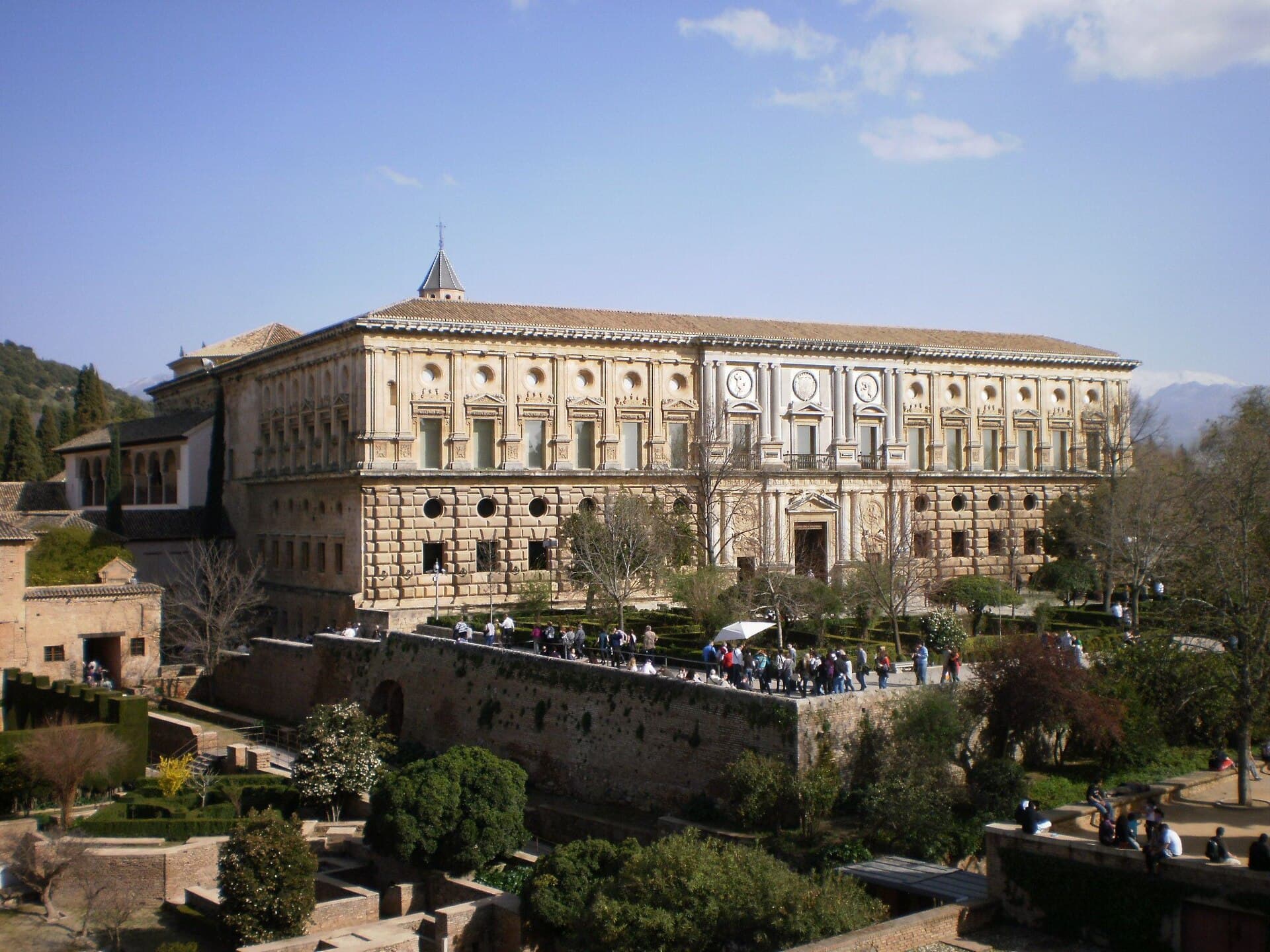 Palace of Charles VThe Palace of Charles V is a Renaissance building standing inside the Alhambra, 1 minute walk4.7
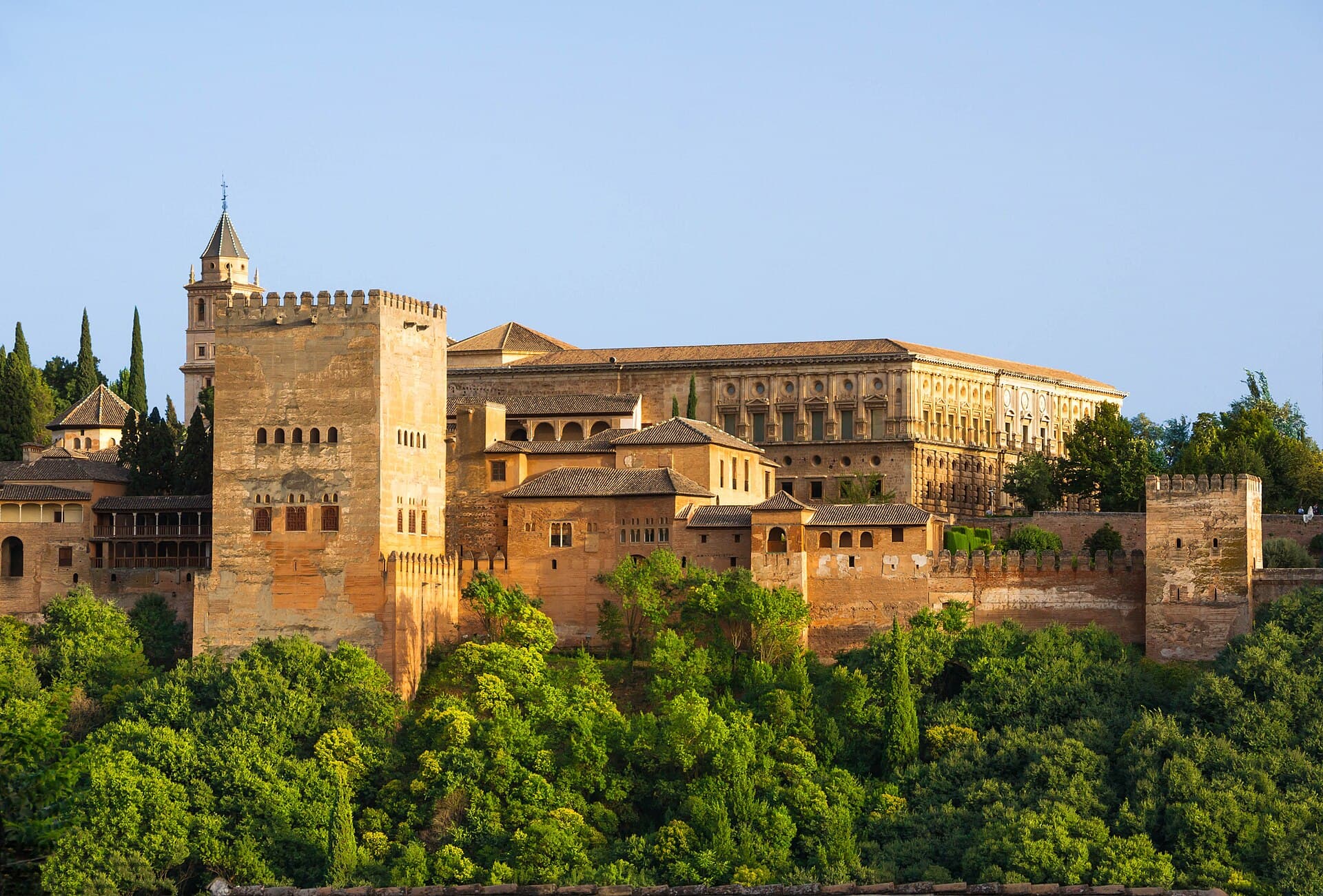 AlhambraThe Alhambra is the most famous thing Muslims built in Spain, standing on a hill2 minutes walk4.9
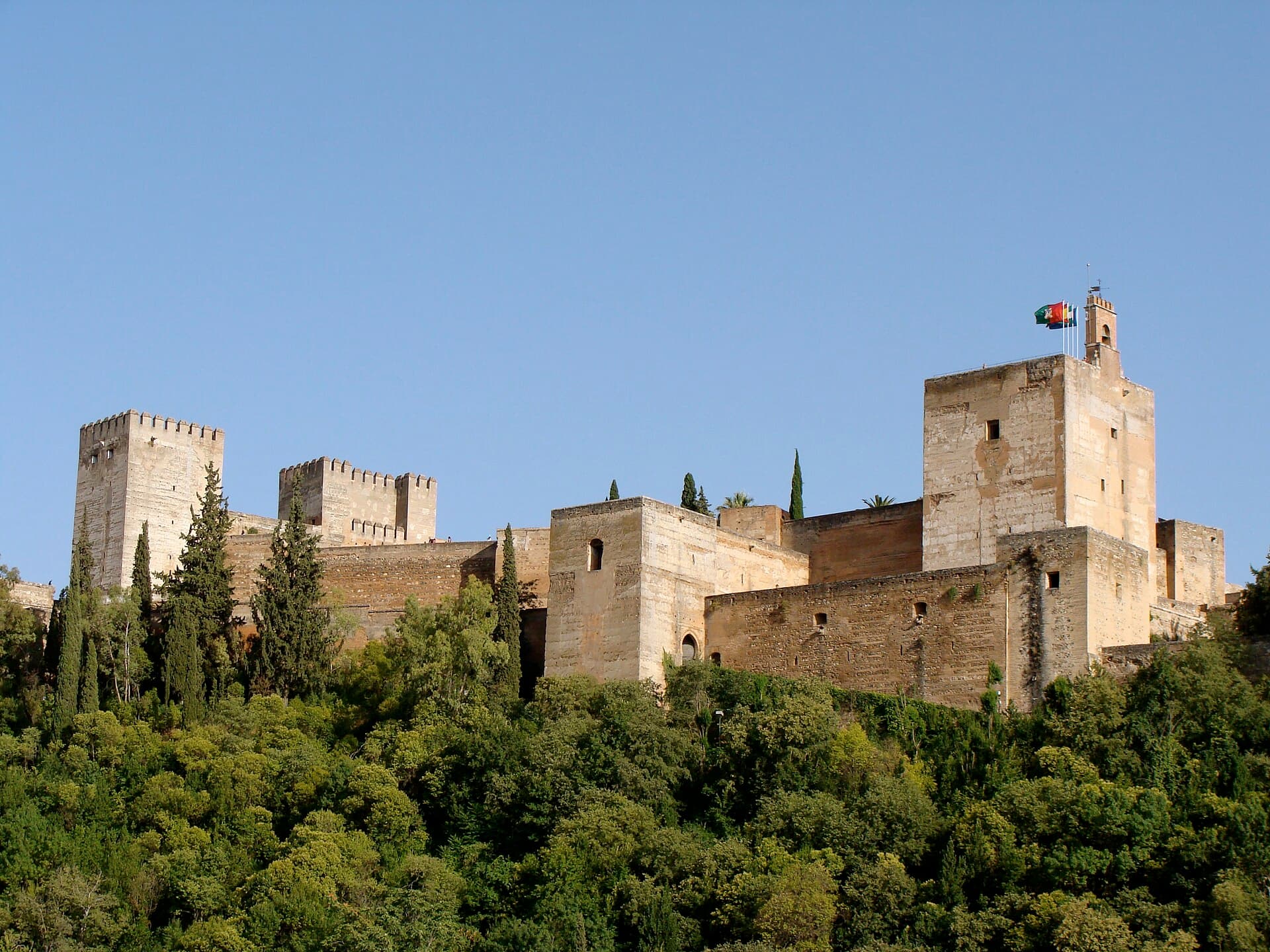 Alcazaba of the AlhambraThe Alcazaba is the military part of the Alhambra and its oldest section. Built 2 minutes walk4.8
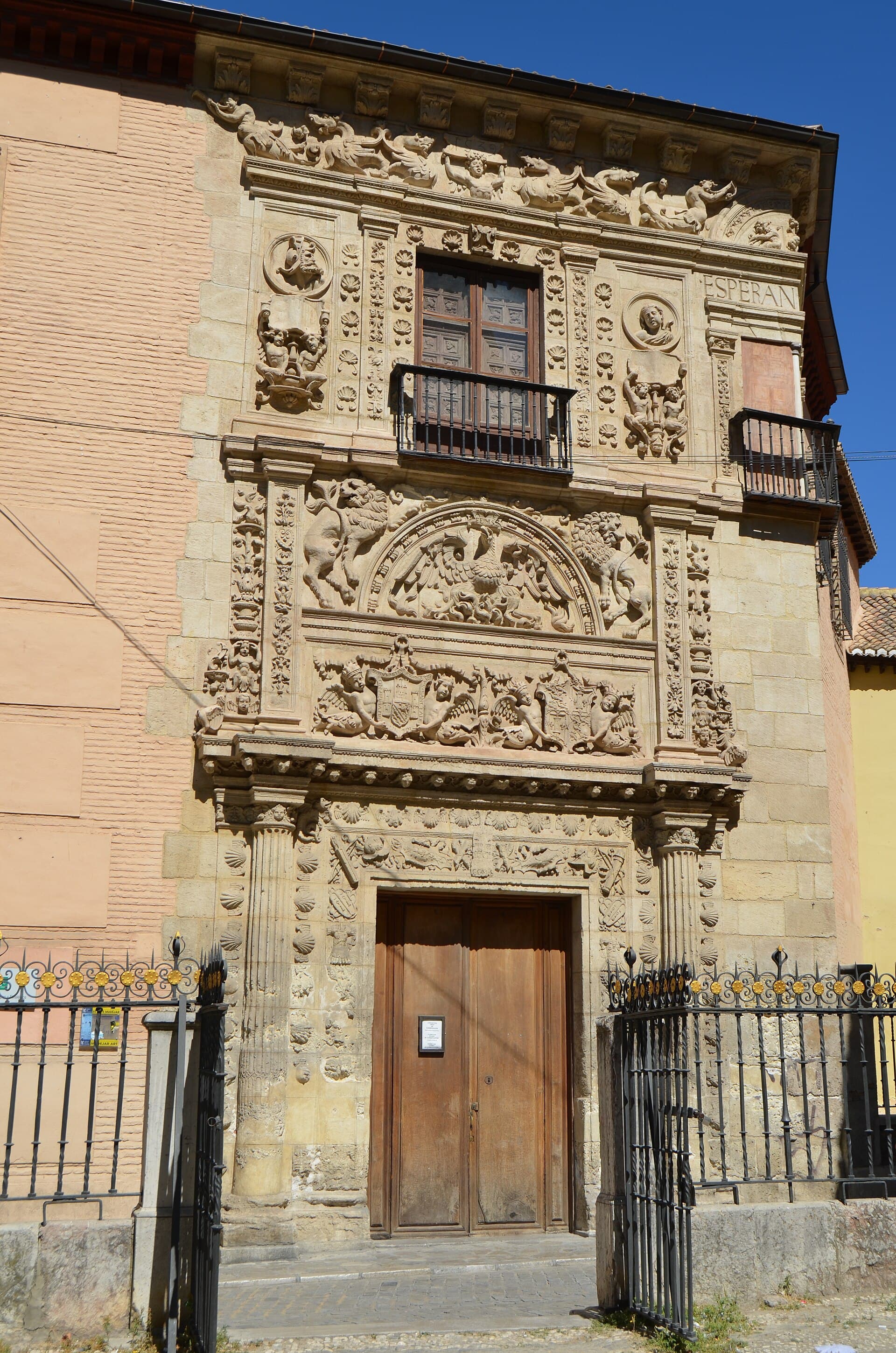 Archaeological Museum of GranadaGranada's provincial archaeology museum, in the Casa de Castril, a Renaissance h3 minutes walk4.4
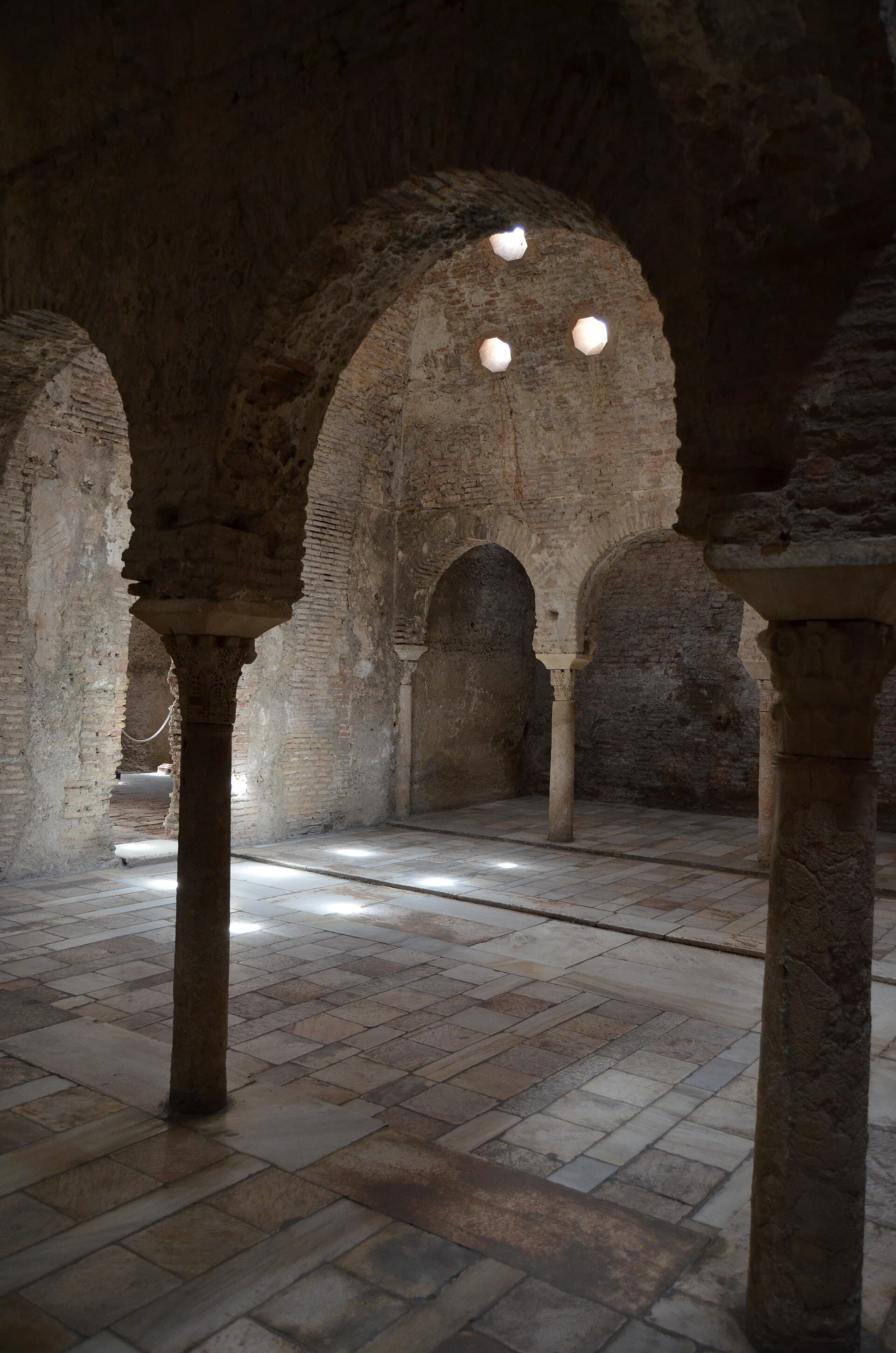 El BañueloEl Bañuelo in Granada is among the oldest surviving Arab baths in Spain, dating 4 minutes walk4.1
You will not be let in, and the ticket is neither exchanged nor refunded. The rule is strict because numbers inside the palaces are capped per quarter hour. Be at the palace gate at least twenty minutes early, and remember that walking there from the main entrance takes time.
An hour to an hour and a half. The route runs one way through the three palaces in order, with no going back. Take your time particularly in the Court of the Lions and the Hall of the Ambassadors — they are the most important things you will see.
They can at peak season. The best slots are first thing in the morning or late evening, and the dedicated night visits to the palaces are very quiet and worth looking for. Avoid midday slots in July and August.