
The Hall of Gold
Saka treasures.
Davide Mauro — CC BY-SA 4.0 · Davide Mauro — CC BY-SA 4.0 · PlainVector — CC0 · Nikolai Bulykin — CC BY-SA 4.0 · Muzaffar Turgunov — CC0 · PlainVector — CC0 · PlainVector — CC0 · photo User:Zenwort — Public domain
The National Museum of the Republic of Kazakhstan opened in 2014 and was, when built, the largest museum in Central Asia. The architect Vladimir Laptev designed it in blue glass and white marble around the idea of a waving flag, as seven blocks stepping from one to nine storeys. Its exhibitions fill about 14,000 m² in 11 halls, telling Kazakhstan's history and culture from prehistory to today: the Hall of Astana, the Hall of Independent Kazakhstan, the Hall of Gold, halls of ancient and medieval history, ethnography, and modern art. The highlight is the Hall of Gold, with Saka-era gold and a reconstruction of the costume of the warrior known as the «Golden Man», alongside ancient Turkic stone statues, inscriptions in Old Turkic script, jewellery and traditional costumes. Foreigners pay about 5,000 tenge for all halls without a guide and 10,000 with a guided tour, per visitor guides. It stands on Independence Square near the Hazrat Sultan Mosque and the Palace of Peace.
Saka treasures.
Old Turkic.
Like a waving flag.
Independence Square, Astana
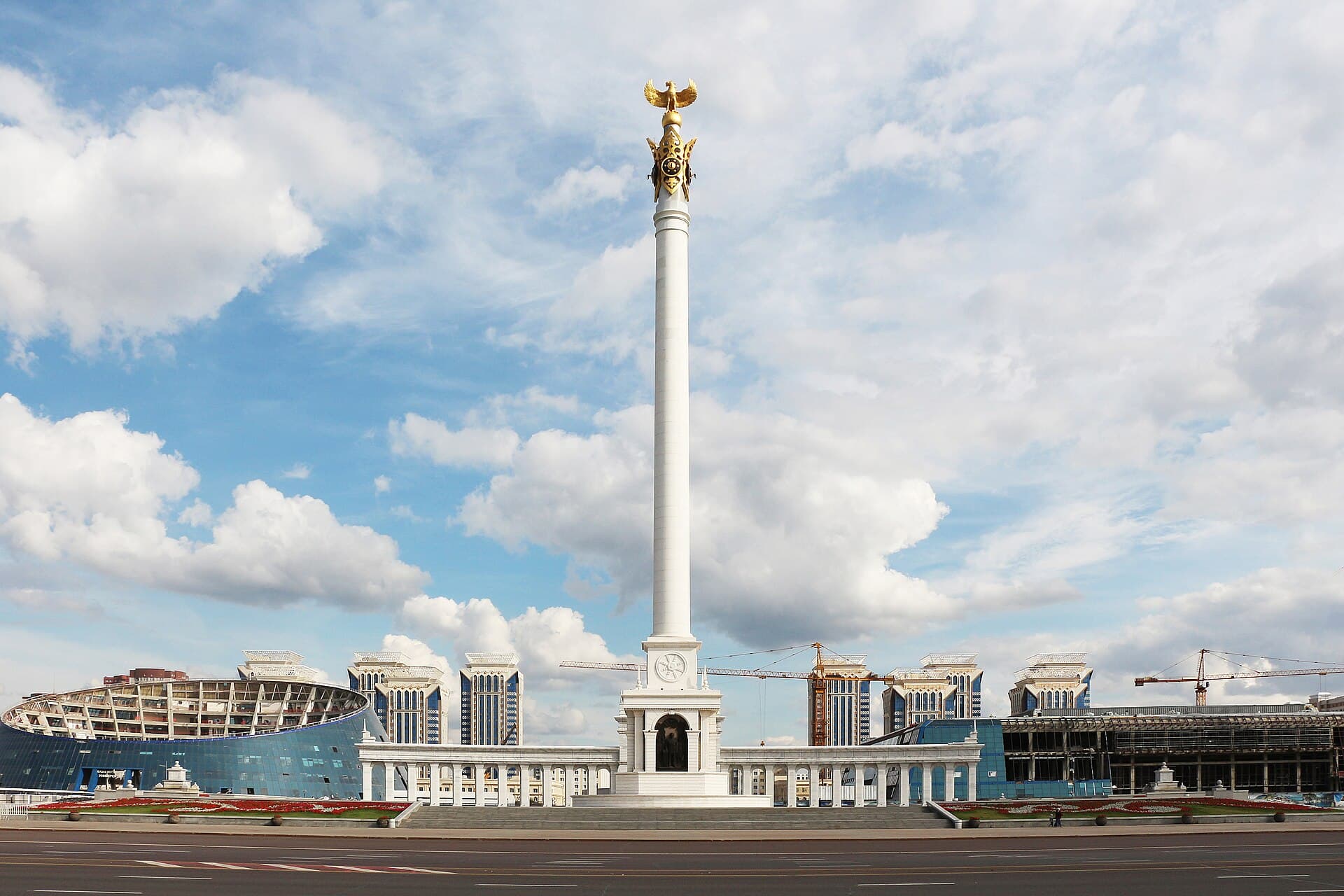 Kazakh Eli Monument (Astana)Kazakh Eli, whose name means the land of the Kazakhs, is the independence monume6 minutes walk
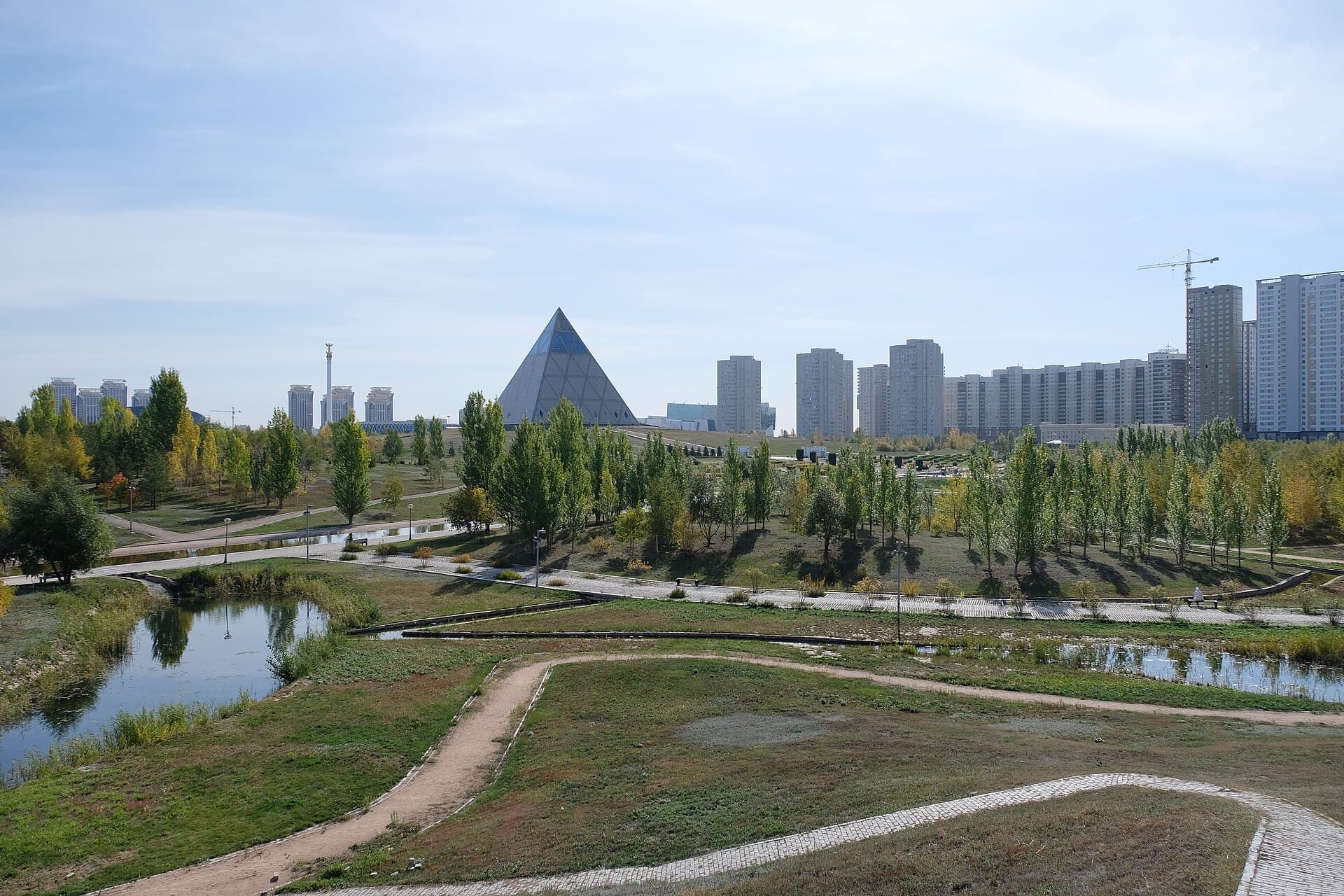 Palace of Peace and ReconciliationA 62 m glass pyramid in Astana's Presidential Park, also known as the Pyramid of9 minutes walk4.6
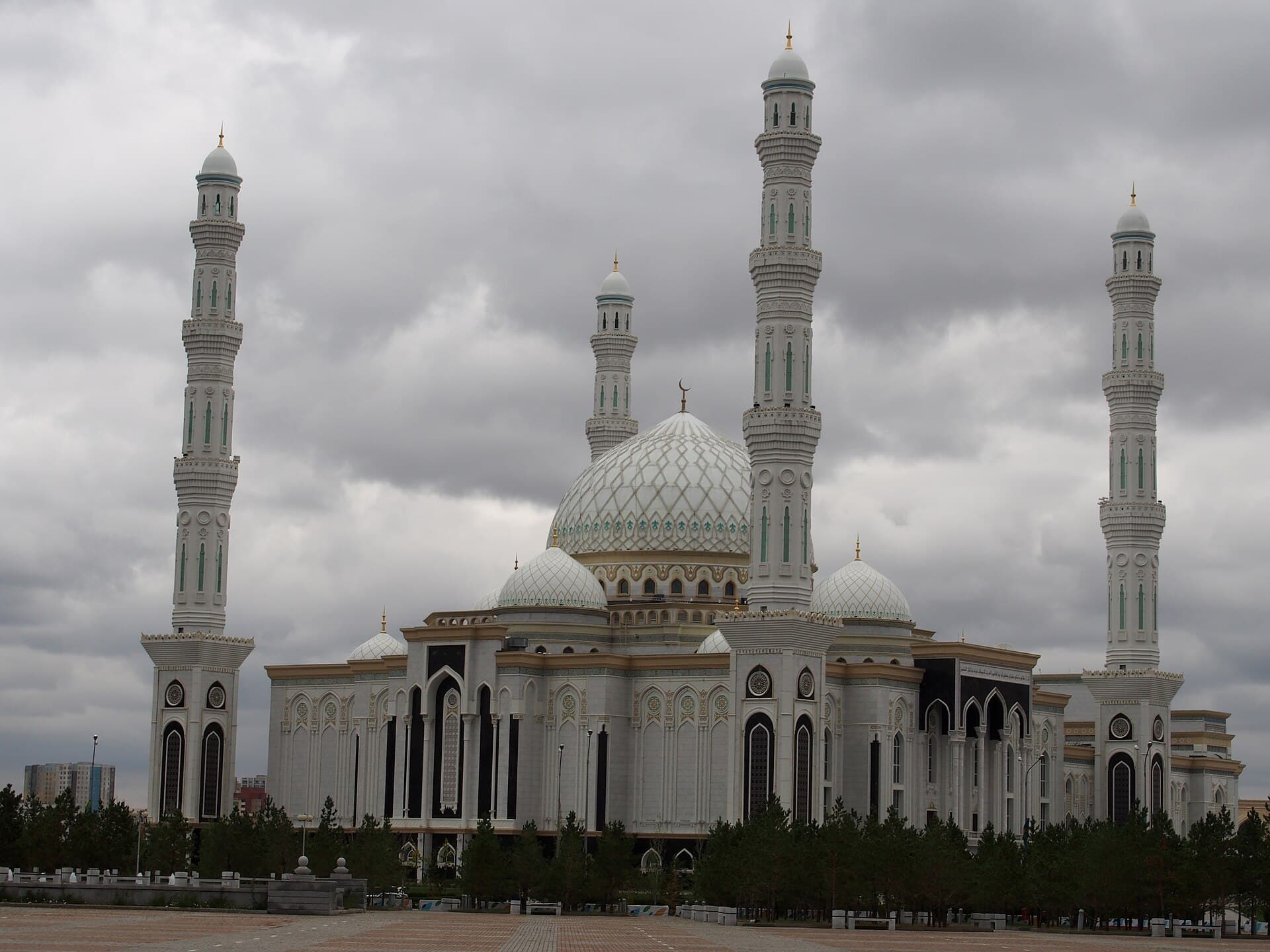 Hazrat Sultan MosqueA grand white Friday mosque on the right bank of the Yesil river in Astana, open11 minutes walk4.8
The Hall of Gold with Saka gold and a reconstructed «Golden Man» costume, plus Old Turkic stone statues; foreigners pay about 5,000 tenge, per visitor guides.