
The curved facade
Two storeys of carved niches.
Jean Housen — CC BY 3.0 · Dosseman — CC BY-SA 4.0 · Zairon — CC BY-SA 3.0 · Jean Housen — CC BY 3.0 · Carole Raddato from Frankfurt, Germany — CC BY-SA 2.0
Jerash's largest public fountain, dedicated to the nymphs in 191 AD. It rises on the colonnaded street as a two-storey semicircular stone facade lined with niches that once held statues, crowned by a finely carved frieze. The lower storey was faced with coloured marble and the upper with painted plaster; water spilled from seven carved lions' heads into a large basin in front and drained away through channels beneath the street. A big dish-shaped stone basin still sits before it, probably a later addition. The fountain was a gathering place where people drew cool water in the summer heat, and part of the dressing of the main street with its run of columns, shops and gateways. It stands on your left as you walk up the Cardo from the Oval Plaza, just before the gateway to the Temple of Artemis, so it is seen on the way there.
Two storeys of carved niches.
Where the water once poured.
On the way to Artemis.
On the colonnaded street, by the entrance to the Temple of Artemis, ancient Jerash
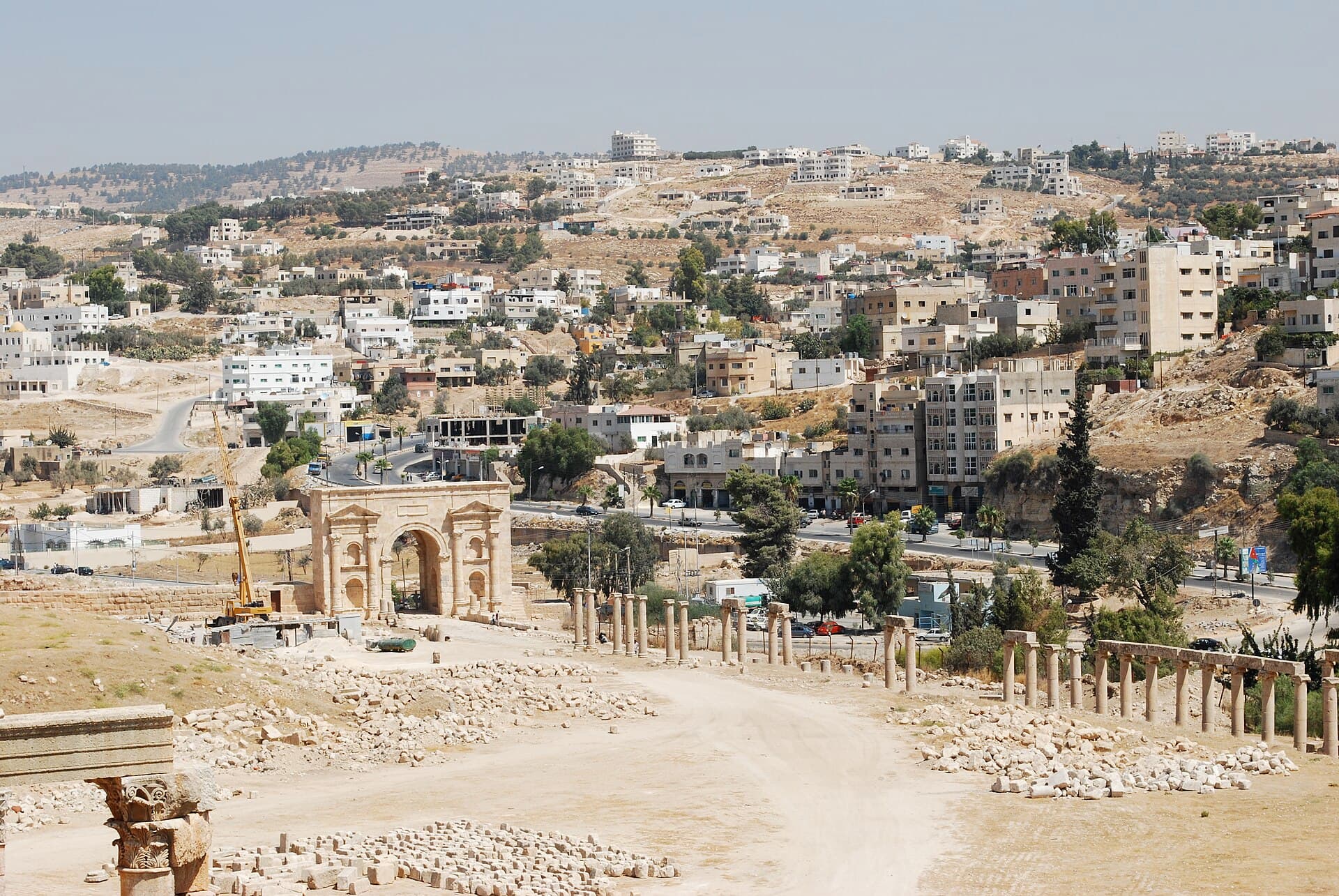 JerashOne of the most complete Roman cities surviving outside Italy, and the thing tha1 minute walk4.7
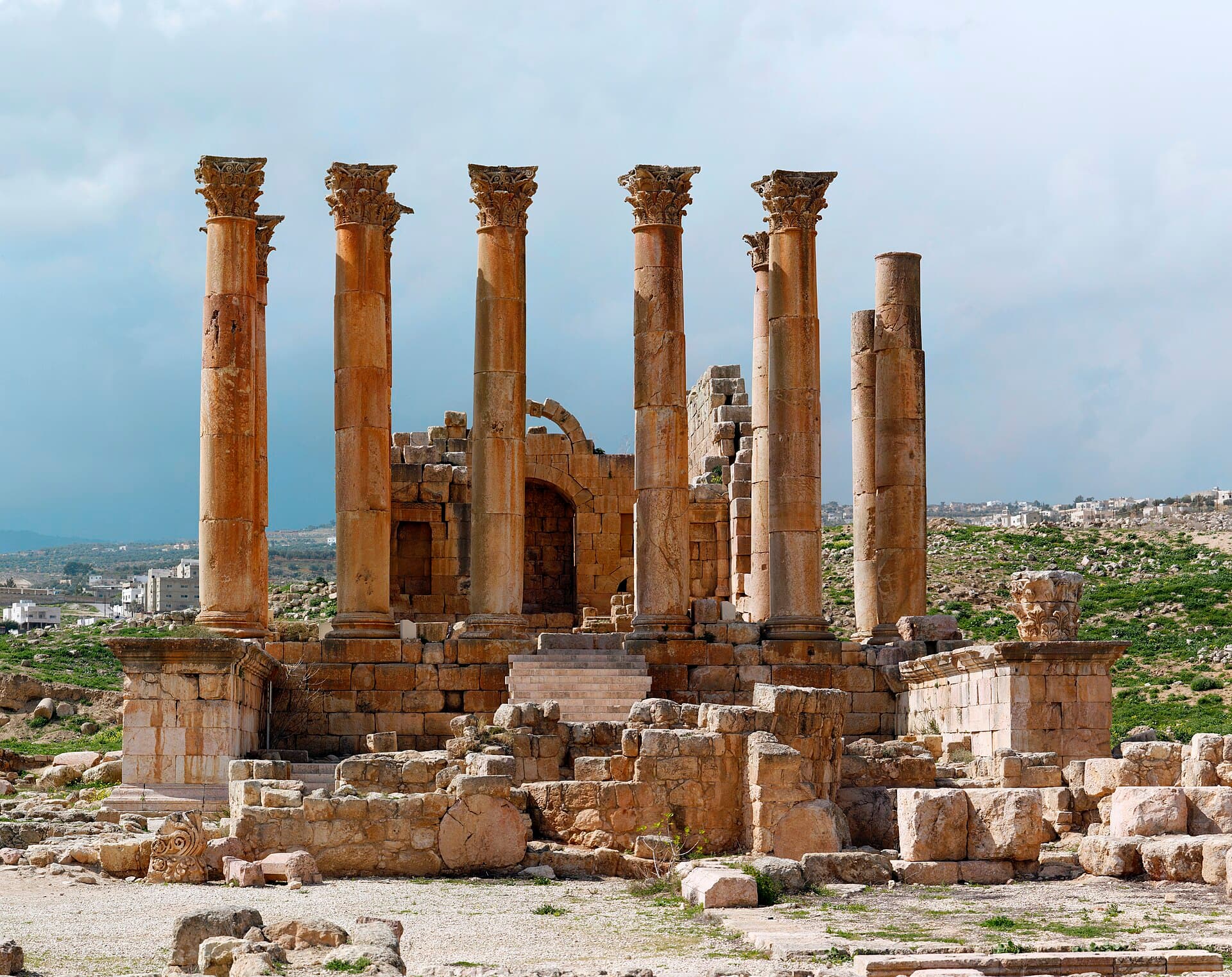 Temple of Artemis (Jerash)The temple of Artemis, patron goddess of Gerasa, built in the mid-2nd century AD2 minutes walk
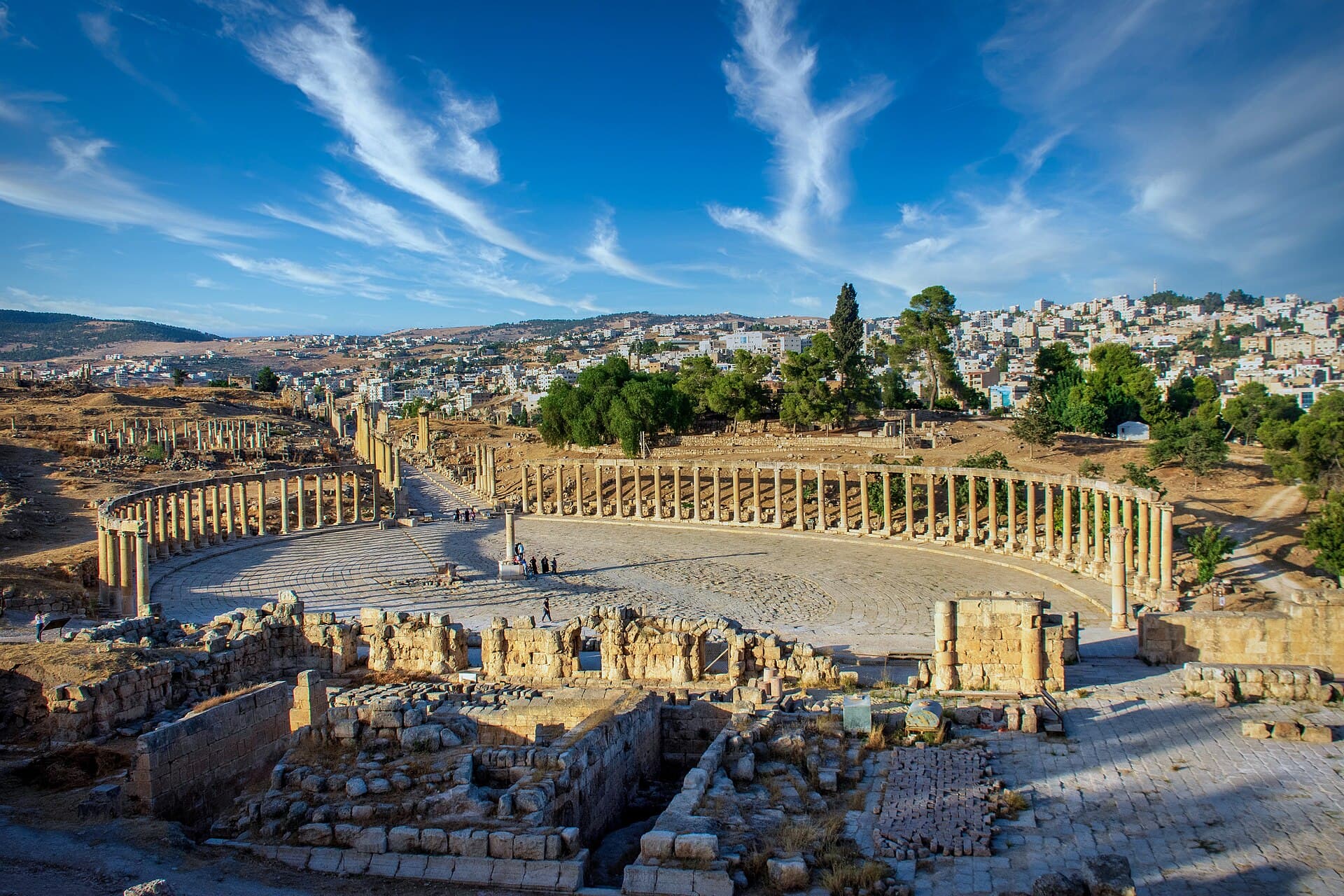 Oval Plaza and Colonnaded Street (Jerash)Jerash's most famous view: a broad egg-shaped plaza about 90 metres long, ringed4 minutes walk
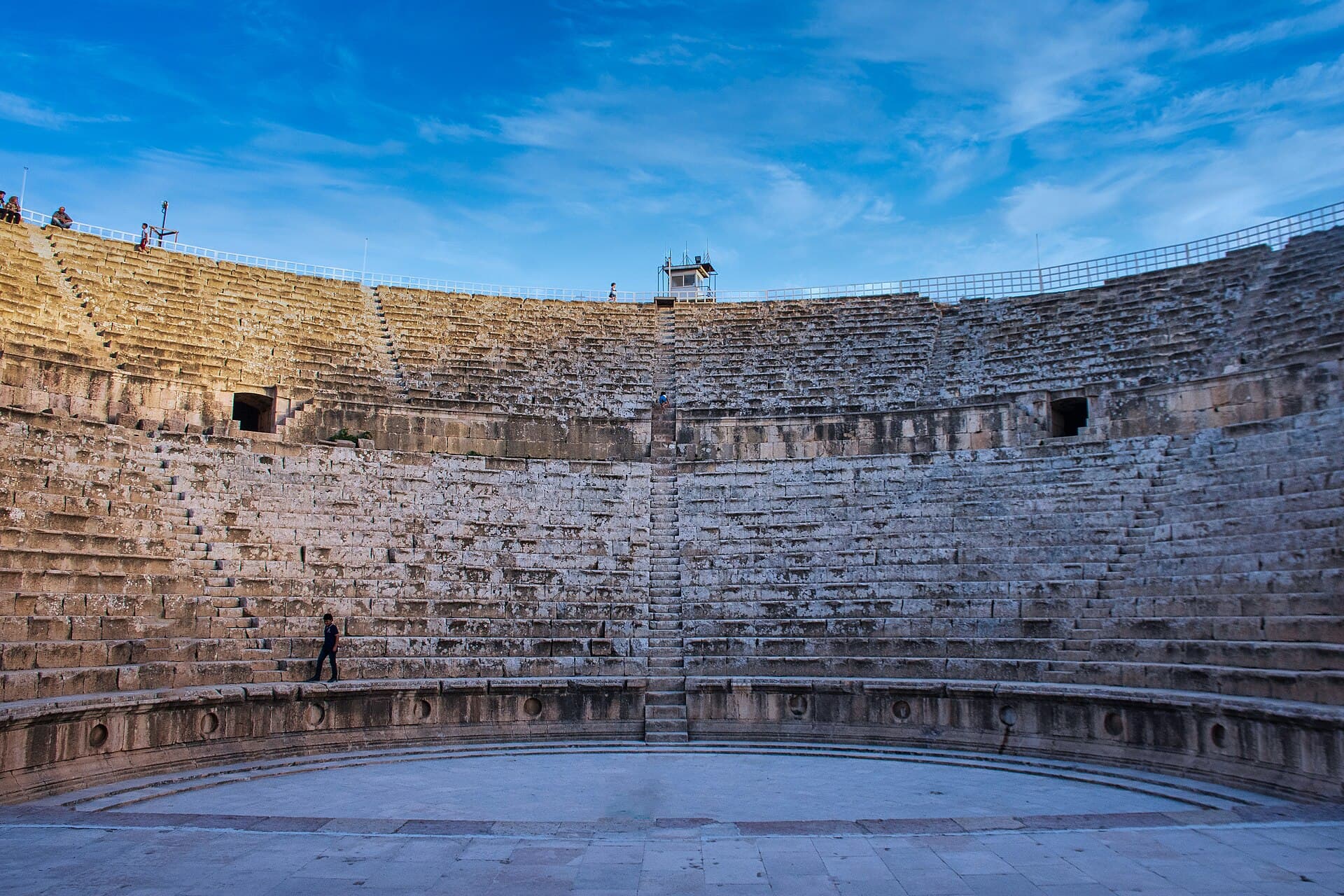 South Theatre (Jerash)Jerash's largest and finest theatre, built in the late 1st century AD under Empe6 minutes walk
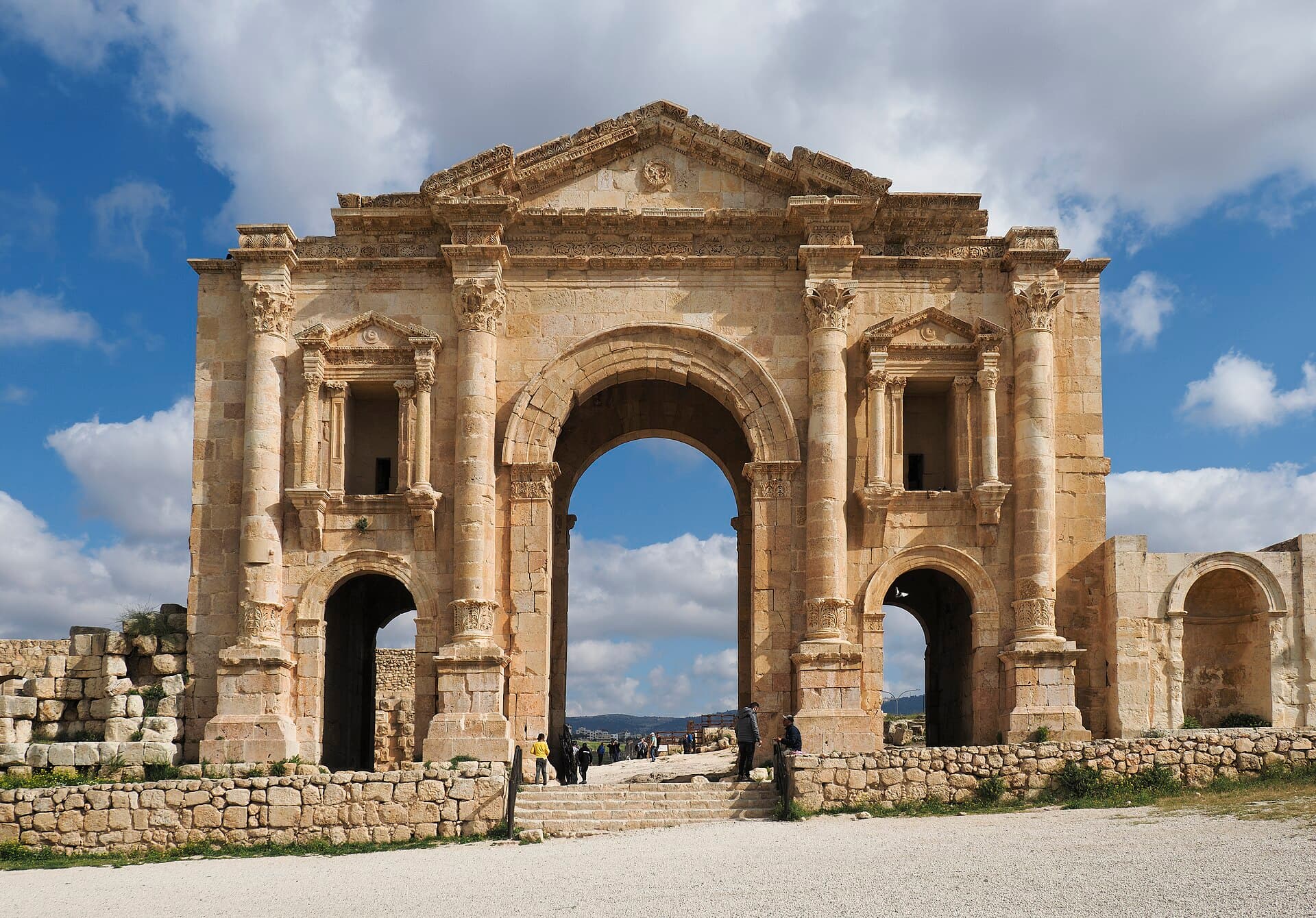 Arch of Hadrian (Jerash)A huge Roman triumphal gateway with three arches, raised by the people of Gerasa12 minutes walk
A public fountain dedicated to the nymphs of Greek and Roman belief, used to adorn the main streets of cities of the period.
No, it has been dry for centuries, but the stone basin and drains are still visible.