
The echo
Your voice returns from mid-orchestra.
Hisham Mansour Zayadnh — CC BY-SA 4.0 · Dosseman — CC BY-SA 4.0 · Carole Raddato from Frankfurt, Germany — CC BY-SA 2.0 · Carole Raddato from Frankfurt, Germany — CC BY-SA 2.0 · Dosseman — CC BY-SA 4.0
Jerash's largest and finest theatre, built in the late 1st century AD under Emperor Domitian on the slope of the southern hill, with seats for about three thousand on stone rows in two tiers. Greek numbers are still cut into some of the seats, thought to be seat reservations. Behind the stage rises the tall stage wall with two storeys of columns, niches and the three doors the actors entered by; part of it has been rebuilt, making it a grand backdrop for the Jerash Festival concerts every summer. Visitors love its acoustic trick: stand on a particular stone in the middle of the orchestra and speak normally, and your voice comes back to you amplified, while people in the top rows hear you clearly. Bagpipers in traditional military dress often play here to welcome visitors. From the top rows there is a wide view over the Oval Plaza and the modern town, and next door is the Temple of Zeus, reached from the plaza.
Your voice returns from mid-orchestra.
Two storeys of columns and niches.
Summer concerts on the same stage.
Southern hill above the Oval Plaza, ancient Jerash
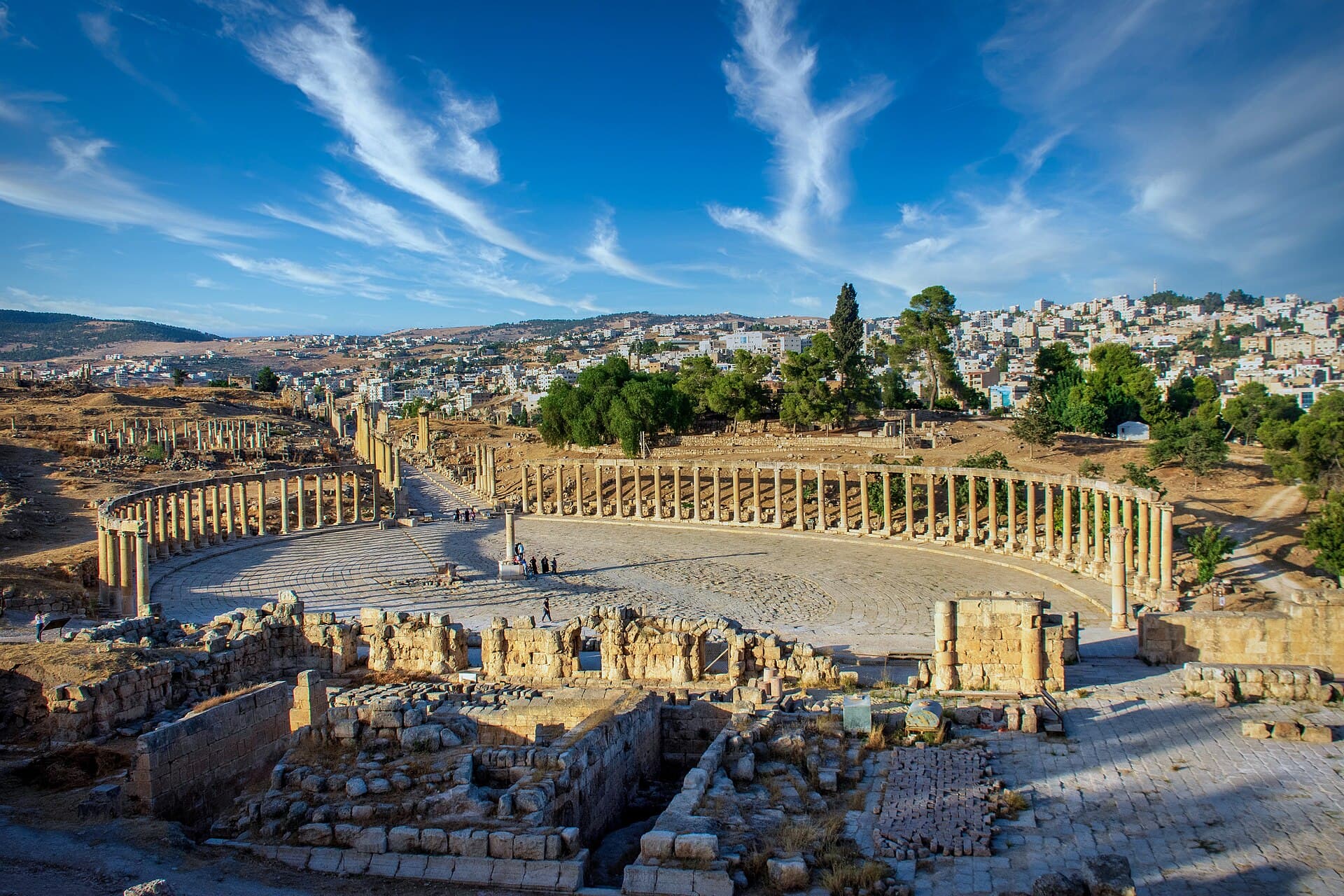 Oval Plaza and Colonnaded Street (Jerash)Jerash's most famous view: a broad egg-shaped plaza about 90 metres long, ringed2 minutes walk
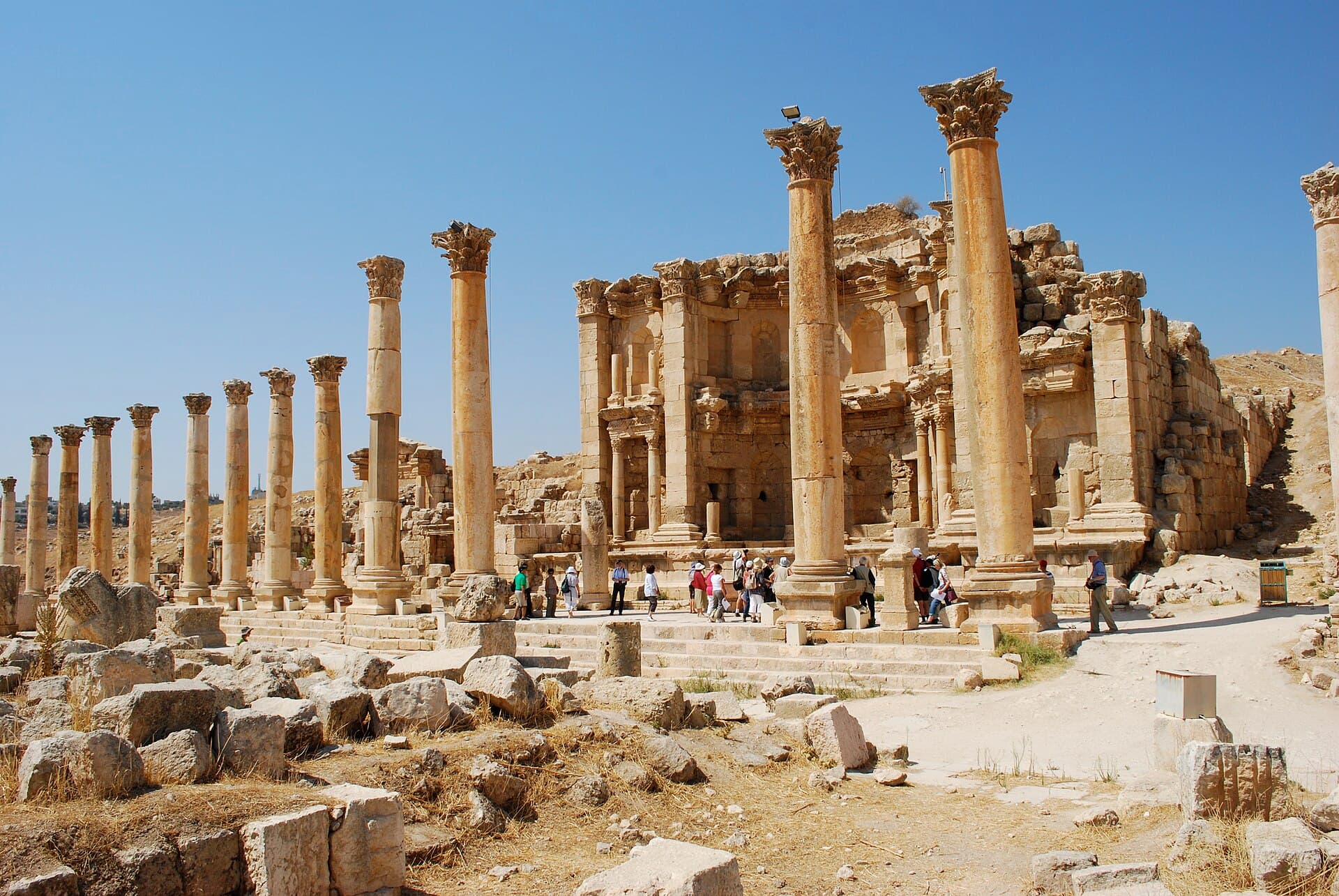 Nymphaeum (Jerash)Jerash's largest public fountain, dedicated to the nymphs in 191 AD. It rises on6 minutes walk
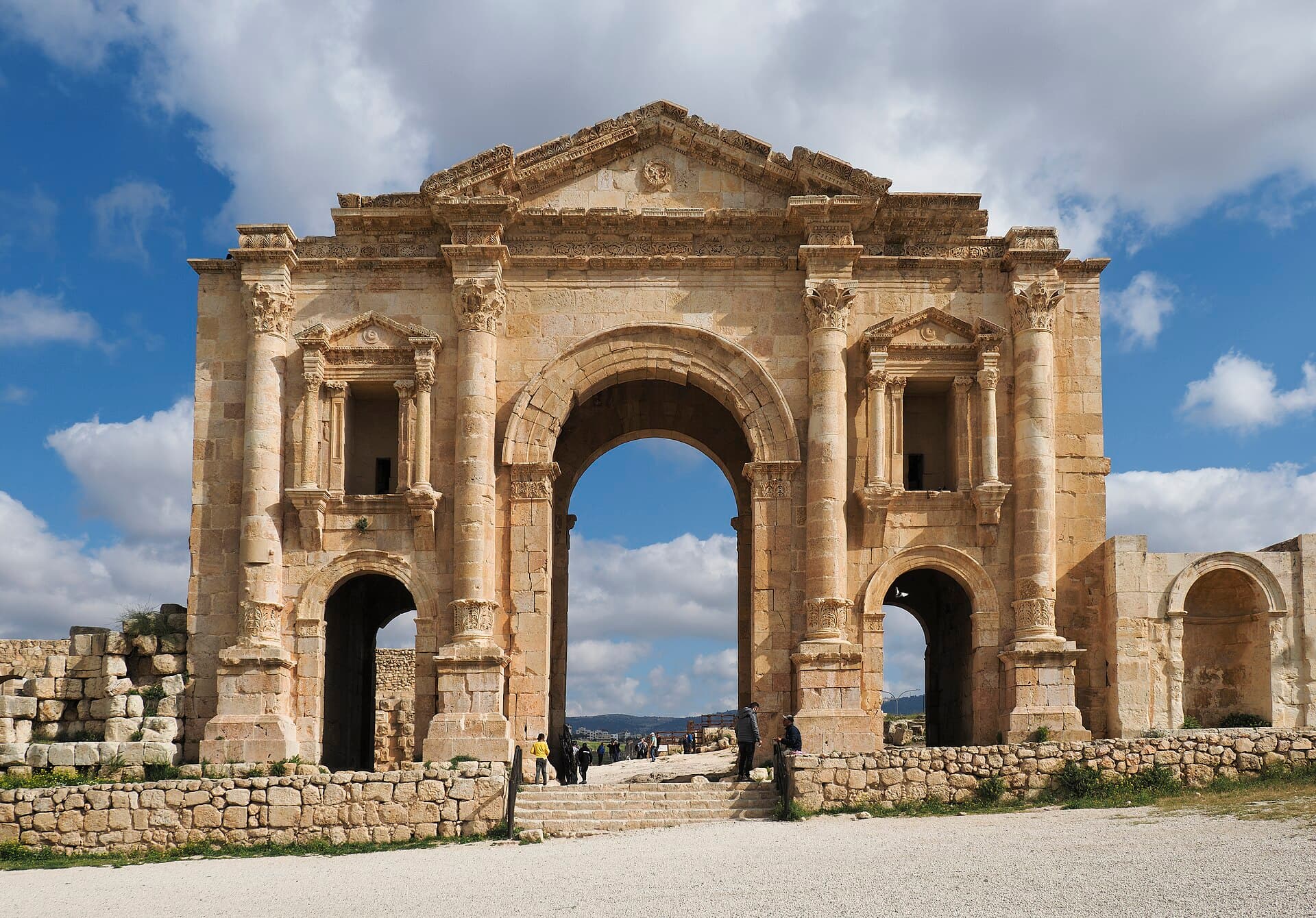 Arch of Hadrian (Jerash)A huge Roman triumphal gateway with three arches, raised by the people of Gerasa7 minutes walk
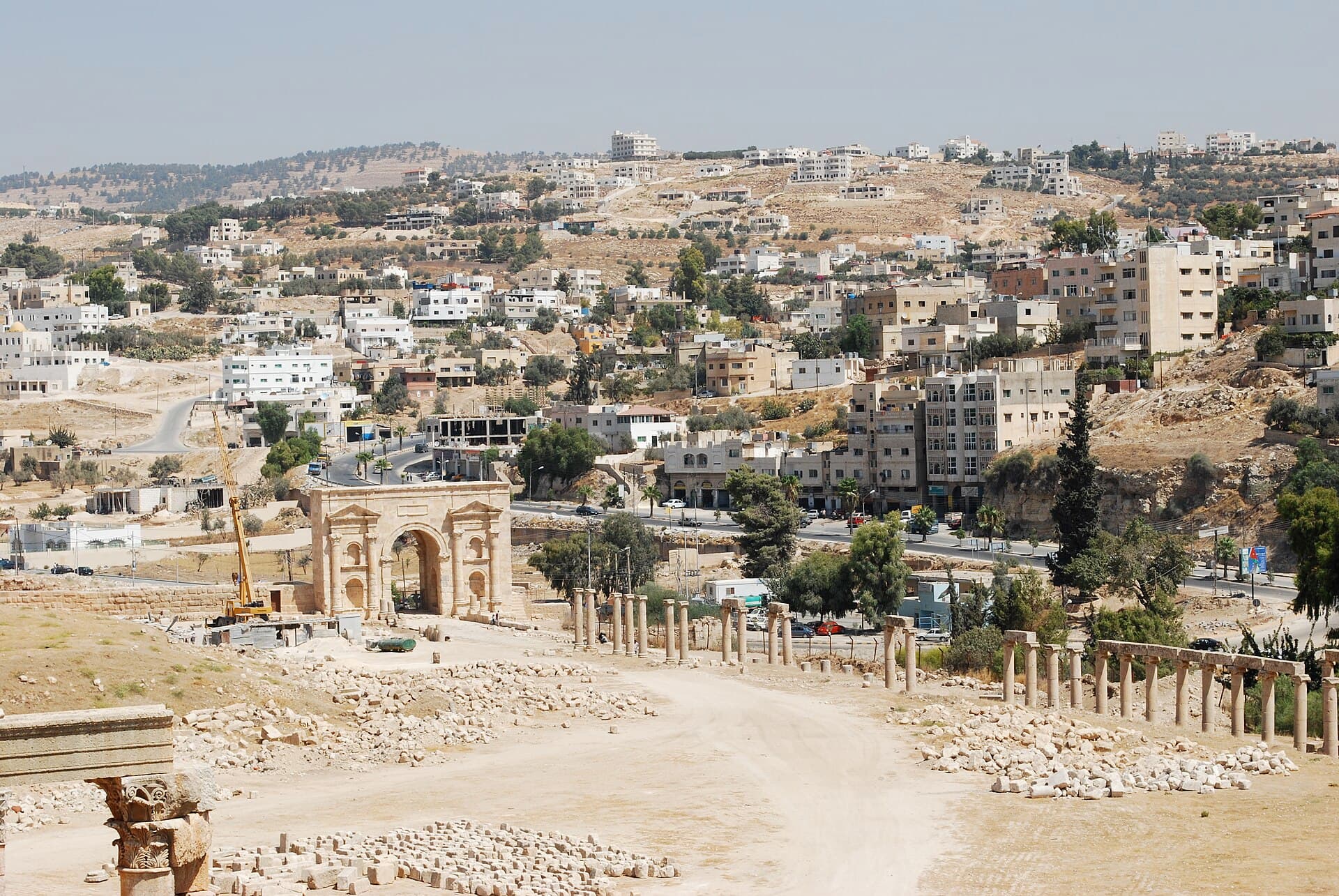 JerashOne of the most complete Roman cities surviving outside Italy, and the thing tha7 minutes walk4.7
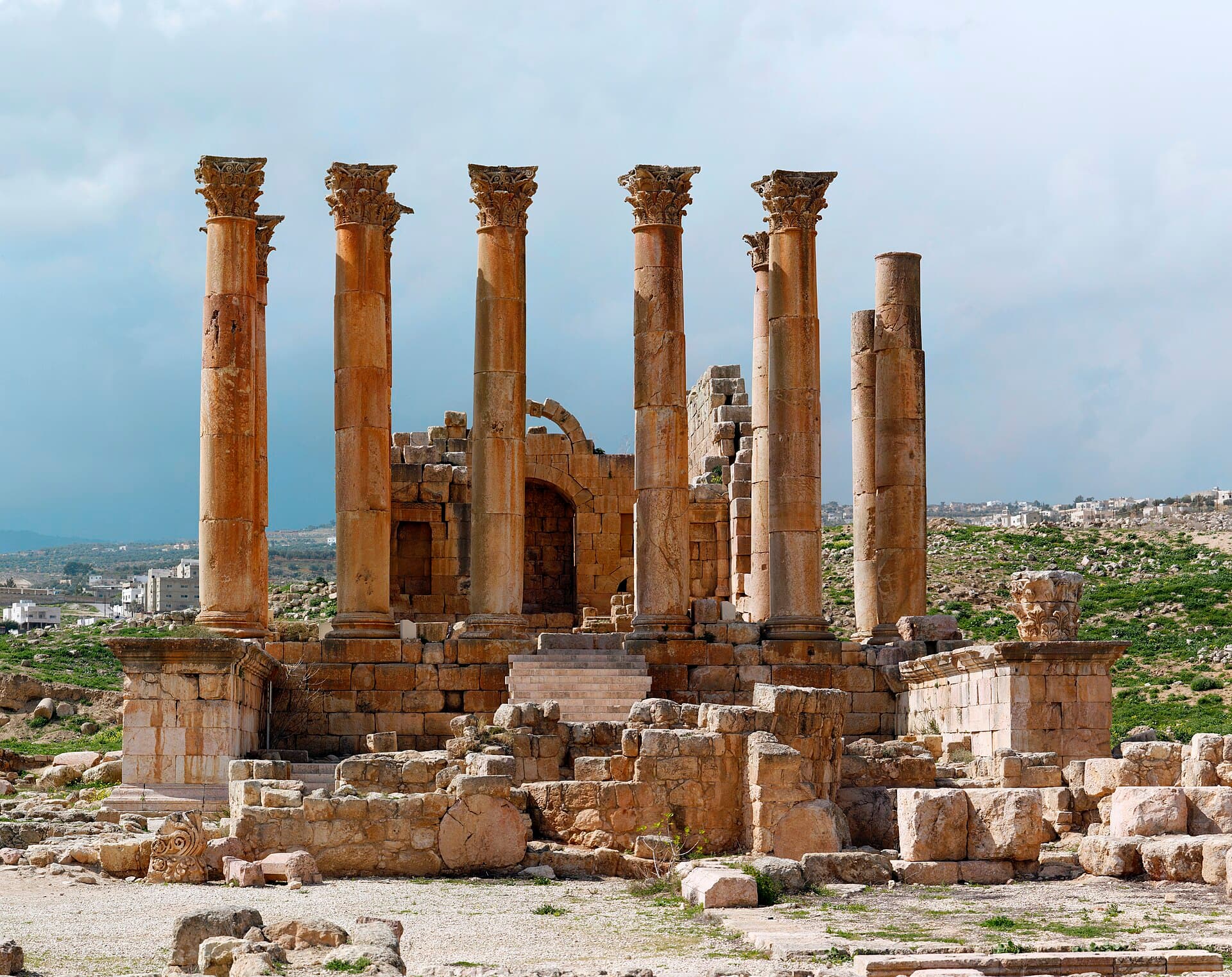 Temple of Artemis (Jerash)The temple of Artemis, patron goddess of Gerasa, built in the mid-2nd century AD7 minutes walk
Yes: the smaller North Theatre near the Temple of Artemis, which also served for city council meetings, and a third small theatre at Birketein outside the site.
Usually in summer, in July; dates and programme are announced each year.