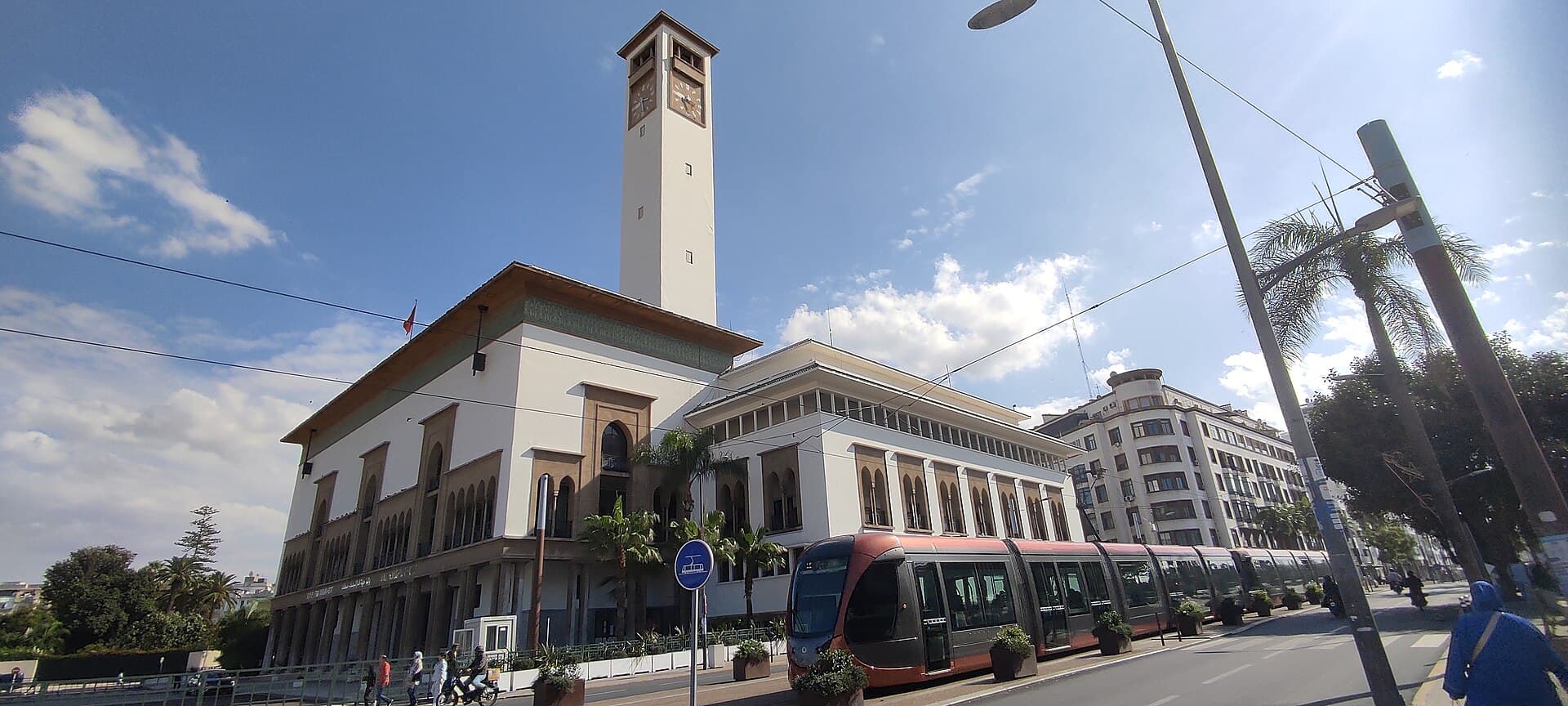
Clock tower
At the medina gate.
HombreDHojalata — CC BY-SA 3.0 · Ideophagous — CC BY-SA 4.0 · Ideophagous — CC BY-SA 4.0 · Dr. Didier Hinz — CC BY-SA 3.0 · Ilham Bakraoui — CC BY-SA 4.0 · Ideophagous — CC BY-SA 4.0 · Rais67 — CC BY-SA 4.0 · mustapha ennaimi from casablanca, maroc — CC BY 2.0
The historic core of Casablanca, the walled town near the port that came before the modern city, around which twentieth-century districts, broad boulevards and apartment blocks grew. It is smaller and simpler than the medinas of Fes and Marrakech, but it keeps an authentic everyday life away from the tourist crowds. You enter through its gates, among them Bab Marrakech, with the clock tower at its entrance, first raised at the start of the twentieth century and rebuilt in the 1990s. Inside are narrow lanes between white houses, markets for clothes, household goods and spices, and small mosques and shrines. On its seaward edge is the Sqala, an eighteenth-century bastion with bronze cannons and ramparts, part of which is now a restaurant, and nearby is a restaurant recreating the atmosphere of the famous film named after the city. From the walls there are views over the port and, in the distance, the minaret of the Hassan II Mosque. Wandering is free; it is best visited by day, keeping an eye on your belongings in the busy lanes. It lies near United Nations Square, a good starting point for a walk through the city centre.
At the medina gate.
Cannons above the sea.
Markets off the tourist trail.
Near the port and United Nations Square, Casablanca
No, it is smaller, younger and plainer, but it offers a glimpse of everyday Casablanca life before the modern city.