An organ with moving angels
In the adjoining cathedral, with short demonstrations in season.
Yanek — CC BY-SA 3.0 · kallerna — CC BY-SA 4.0 · Аимаина хикари — CC0 · Gerda Arendt — CC0
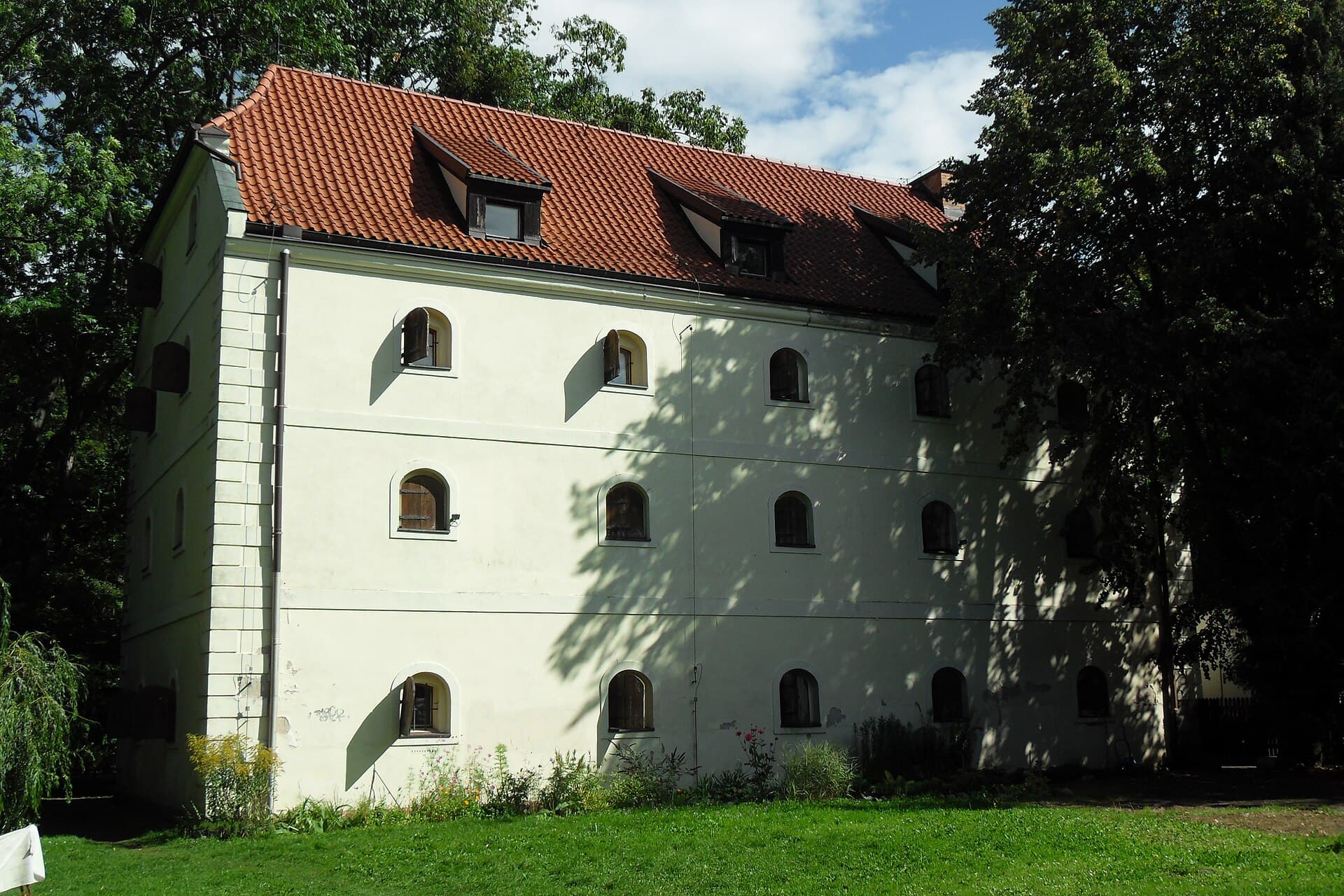
A historic park in the Oliwa district north-west of Gdańsk, originally the garden of a twelfth-century Cistercian abbey, covering some ten hectares. The design combines two manners: a formal French section with symmetrical beds, a fountain and straight axes, and a free English section with winding paths, a pond and mature trees. Holding both in one garden is unusual and worth noticing. The park holds a glass palm house with tropical plants, among them a palm more than two centuries old. Adjoining it is Oliwa Cathedral, in practice part of the visit: a long narrow church with a twin-towered front, holding an eighteenth-century baroque organ on which carved angels move while it plays. Short daily demonstrations are given in season — ask about the times. The park is free and open. Access is by suburban train from central Gdańsk in about twenty minutes, then a short walk.
In the adjoining cathedral, with short demonstrations in season.
A formal symmetrical section and a free winding one in one garden.
In the glass palm house at the centre of the park.
Oliwa district, north-west Gdańsk
Gdańsk, Sopot and Gdynia — three neighbouring cities on the Bay of Gdańsk that function in practice as one area, linked by a frequent suburban train line. Gdańsk is the historic city, Sopot a seaside resort with the longest wooden pier in Europe, and Gdynia a modern port built in the 1920s. Oliwa lies between Gdańsk and Sopot on the same line.
The train from central Gdańsk, then the cathedral first to catch an organ demonstration if it is the season, then the park and palm house. Afterwards you can take the train one stop to Sopot and walk the pier — a comfortable full day away from the old town crush.