Wooden houses
From western Georgia.
Kakhi Kuloshvili — CC BY-SA 4.0 · Kober — CC BY-SA 4.0 · DDohler — CC BY 2.0 · DDohler — CC BY 2.0 · DDohler — CC BY 2.0 · DDohler — CC BY 2.0 · Jonathan Cardy — CC BY-SA 3.0 · Surprizi — Public domain
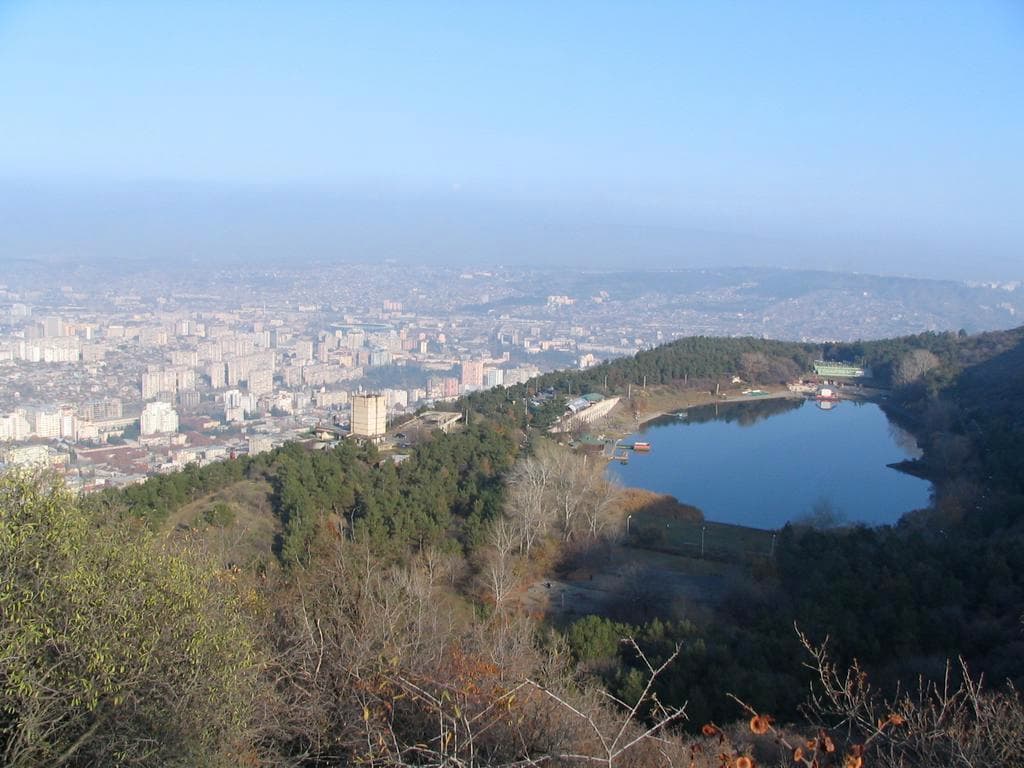
An open-air museum named after the Georgian ethnographer Giorgi Chitaia, who founded it in 1966, on a hill west of Turtle Lake overlooking the Vake district. It is essentially a historic village assembled from buildings moved here from every part of Georgia, and since 2004 it has been part of the Georgian National Museum. It spreads over fifty-two hectares in eleven zones, with around seventy buildings and more than eight thousand objects. Among them are flat-roofed stone houses from eastern Georgia, carved wooden houses from the west, watchtowers from the mountain regions, wineries from Kakheti and water mills. Inside the houses are the tools of traditional daily life, such as spindles, looms, clothes, carpets, pottery and furniture, and the museum also holds an early Christian basilica and a family burial vault from the sixth to seventh century. Each summer it hosts a folk culture festival with music and crafts. Entry is by ticket; it usually opens Tuesday to Sunday from 10 am to 6 pm, and prices have changed in recent years, so check before you go. The site is a large hillside with sloping paths, so wear comfortable shoes; it pairs well with Turtle Lake.
From western Georgia.
From Kakheti.
From the mountains.
Tortila road west of Turtle Lake, above Vake, Tbilisi
Yes, it is a large green space where visitors wander between traditional houses, but the paths are sloping, so wear comfortable shoes.