
Wooden houses
White with balconies.
Sharmil2672 — CC BY-SA 4.0 · Dan Sloan — CC BY-SA 2.0 · Rob Oo from NL — CC BY 2.0 · Sharmil2672 — CC BY-SA 4.0 · Sharmil2672 — CC BY-SA 4.0 · Dan Sloan — CC BY-SA 2.0
The Waterkant is a riverside street on the Suriname River in central Paramaribo, lined with white wooden colonial houses with balconies and red roofs. It is part of the Historic Inner City, a UNESCO World Heritage Site since 2002. The city is named after the Paramaribo people who lived at the river mouth, the name meaning dwellers of the great river. The Dutch set up a trading post here in 1613, and English settlers built a town protected by a fort in 1650. Today more than 250,000 people live in the city, about half the country's population. You walk the waterfront among wooden houses and trees, with colourful fishing boats on the bank. Close by is the wide Independence Square, with the white Presidential Palace, its wooden balconies and the national coat of arms on its front. In the lanes around are wooden buildings in Dutch style. The Waterkant is in central Paramaribo, 700 m from Fort Zeelandia. Walking is free. UK advice warns of pickpocketing and robbery in busy shopping areas and in the Palm Garden behind the palace. Keep your belongings safe in busy streets and do not walk alone in quiet spots.
White with balconies.
On Independence Square.
Painted boats.
Waterkant and Independence Square, central Paramaribo
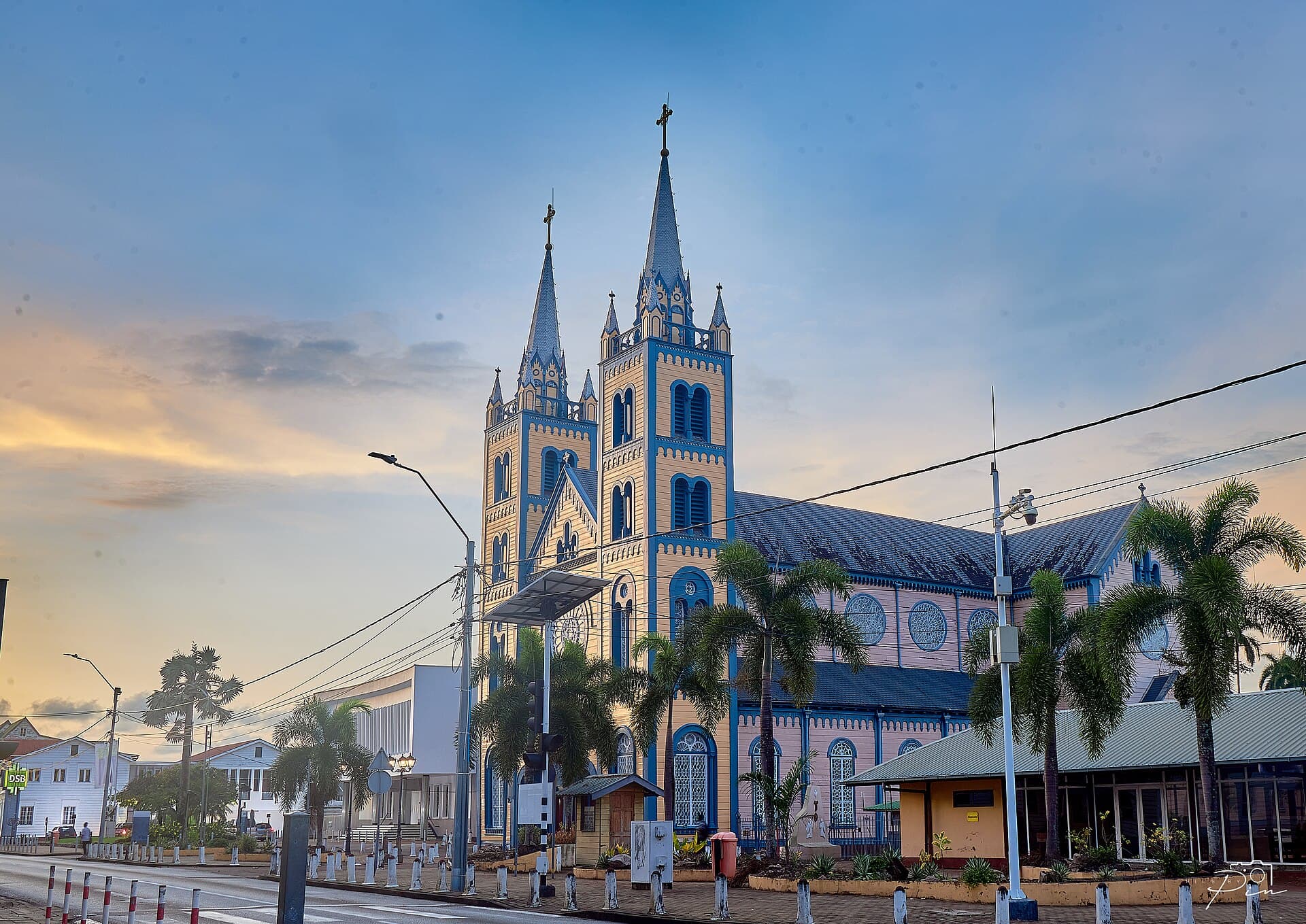 Saints Peter and Paul CathedralSaints Peter and Paul Cathedral is a large wooden church in central Paramaribo. 6 minutes walk
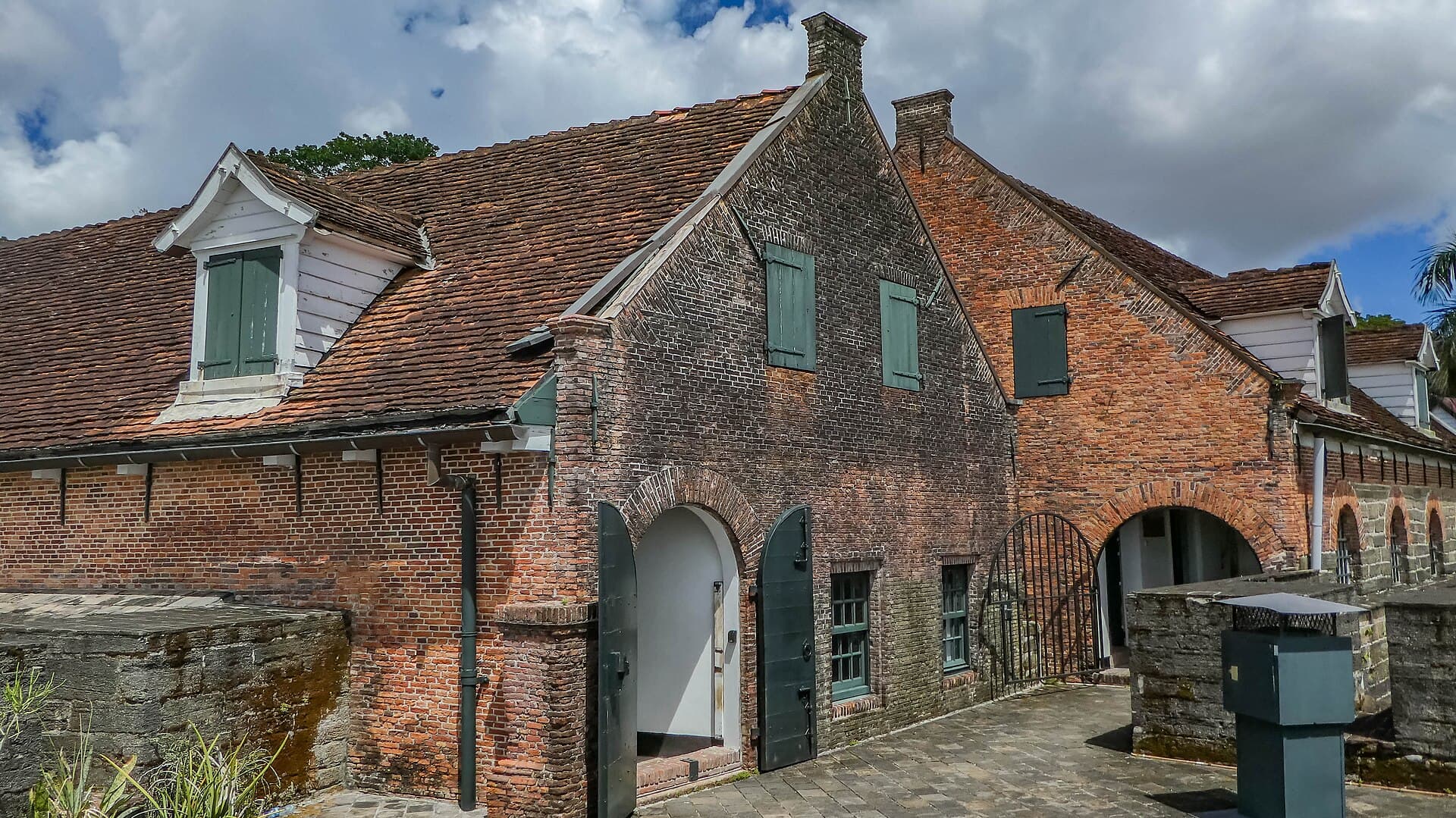 Fort ZeelandiaFort Zeelandia is a small fortress of stone and red brick on the bank of the Sur8 minutes walk
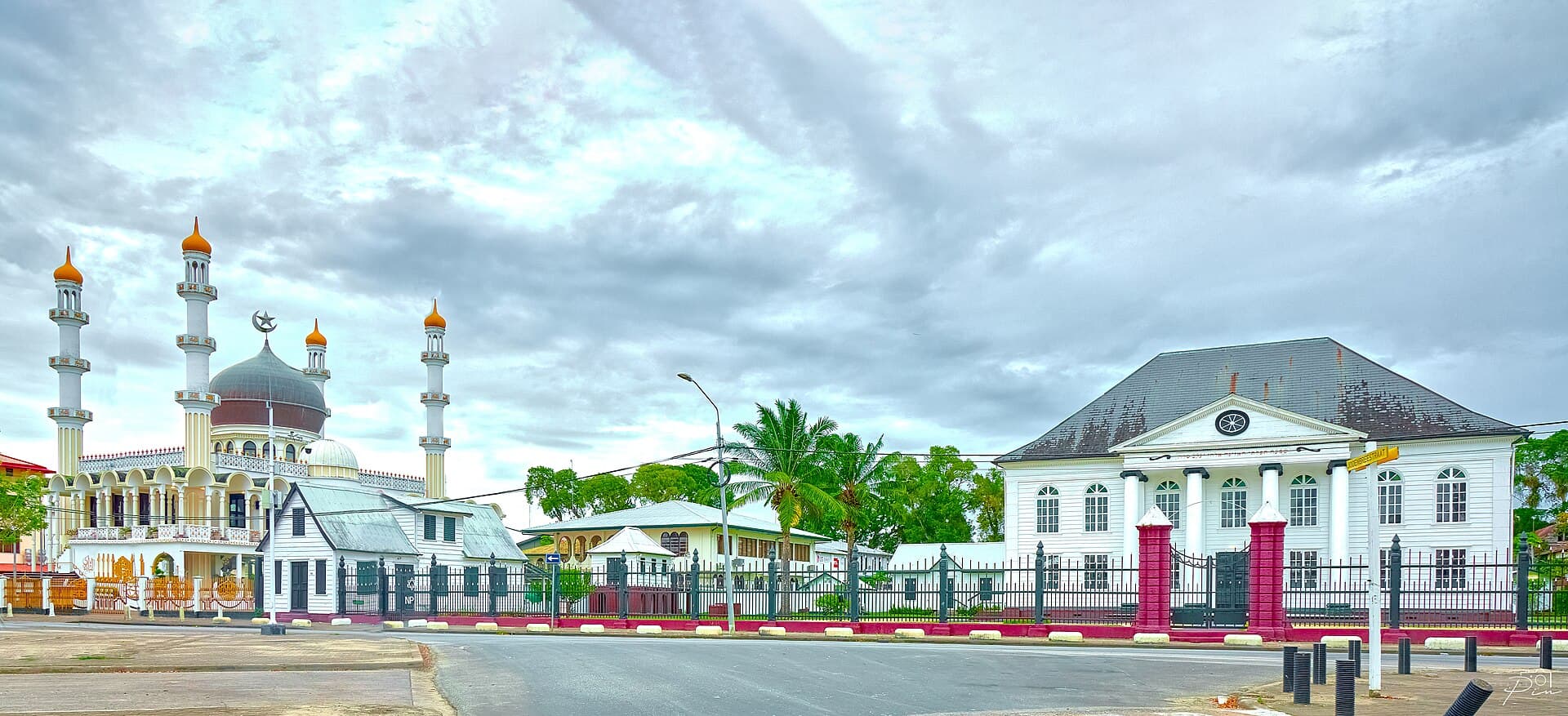 Synagogue and Mosque on KeizerstraatOn Keizerstraat in central Paramaribo, the Neveh Shalom Synagogue and the Keizer8 minutes walk
Yes by day with care; avoid quiet spots.
Fort Zeelandia is 700 m away.