The Kastro wall
Temple column drums laid horizontally into the castle's masonry.
Olaf Tausch — CC BY 3.0 · Zde — CC BY-SA 4.0 · Jean Housen — CC BY-SA 4.0 · Holger Uwe Schmitt — CC BY-SA 4.0
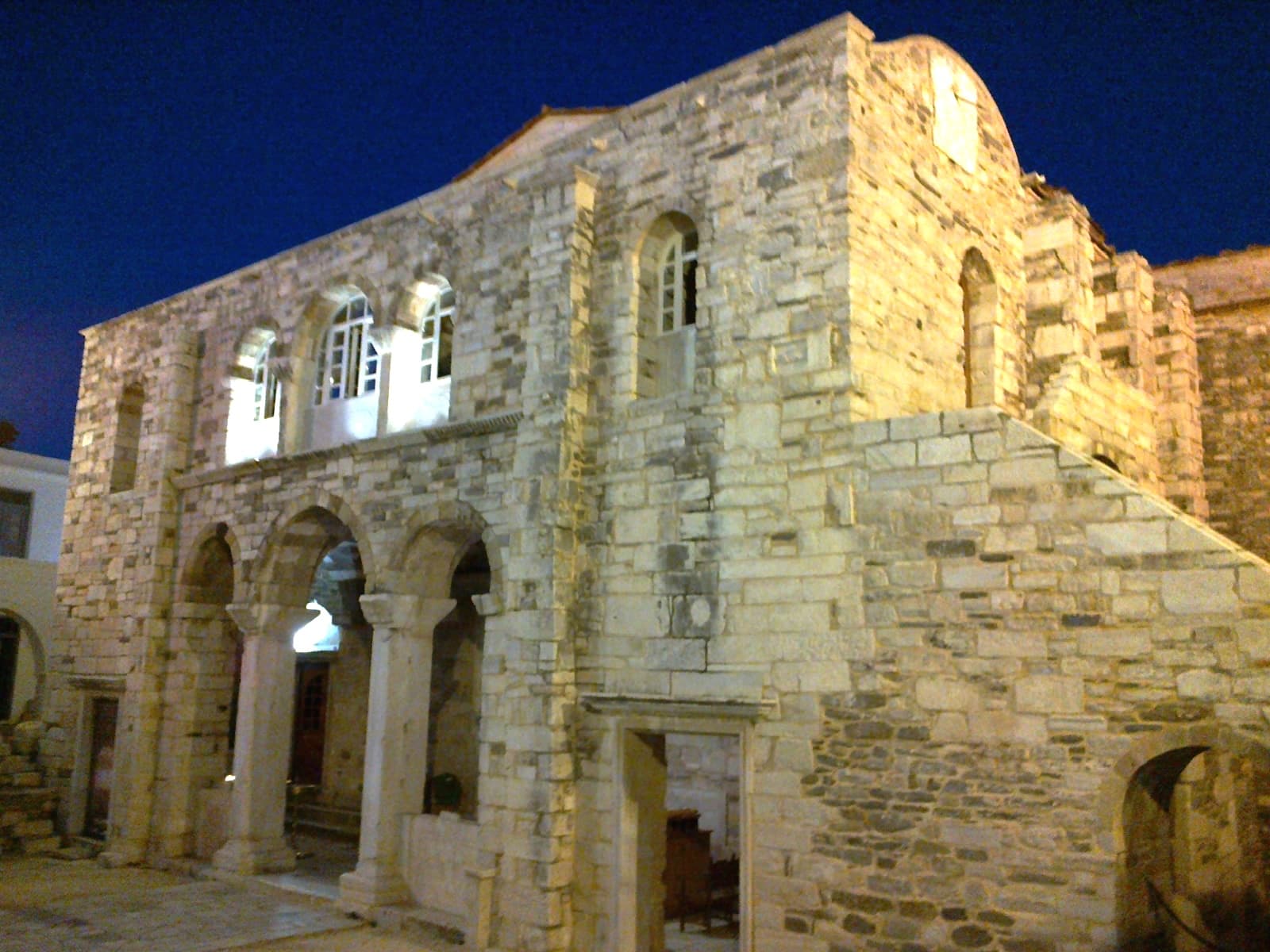
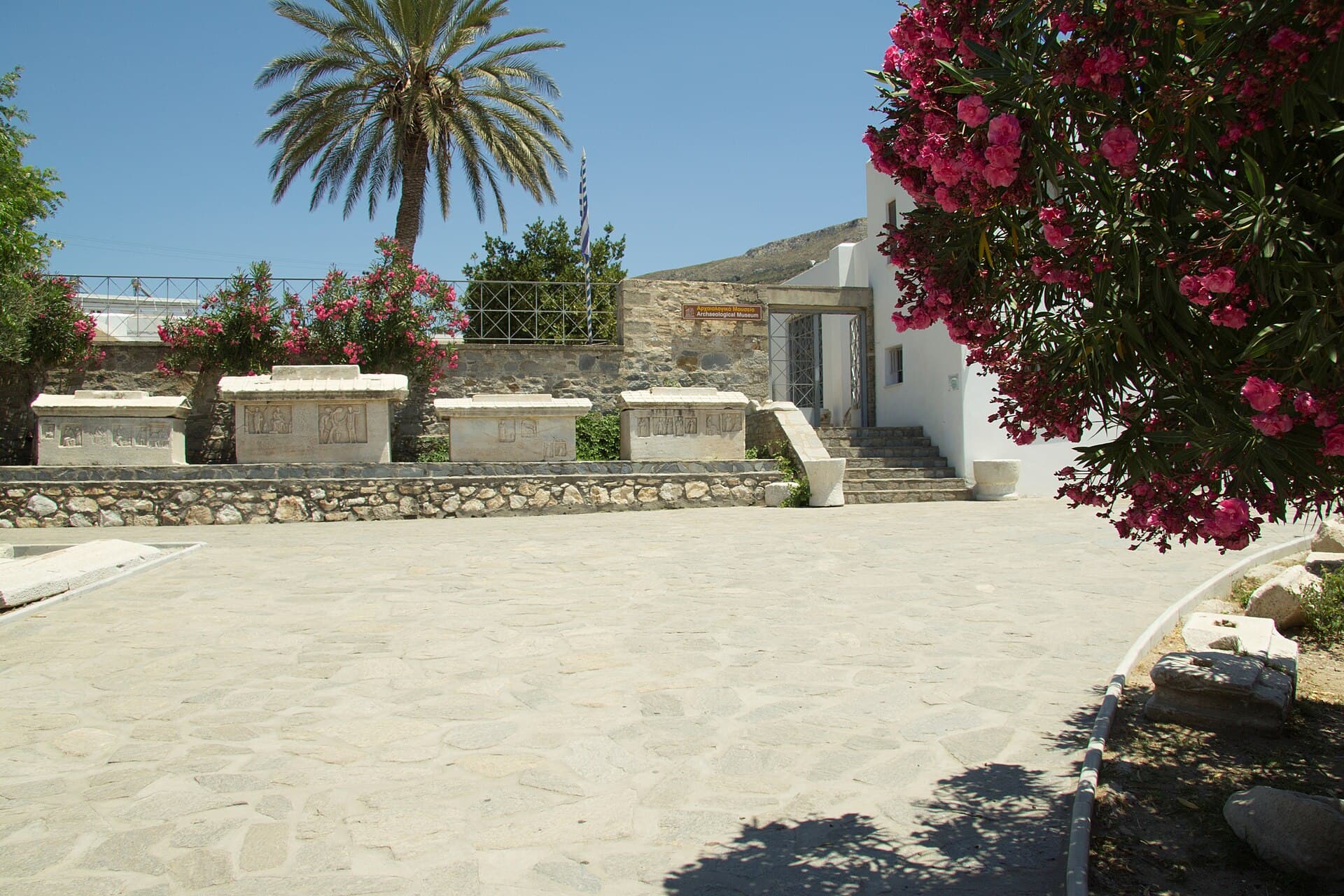
**The capital and main port of Paros** — and one of the first things you notice off the ferry is that it is **a real town**, not a tourist front. Behind the busy seafront runs an **old town** of white paved lanes, their paving edges picked out in white lines — a genuine Cycladic habit: the joints are limewashed each year, so the alleys appear drawn in outline. At the top is the **Kastro**: a 13th-century Venetian castle built — and this is the striking part — **from the stone of an ancient Greek temple**: in its wall you see **marble column drums** laid horizontally like bricks, and carved blocks reused. It is the clearest example in the Cyclades of a temple recycled into a fortress. The town also holds **Panagia Ekatontapiliani**, the **Archaeological Museum** and ancient cemeteries. ⚠ Its seafront is **loud and crowded** — the old town behind it is far quieter.
Temple column drums laid horizontally into the castle's masonry.
White paving with limewashed joints through the old town.
A white windmill that has become Parikia's landmark on arrival.
Parikia, 84400 Paros, Greece
**Because it was the fastest and cheapest way — and it was entirely normal in its time.** ✅ **The practical logic**: building a fortress needs **large, squared, cut blocks**. Quarrying and transporting stone takes years and money. **An abandoned temple nearby is a ready-made store**: precisely cut blocks, solid column drums, marble to hand. So it was used as it stood. ✅ **The archaeological term is *spolia*** — reusing older architectural elements in new construction, and it was a **very common practice** across the Mediterranean: you see it in the churches of Rome, the mosques of Anatolia and the castles of the islands. ✅ **Sometimes it carried a symbolic meaning too**: using a pagan temple's stone in a Christian building or a fortress announced the new order's victory over the old. ⚠ **At Parikia it is unusually visible**: **the column drums are laid horizontally in the wall**, so you see them from the street with no explanation needed — which is what makes this Kastro a textbook example.
**Naxos for landscape and interior, Paros for connections and life — and many people do both, since they are 45 minutes apart by ferry.** ✅ **Paros** is the **Cyclades ferry hub** — with routes to almost every island, making it **the easiest logistically** and an ideal base for island-hopping. Its two towns, **Parikia** and **Naoussa**, have evening life and a wider choice of restaurants, its beaches are good, and the island is **small enough to cover easily**. ⚠ Its drawbacks: **busier and more touristy**, with no mountainous interior to speak of. ✅ **Naxos** is **larger, more fertile and more varied** — mountains, marble villages, temples and the best sandy beaches in the Cyclades, at lower prices, with a genuine farming life. ⚠ Its drawbacks: **quieter evenings** and fewer ferry routes. ✅ **The rule**: a week on one island with children or a car → **Naxos**. Hopping between several islands, or a short trip → **Paros**. ✅ **The best answer**: **both** — the ferry between them is short and frequent.