
Top terrace
Avenue views.
Gerd Eichmann — CC BY-SA 4.0 · Severu — CC BY-SA 4.0 · taylorandayumi — CC BY 2.0 · gary4now — CC BY 3.0
The Victory Gate, a huge monument built between 1957 and 1968 at the end of the capital's widest avenue in honour of those who fought for independence from France. It is nicknamed Vientiane's Arc de Triomphe for its likeness to the Paris arch, but its decoration is wholly Lao, with mythical creatures and towers shaped like Buddhist stupas. The ceiling under the arch is decorated with coloured reliefs of gods and mythical beings from the old epics. Inner stairs climb through floors of souvenir stalls to the top terrace, which looks down Lane Xang Avenue to the presidential palace and over the city's low green roofs. Lao people like to say, with a smile, that it was built with cement the United States donated for an airport runway, earning it the nickname the vertical runway. A broad park with a large fountain and flowerbeds surrounds it, popular in the evening. A small fee at the entrance; sources differ on the amount. March to May is very hot, so early morning or late afternoon is best.
Avenue views.
Coloured reliefs.
A big fountain.
End of Lane Xang Avenue, central Vientiane
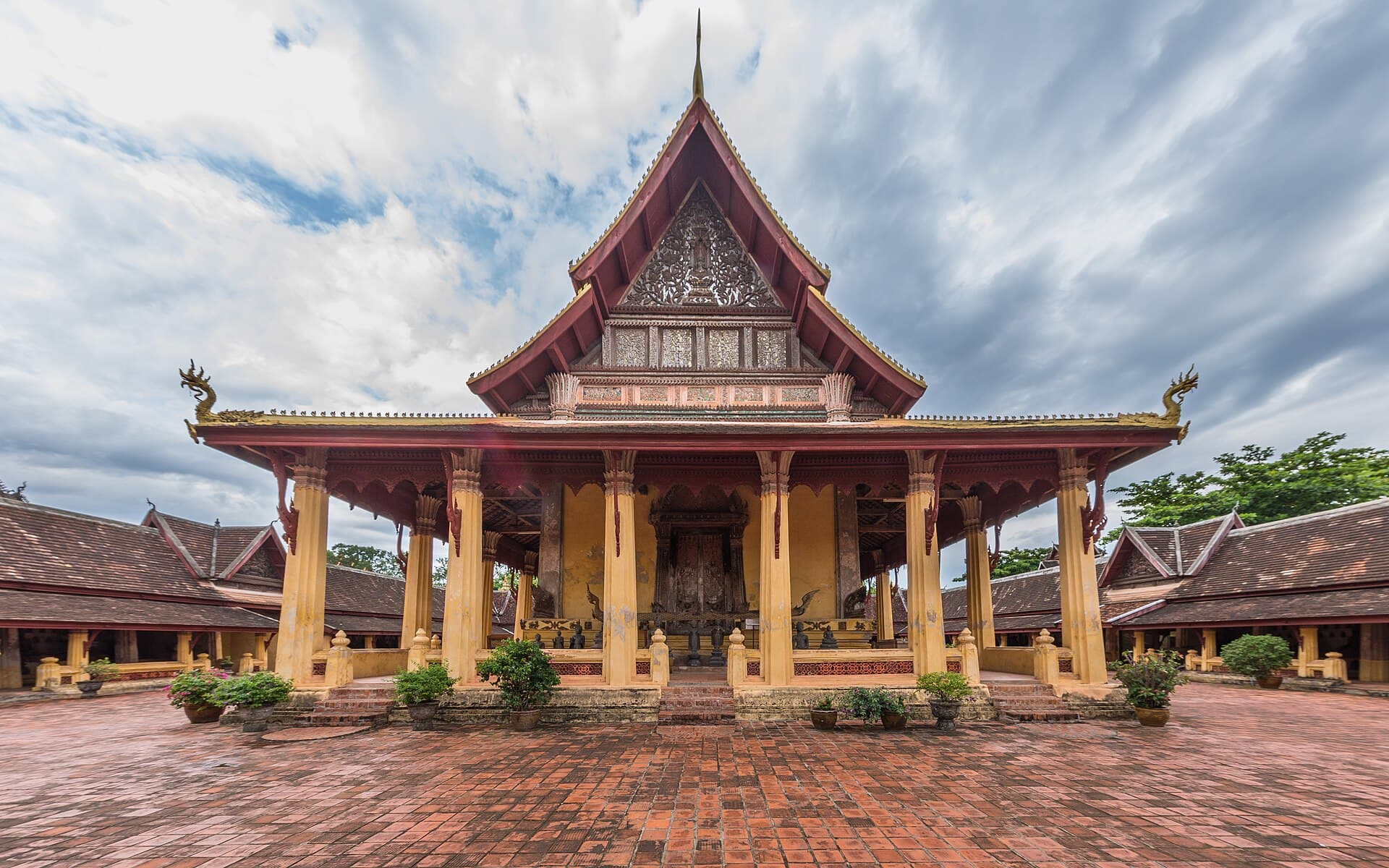 Wat Si SaketVientiane's oldest surviving temple, built by King Anouvong in 1818 in the style14 minutes walk4.5
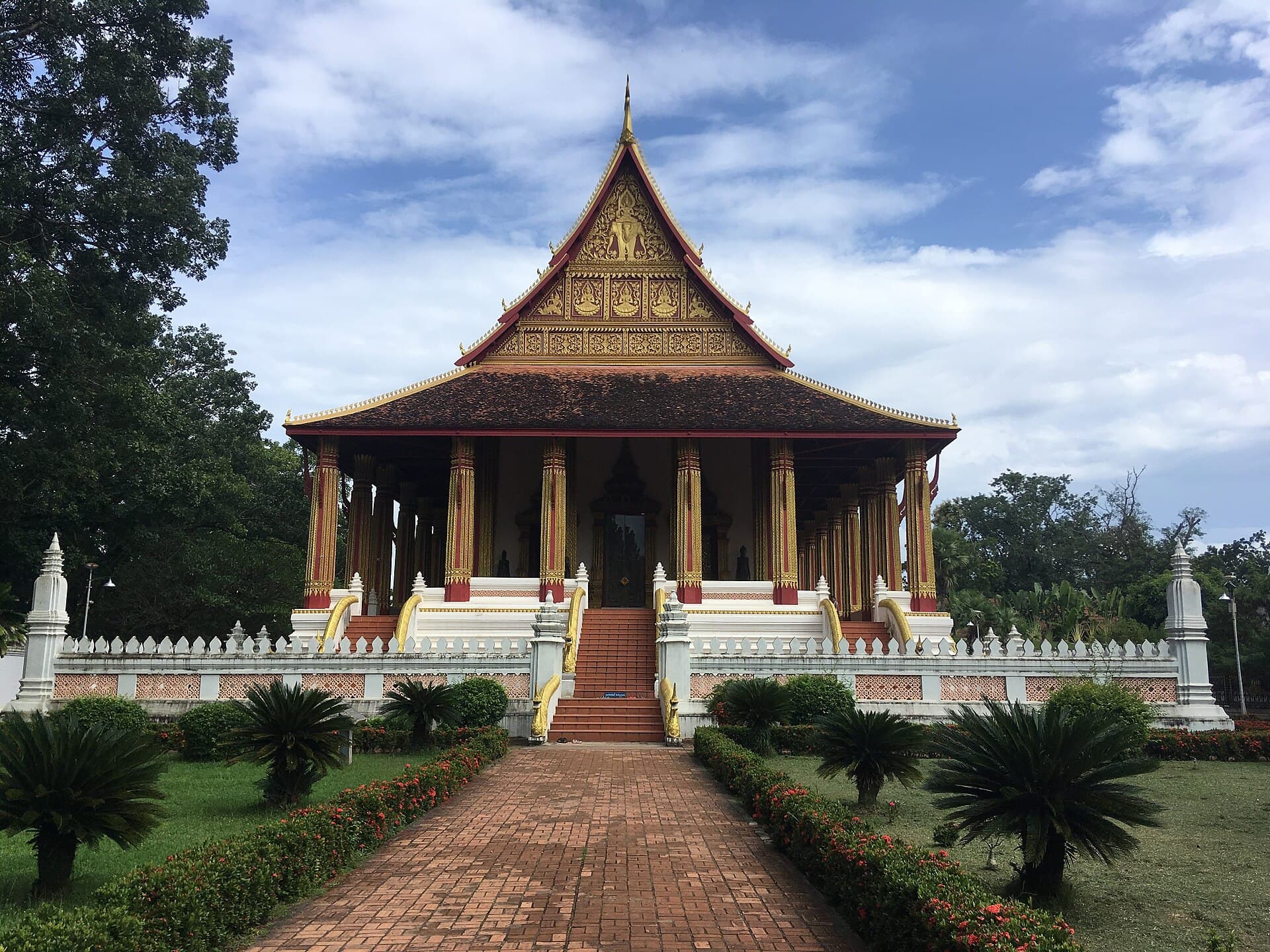 Haw Phra KaewA former royal temple built by King Setthathirath in 1565-1566, after he moved t15 minutes walk4.4
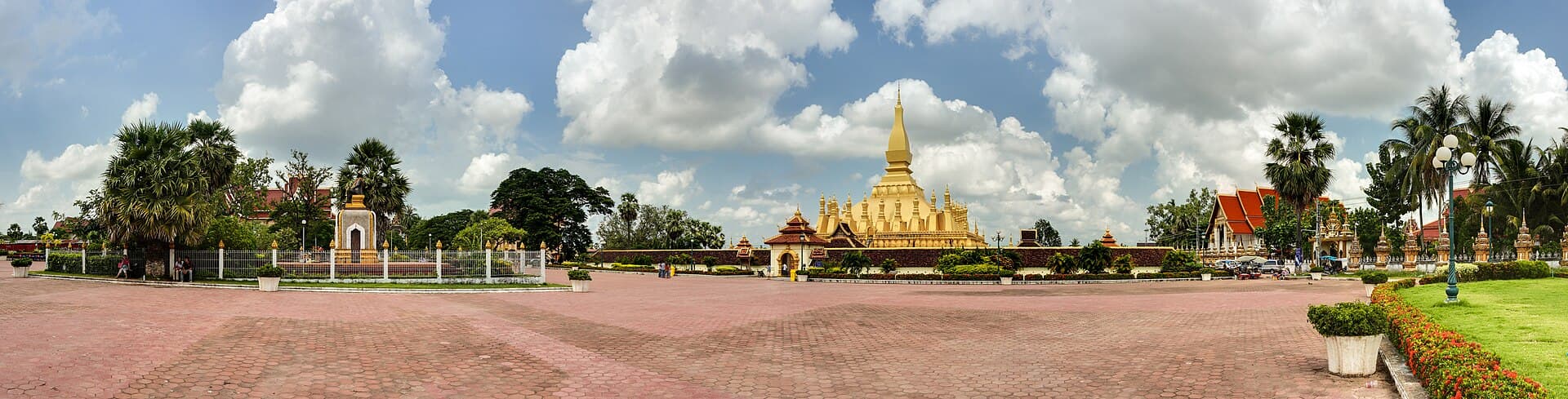 Pha That LuangThe great golden stupa that is the national symbol of Laos, shown on the state s25 minutes walk4.4
The popular story says it was built with US-donated cement meant for an airport runway, used for the monument instead.