The cloister
Rows of niches.
Basile Morin — CC BY-SA 4.0 · Basile Morin — CC BY-SA 4.0 · Philip Nalangan — CC BY 4.0 · Philip Nalangan — CC BY 4.0
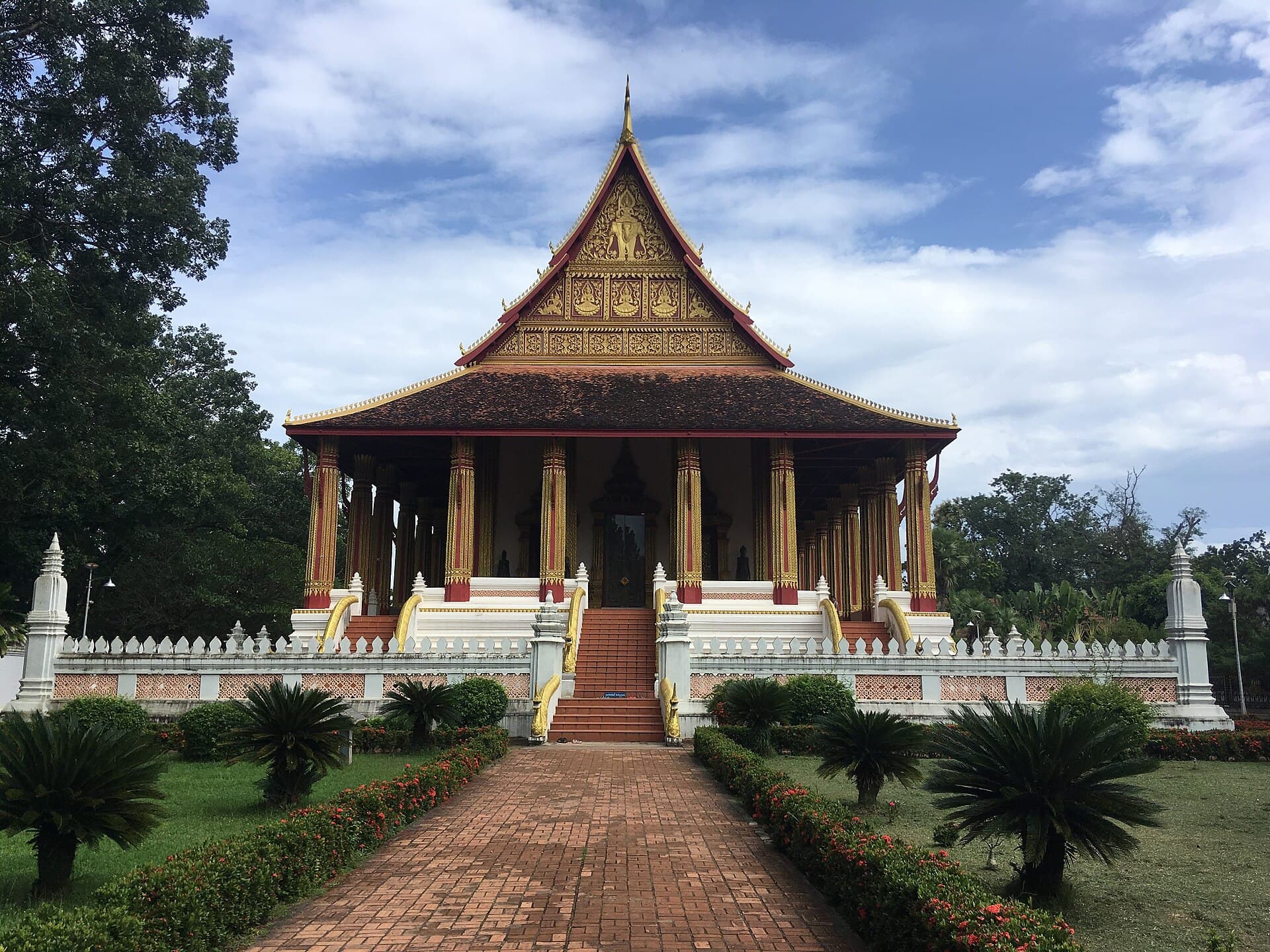
Vientiane's oldest surviving temple, built by King Anouvong in 1818 in the style of its day, with a surrounding terrace and an ornate five-tiered roof. It is said to be the only temple spared when the Siamese army sacked the city a decade later, perhaps because its style was close to Bangkok's temples. Its loveliest feature is the cloister around the main hall: walls filled with thousands of small niches, each holding a small ceramic or silver figure, lined up in neat rows in the shade of wooden pillars, so the gallery looks like a calm stone honeycomb. The main hall has heavy wooden pillars and tiered roofs, with faded old murals inside. The temple is now a small museum, its courtyard quiet under frangipani trees, a few steps from Haw Phra Kaew. A small fee at the entrance; sources differ on the amount. Temples are living places of worship: cover shoulders and knees and take off shoes before entering halls.
Rows of niches.
Five tiers.
Quiet shade.
Corner of Lane Xang Avenue and Setthathirath Road, central Vientiane
It is Vientiane's oldest surviving temple, spared when the city was sacked in the 19th century, with a cloister of thousands of niches.