
The circling arcades
237 balconies and four centuries over one continuous portico.
Draceane — CC BY-SA 4.0 · Gómez de Mora, Juan, 1586-1648, architect — Public domain · Javier Perez Montes — CC BY-SA 4.0 · FrDr — CC BY-SA 4.0
The Plaza Mayor has been Madrid's reception room for four centuries: a majestic enclosed rectangle of uniform red buildings under slate spires, whose 237 balconies watched coronations, duels, inquisition trials and markets — all of Spain's history has crossed this one square. Today it is an open theatre: painters and living statues beneath the arcades, Philip III on horseback at the centre, the painted Casa de la Panadería frescoes on the north face. Its ring of cafés is a known, accepted tourist trap — coffee here buys a theatre seat, not a drink. Old Madrid radiates from it: the Arco de Cuchilleros drops to the world's oldest restaurants, the glass San Miguel market is steps away, and Calle Mayor runs on to the Royal Palace — making it kilometre zero of every walking day.
237 balconies and four centuries over one continuous portico.
A fully painted façade — Spain's finest square mural.
The arch steps drop to cellar taverns and the world's oldest restaurants.
Plaza Mayor, 28012 Madrid
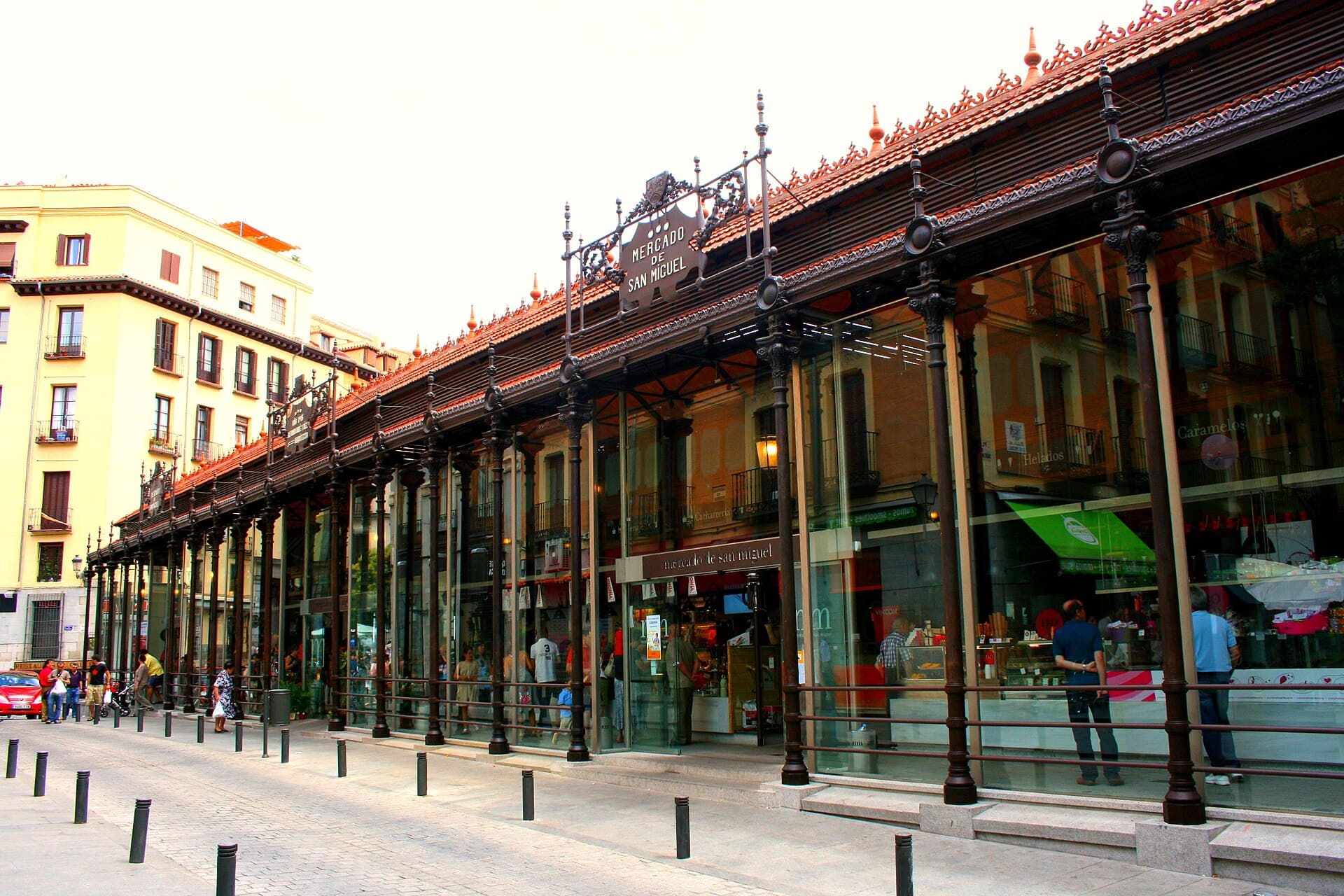 Mercado de San MiguelAn iron and glass market hall directly beside the Plaza Mayor, built at the star2 minutes walk4.5
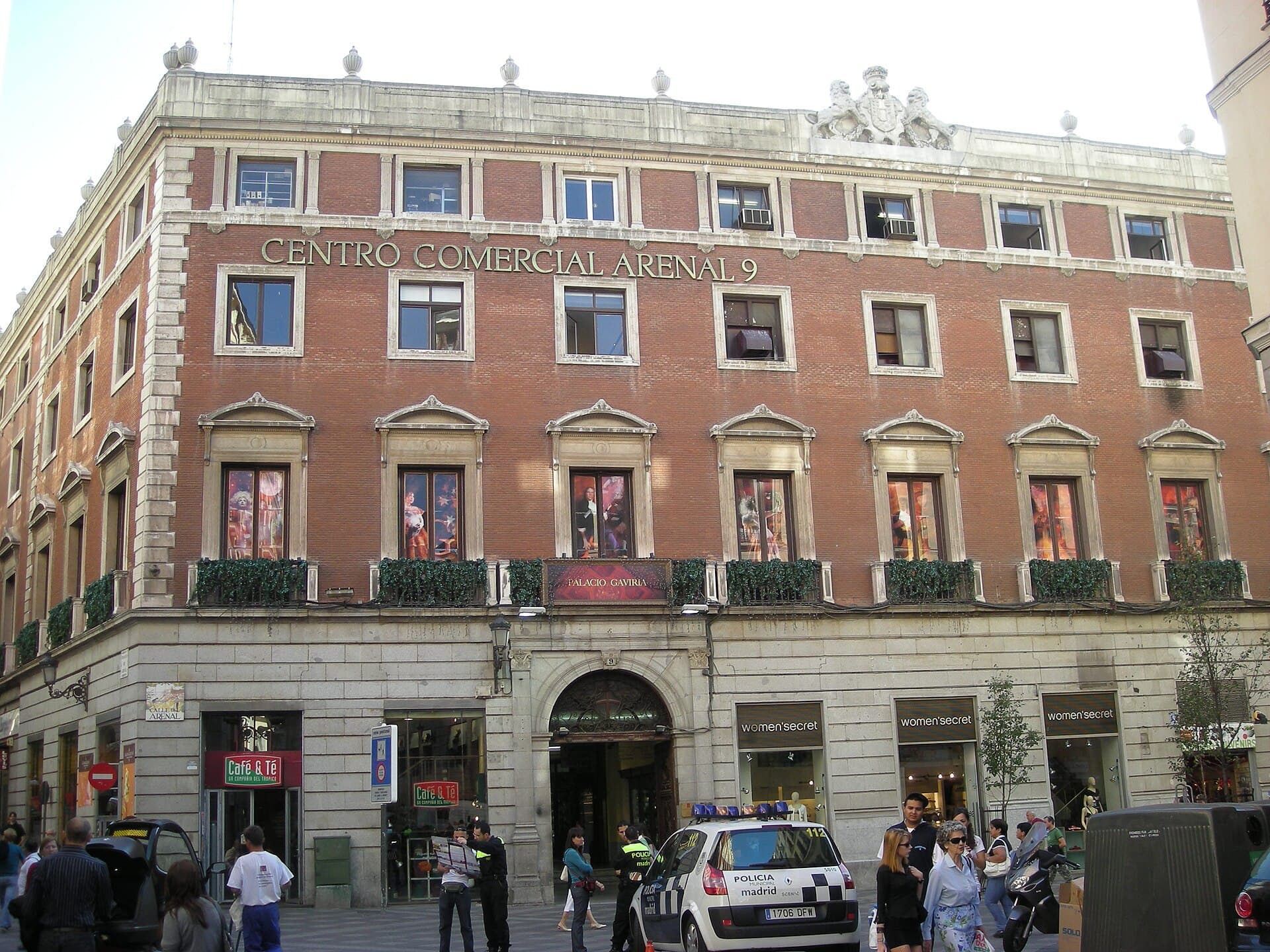 Palacio de GaviriaPalacio de Gaviria is a mid-19th-century mansion built for a wealthy banker on C3 minutes walk4.4
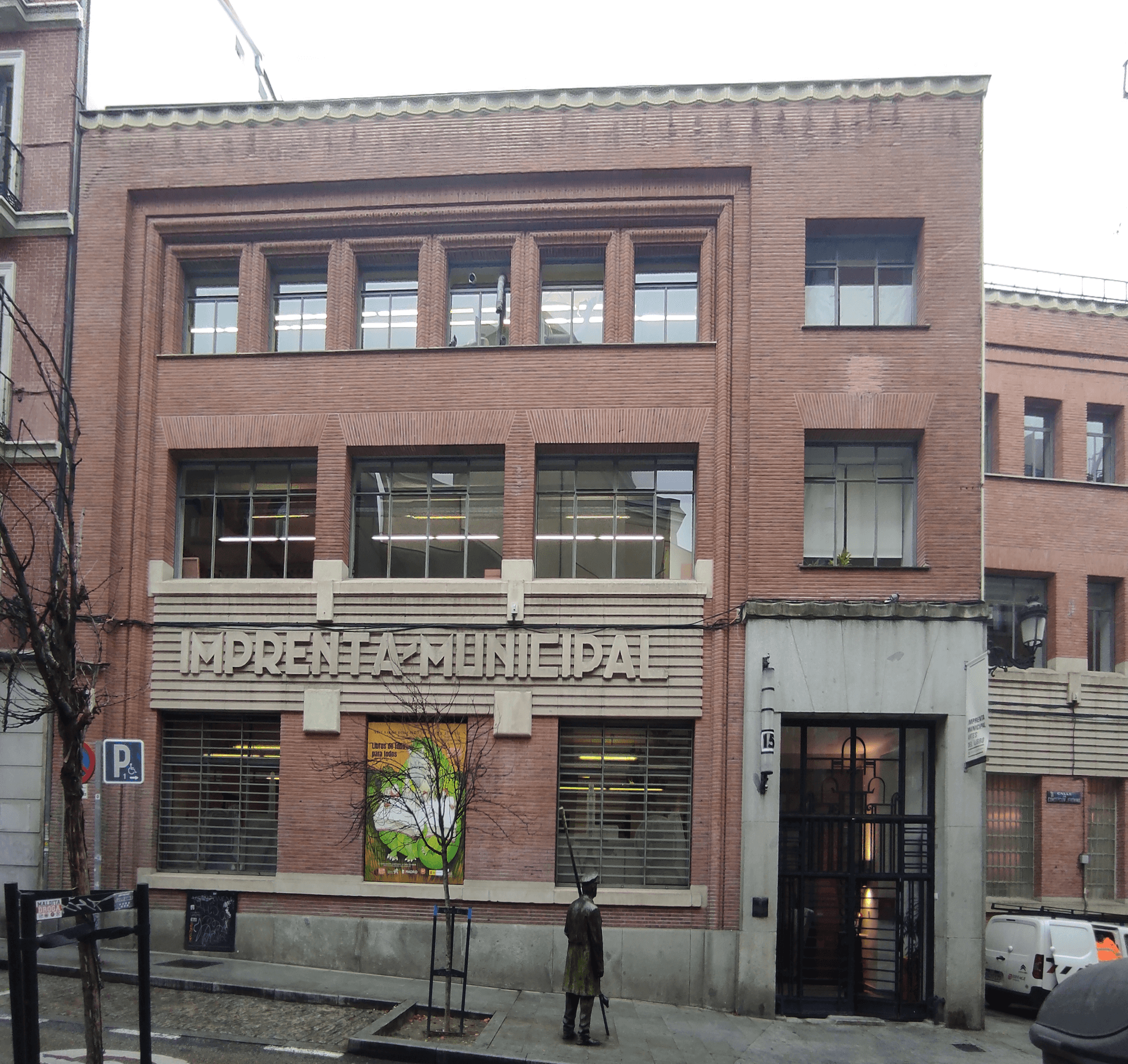 Imprenta Municipal, Artes del LibroA small city-run museum devoted to the history of printing and bookmaking, in th3 minutes walk4.5
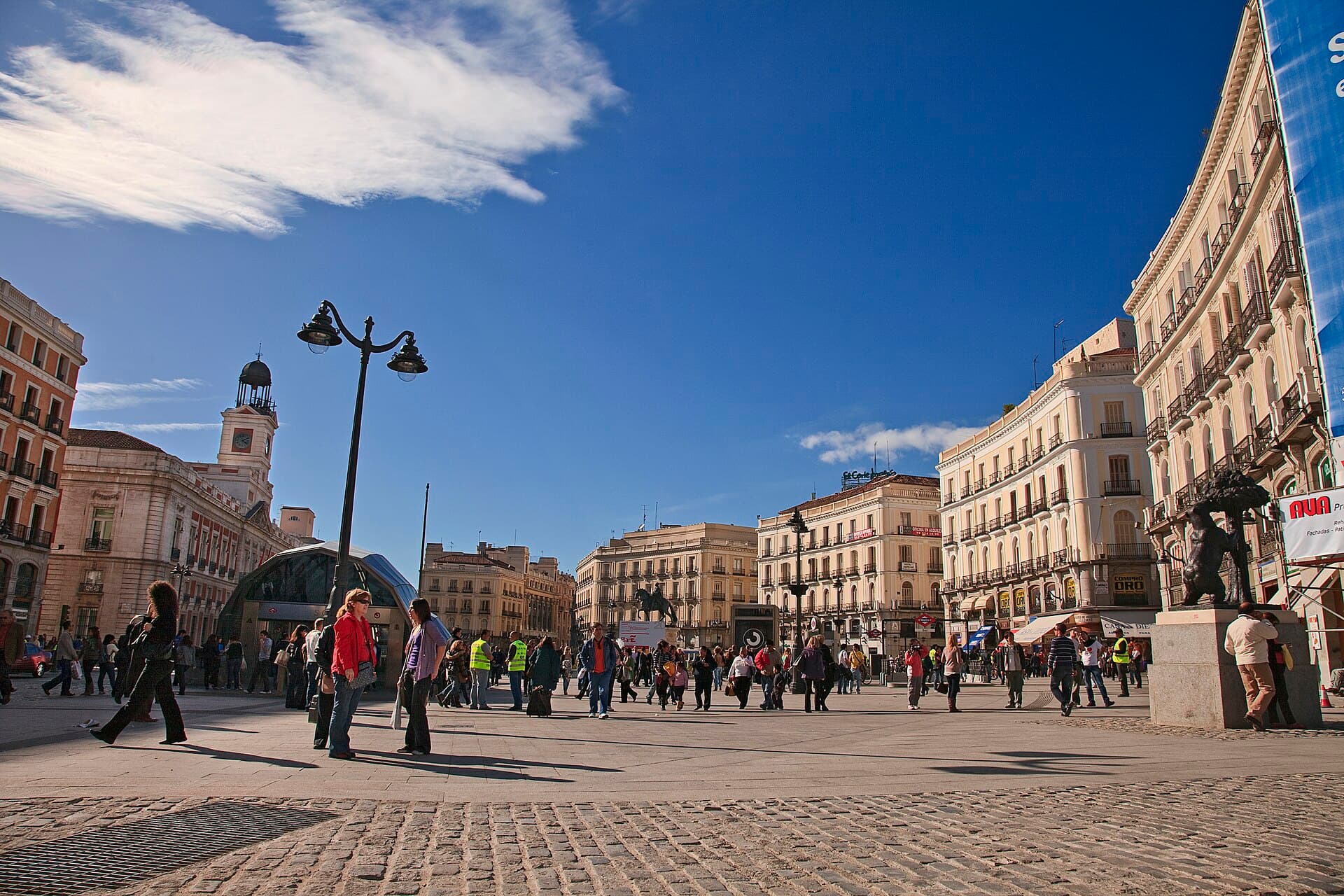 Puerta del SolThe Puerta del Sol is Spain's literal point zero: the Kilometre Zero plaque befo5 minutes walk4.7
 Museo de San IsidroA small city museum in the old quarter, on the plot where tradition says San Isi6 minutes walk4.7
Exit any arch: San Miguel market for elegant grazing (packed but worthy), and Cava Baja with La Latina behind the arch for Madrid's truest tapas. Inside the square, only drink.
Botín below the square holds the Guinness title (1725) with its original ovens — its signature being roast suckling pig, so halal-conscious visitors should know the symbolism outweighs the table: a doorway glance at the ancient oven suffices.
Early morning is yours alone for photos, evening for the living theatre. December turns it into the venerable Christmas market of 1860 — its most crowded and warmest-spirited hour.