
The clamp holes
Visible in the stone where the iron was prised out in the Middle Ages.
Thomas Wolf, www.foto-tw.de — CC BY-SA 3.0 de · Virtual-Pano — CC BY 4.0 · Virtual-Pano — CC BY-SA 4.0 · Pudelek (Marcin Szala) — CC BY-SA 3.0
**The largest surviving Roman city gate north of the Alps**, and the greatest Roman monument in Germany: a block of sandstone **30 metres** high and 36 wide, built around **AD 170**. It was built **without mortar**: the stone blocks — some weighing six tonnes — are held together by iron clamps alone. That caused a later problem: in the Middle Ages many of the clamps were prised out for the value of their iron, and the holes are still visible in the stone. Its name, «the black gate», is medieval and comes from the pale sandstone having darkened with age. Note: the reason it survives is the irony of it. In the eleventh century a Greek hermit monk named **Simeon** lived inside it, and after his death the gate was converted into **two churches stacked one above the other** in his honour. Trier''s other Roman gates were dismantled and their stone re-used; this one survived because it had become sacred. Then in 1802 **Napoleon** ordered the church additions stripped away and the gate returned to its Roman form — with part of the church apse deliberately left as evidence of that phase. Note: you can climb its levels and walk its galleries.
Visible in the stone where the iron was prised out in the Middle Ages.
Part of the church deliberately left as evidence of the conversion.
Climbable and walkable above the square.
Porta-Nigra-Platz, Trier
 Basilica of ConstantineThe throne hall of the emperor **Constantine**, built around **AD 310** — and **9 minutes walk4.4
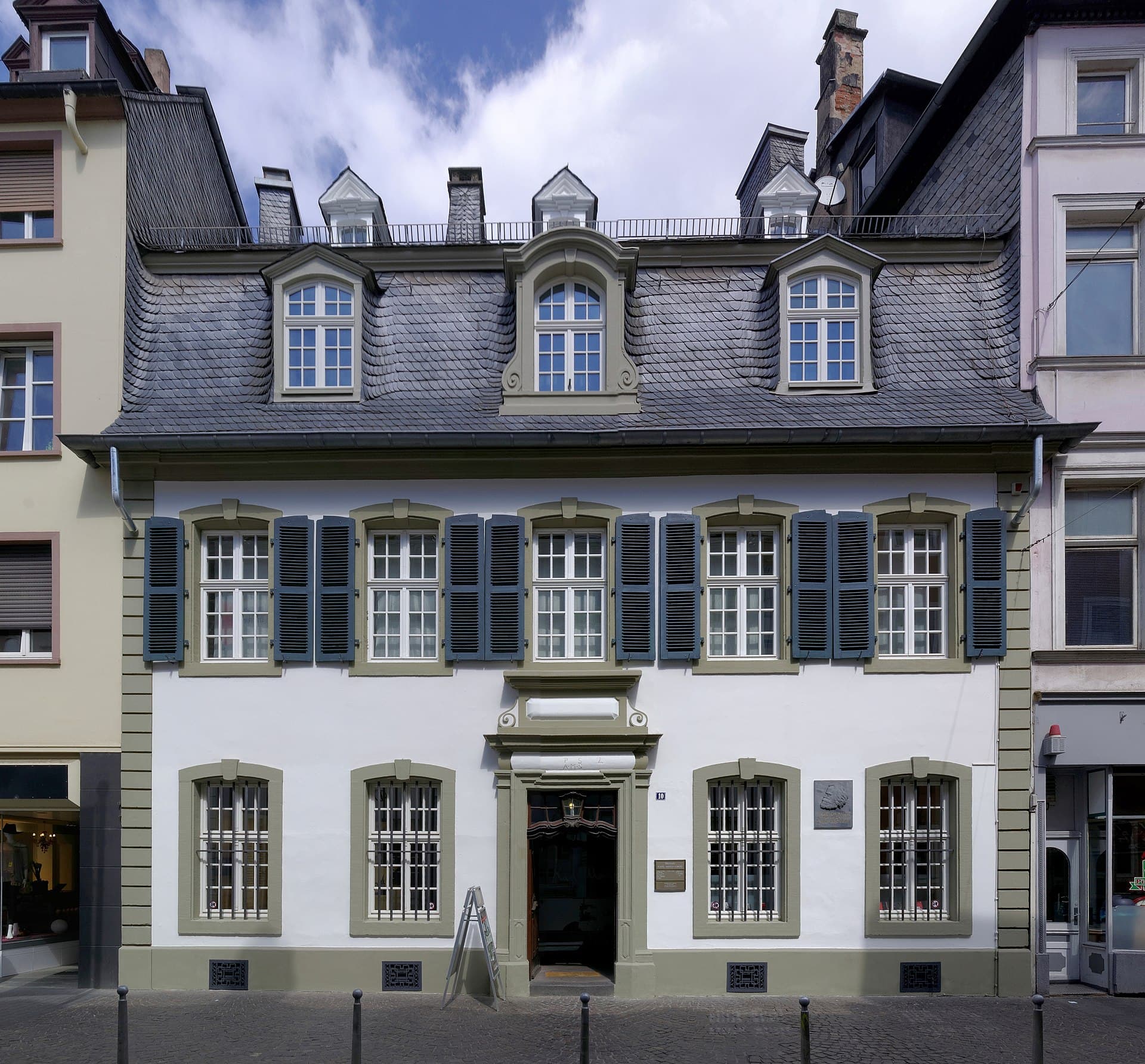 Karl Marx HouseThe house in which **Karl Marx was born** in **1818**, an eighteenth-century bar11 minutes walk4.4
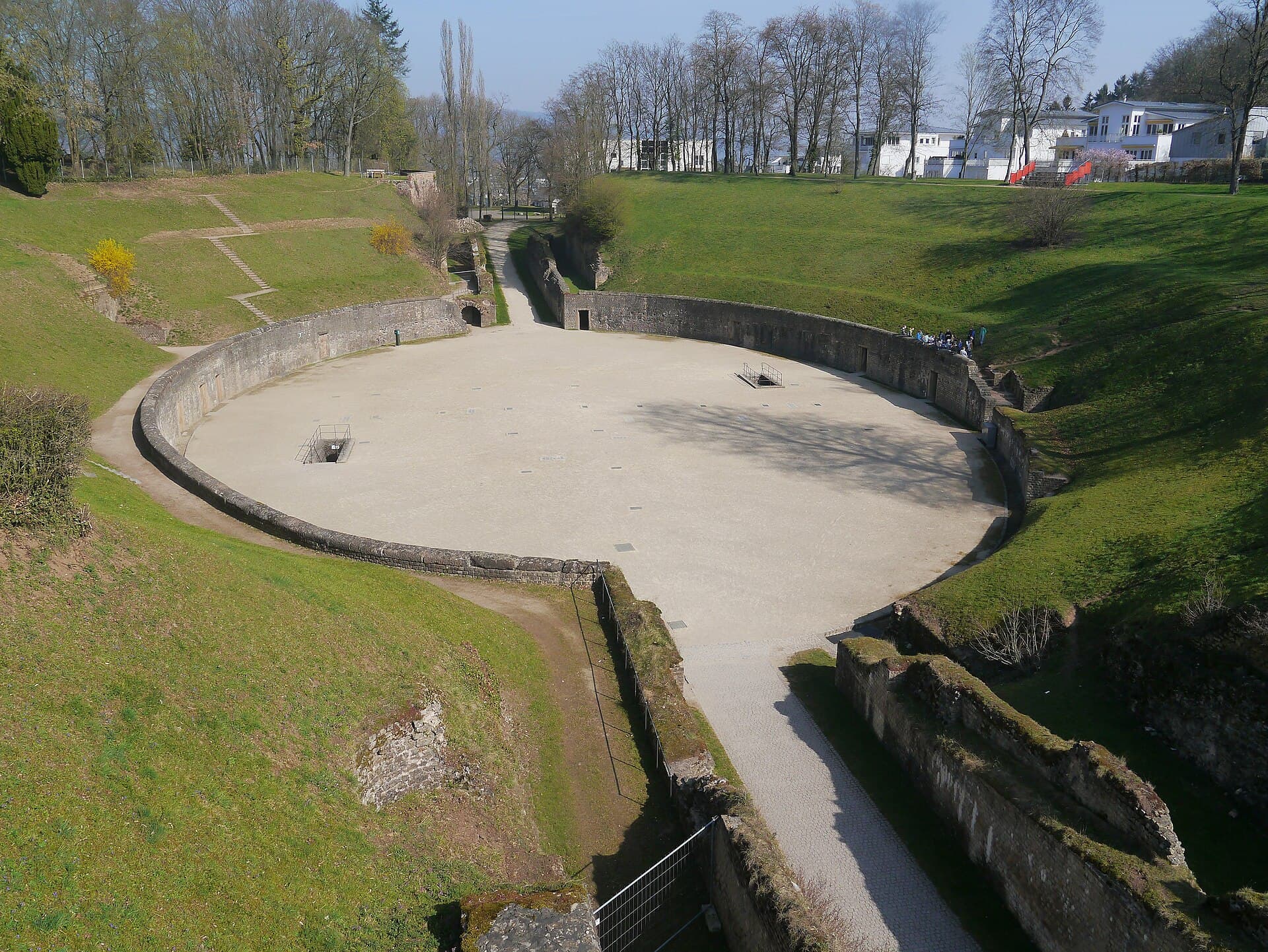 Trier AmphitheatreA Roman amphitheatre of about **AD 100** on a hillside east of the city, holding17 minutes walk4.6
They are UNESCO-listed **together** in a single 1986 inscription, and the main ones fit into **one day** because the centre is walkable. The big four: the **Porta Nigra** to the north; the **Basilica of Constantine** — the throne hall, and the largest surviving column-free interior from the ancient world; the **Imperial Baths**, whose underground service tunnels can be walked; and the **amphitheatre**, which held twenty thousand. Add the **Roman bridge**, whose original piers still carry traffic today, the **Barbara Baths**, and the **cathedral**, built over the palace of Constantine''s mother Helena. ⚠ **The combined Antikencard is much better value** than single tickets — ask at the first site. ⚠ And the **Rheinisches Landesmuseum** explains all of them and deserves two hours.