Coconut palms
On the sand.
Hermann Luyken — CC0 · enioprado — CC BY-SA 3.0 · Hermann Luyken — CC0 · Alfredo Borba — CC BY-SA 4.0 · Ben Tavener from Curitiba, Brazil — CC BY 2.0
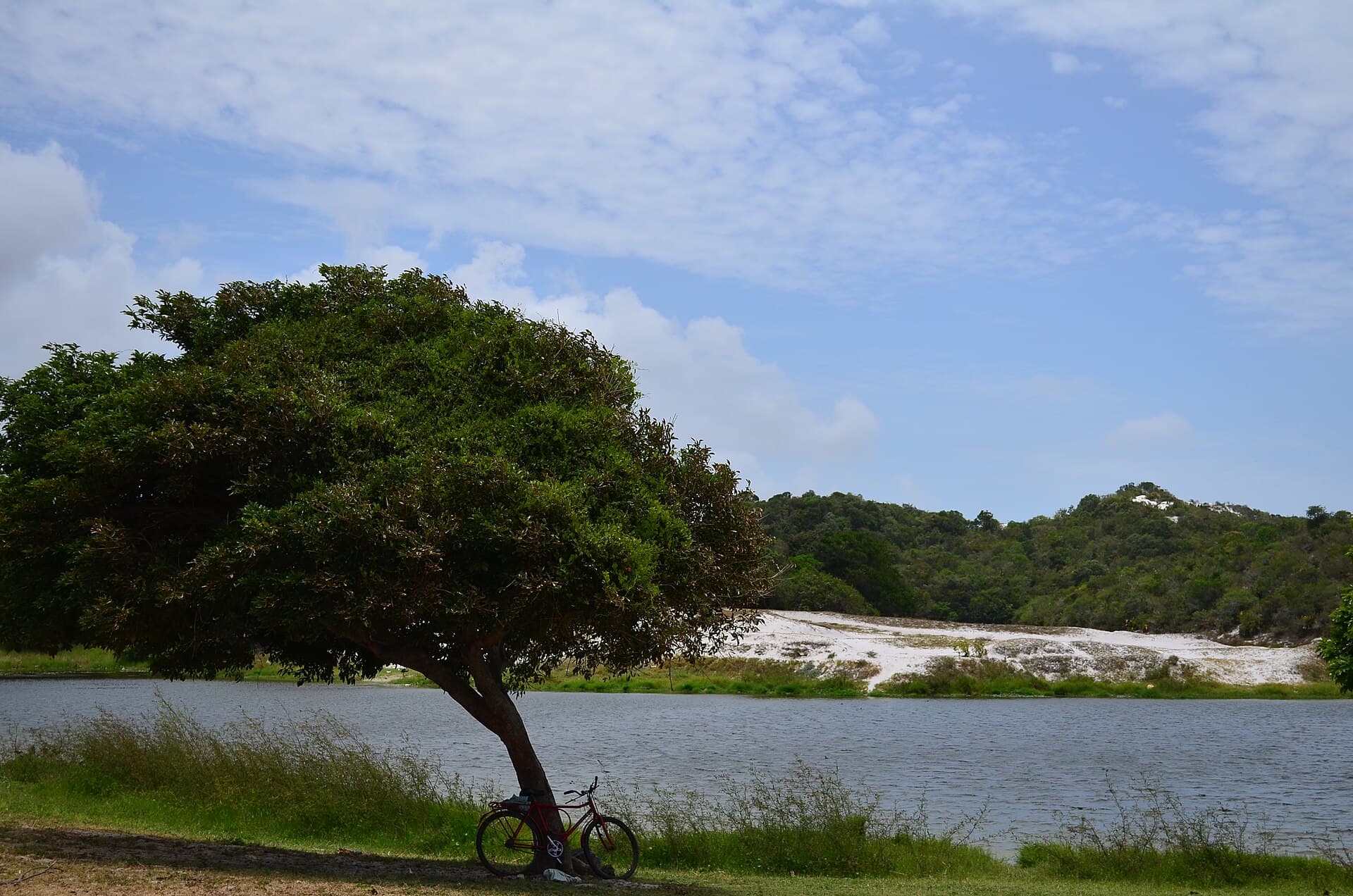
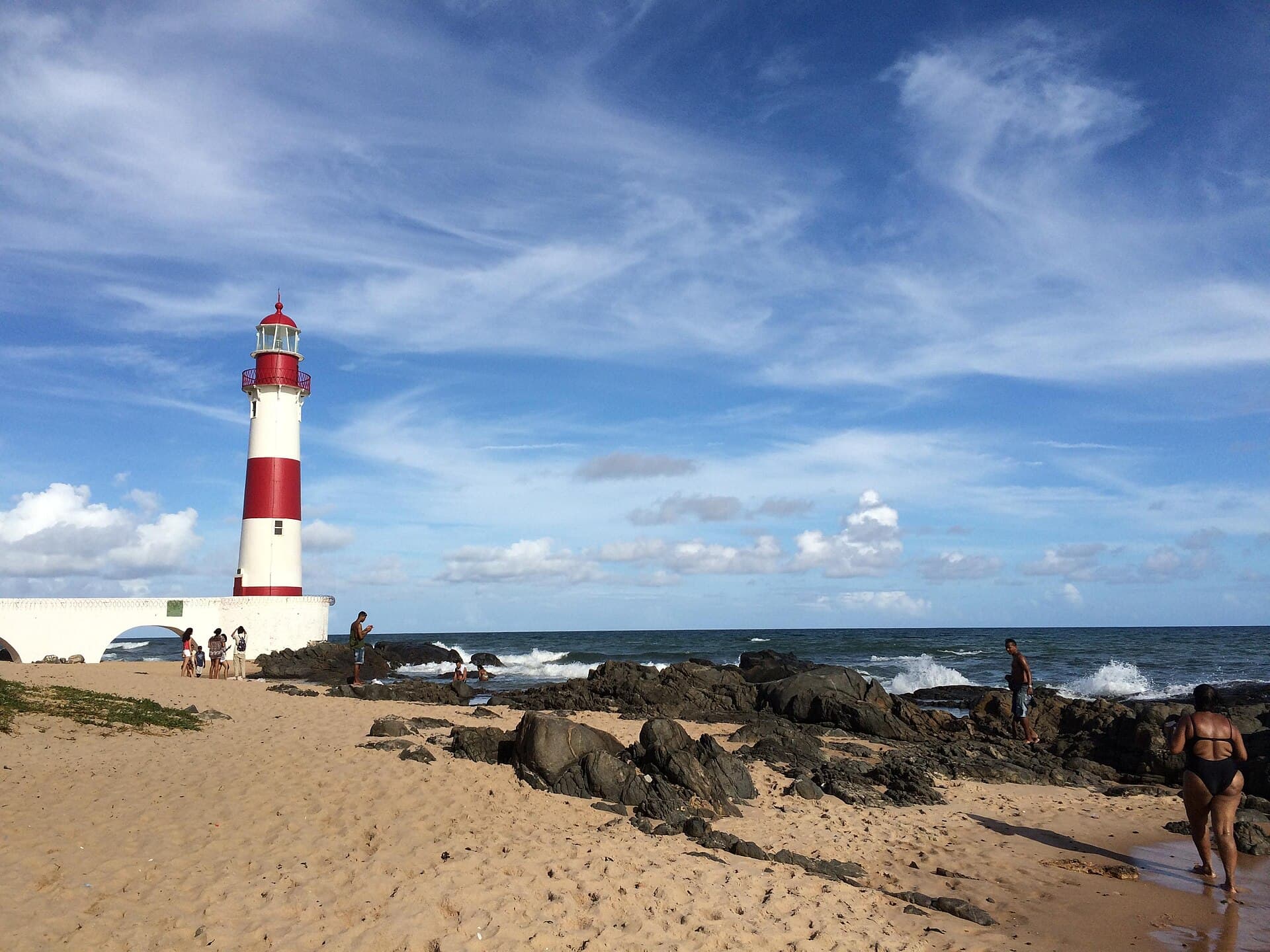
Itapuã is a palm-fringed beach on the Atlantic coast of northern Salvador, immortalised in songs by Dorival Caymmi and Vinicius de Moraes until its name became shorthand for lazy Bahian afternoons. The name is Tupi, read as «round stone» or «roaring stone», after the rocks the waves break on. It was once a village of fishermen who hunted whales for the oil that lit the city's streets, and the fishermen's association still stands near the statue of the Itapuã Mermaid. At the other end of the district rises the red-and-white Itapuã lighthouse, and the Abaeté lagoon, with its dark water and white sand, is a short way inland. The water is open ocean; surfing and windsurfing are possible in places, and at low tide pools form among the rocks. In 2024 an international beach-management centre ranked it 36th among 126 beaches it assessed worldwide. Stalls on the sand serve fish and Bahian food.
On the sand.
Among the rocks.
Nearby.
Itapuã district, northern Salvador coast
It is Tupi, read as «round stone» or «roaring stone», after the beach's rocks.