The kastelli
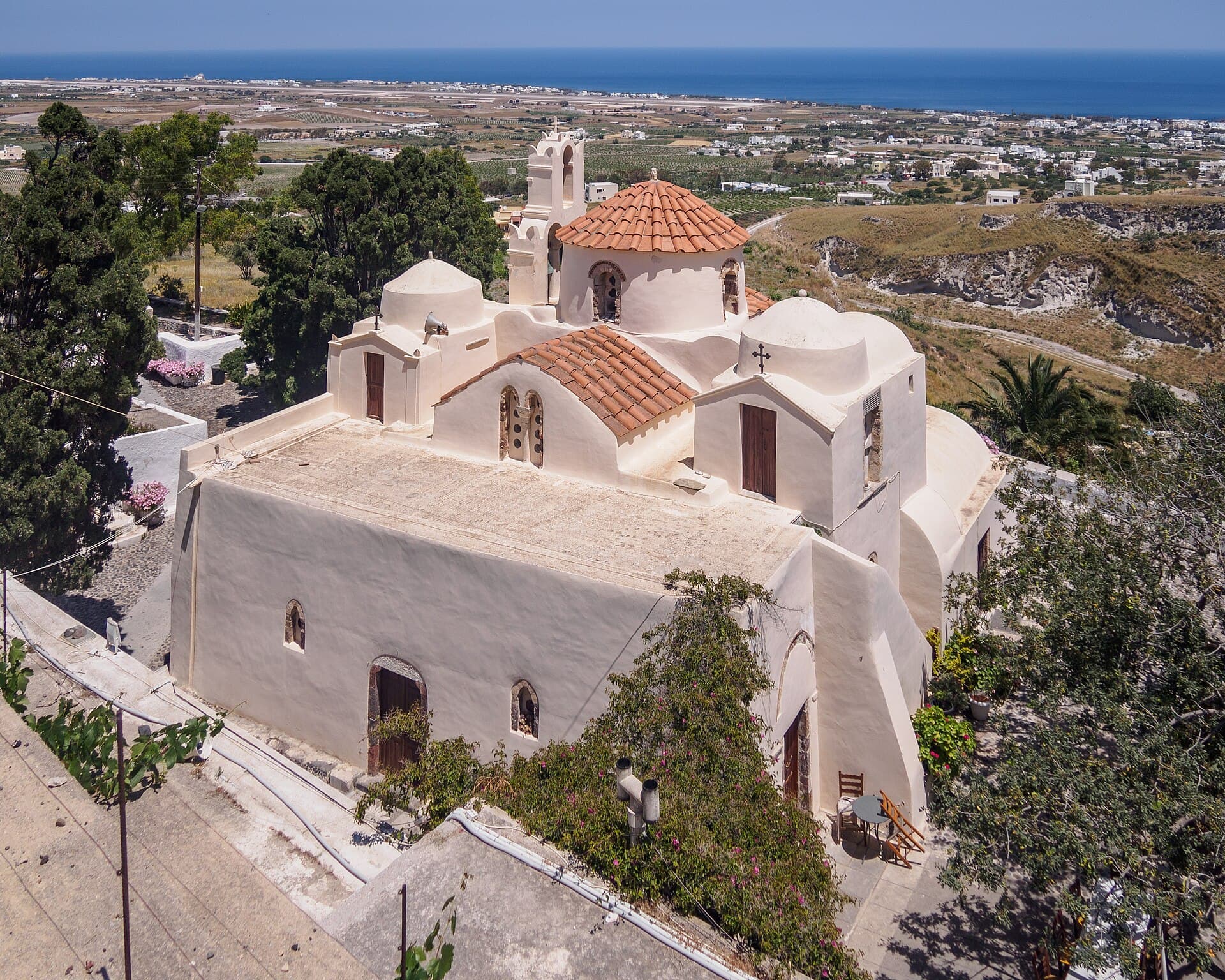
A Venetian castle at the summit with spiralling lanes up to it.
Bgabel — CC BY-SA 3.0 · Jean Housen — CC BY-SA 4.0 · Jean Housen — CC BY-SA 4.0 · Jean Housen — CC BY-SA 4.0
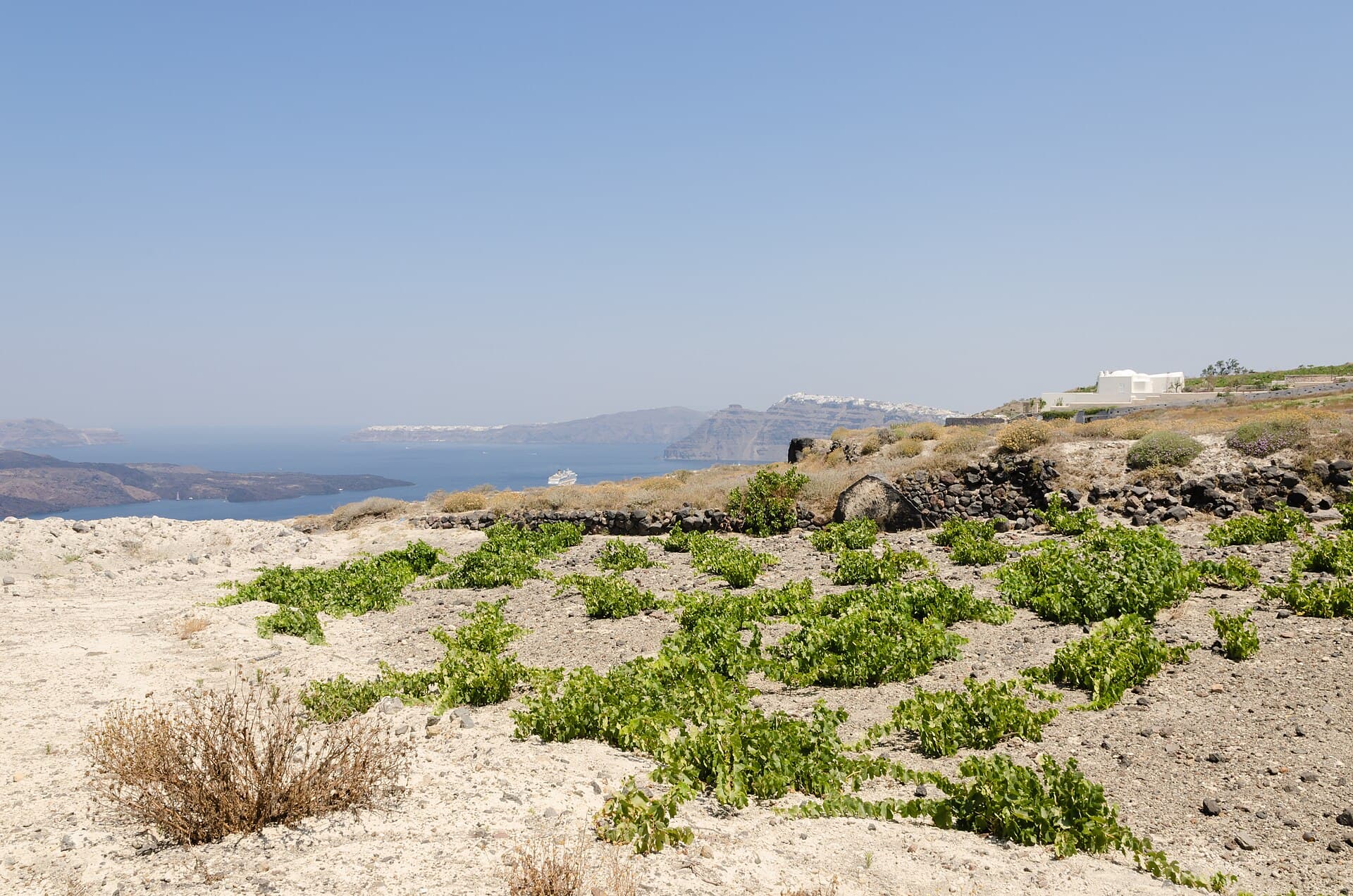
**The highest village on Santorini** and its old capital before Fira, standing on a hill **inland** rather than on the caldera rim — which makes it quite unlike what a visitor expects of the island. Its houses are not the usual blue and white but **stone and earth-coloured**, and its lanes spiral upward to a **Venetian castle** (the kastelli) at the summit — a defensive plan: a village closed in on itself to protect its people from pirates, its outer houses forming the wall. It holds more than thirty small churches, lanes passing under arches, a few artisan shops, and people who live there all year — rare on an island where most villages are hotels. From its summit comes a **view over the whole island**: the caldera to the west, the black eastern coast, and the Aegean on every side. Which makes it the quieter **sunset alternative** to Oia. Above it stands the **Profitis Ilias monastery** on the highest point of Santorini, at about 560 metres.
A Venetian castle at the summit with spiralling lanes up to it.
The caldera, the eastern coast and the Aegean from one point.
People here all year — rare on Santorini.
Pyrgos Kallistis, 84700 Santorini
Because it is **not on the caldera**. The villages you know from photographs — Oia, Fira, Imerovigli — were built on the cliff edge facing the sea, their houses white with blue domes to reflect the sun, and most are now hotels. Pyrgos is an **inland farming village** built on a hill **for protection from pirates** rather than for a view: narrow winding lanes that are easy to defend, outer houses joined to form a wall, and earth-coloured stone rather than white plaster. It is Santorini **before tourism** — which is the reason to go.
An eighteenth-century Orthodox monastery on **the highest point of Santorini** (about 560 m), directly above Pyrgos. For centuries it was **the most important institution on the island**: a religious and economic centre owning land and mills, and a **secret school** said to have taught Greek under Ottoman rule. It has a small museum of manuscripts, icons and craft tools. ⚠ From its terrace comes **the widest view of the whole island** — the caldera, both coasts and the neighbouring islands. ⚠ It is a **working monastery**: modest dress and limited hours, and there are military installations beside it that must not be photographed.