Plaza Grande
Palms and monument.
Diego Delso — CC BY-SA 4.0 · Ángel M. Felicísimo — CC BY-SA 4.0 · Cayambe — CC BY-SA 3.0
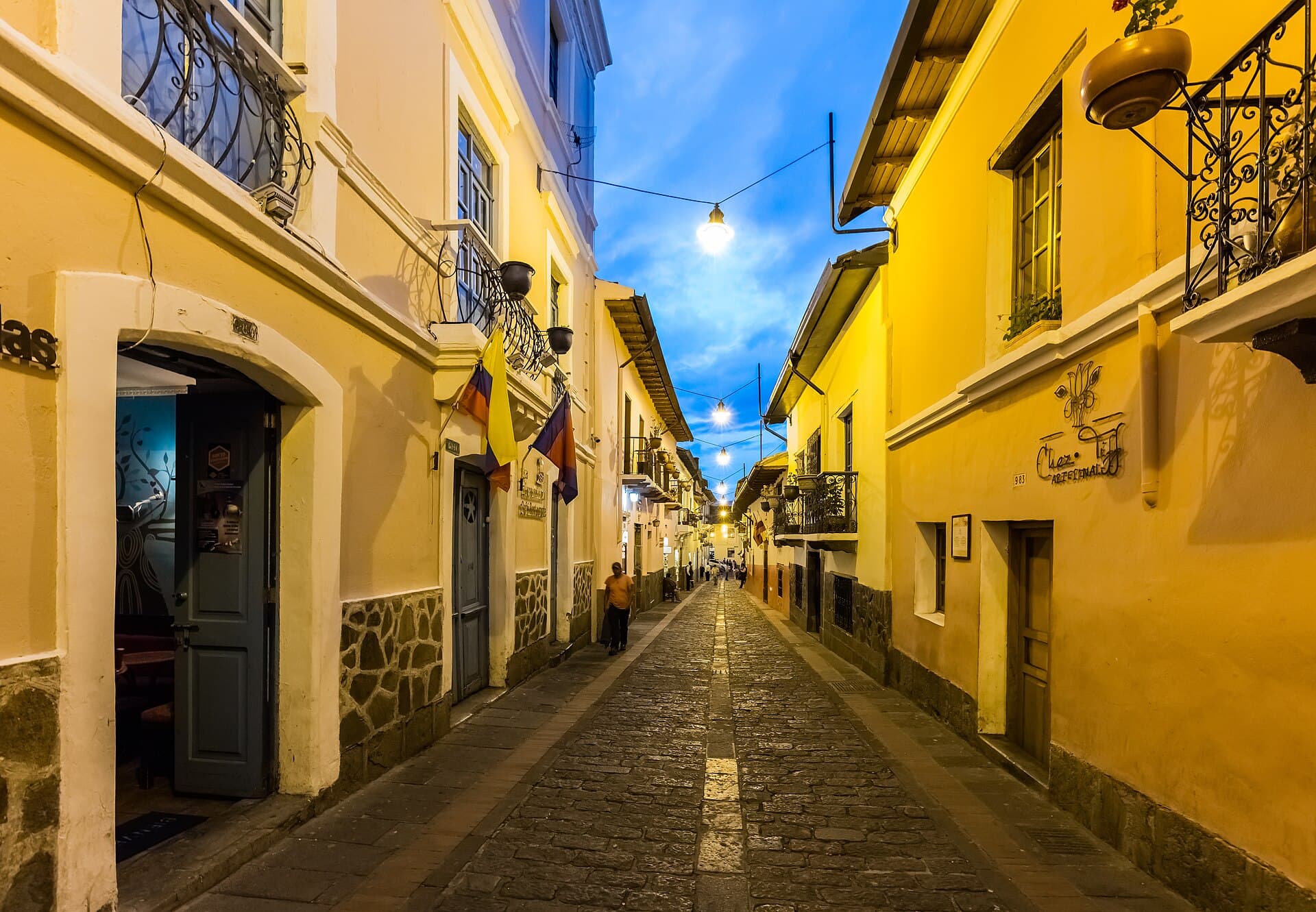
One of Latin America's best-preserved colonial centres, and with Kraków one of the first two cities UNESCO listed as World Heritage, in 1978. It spreads over hills in a valley among volcanoes, with narrow cobbled streets and white houses with blue wooden balconies and inner courtyards. Its heart is the Plaza de la Independencia, known as Plaza Grande, a palm-shaded garden with the Independence monument at its centre, ringed by the white-columned Carondelet presidential palace, the Archbishop's palace whose courtyard is now cafés and shops, the cathedral and city hall. Around it, streets are full of museums, historic houses and cafés, plus dozens of ornate churches and convents admired by architecture lovers, and from nearby hills there are views over red-tiled rooftops and surrounding volcanoes. The centre is busy and fairly safe by day with police around, but watch for pickpockets and avoid quiet streets after dark. Quito sits at about 2,850 metres, so take the first day easy and drink plenty of water. Many governments advise caution in Ecuador, where a state of emergency covers several provinces, so check your own government's travel advice before the trip.
Palms and monument.
The presidency.
Colonial houses.
Plaza de la Independencia (Plaza Grande), old Quito
By day it is busy and fairly safe with police around, but watch for pickpockets and use registered taxis after dark.