Diwan-i-Khas
The marble hall.
Sourabh.biswas003 — CC BY-SA 4.0 · Shagil Kannur — CC BY-SA 4.0 · Nikhil Thokal — CC BY-SA 4.0 · Anupamg — CC BY-SA 4.0 · Diego Tirira from Quito, Ecuador — CC BY-SA 2.0 · Vinayaraj — CC BY-SA 4.0 · Saman Singh — CC BY-SA 4.0 · Hussan.ghazali — CC BY-SA 4.0
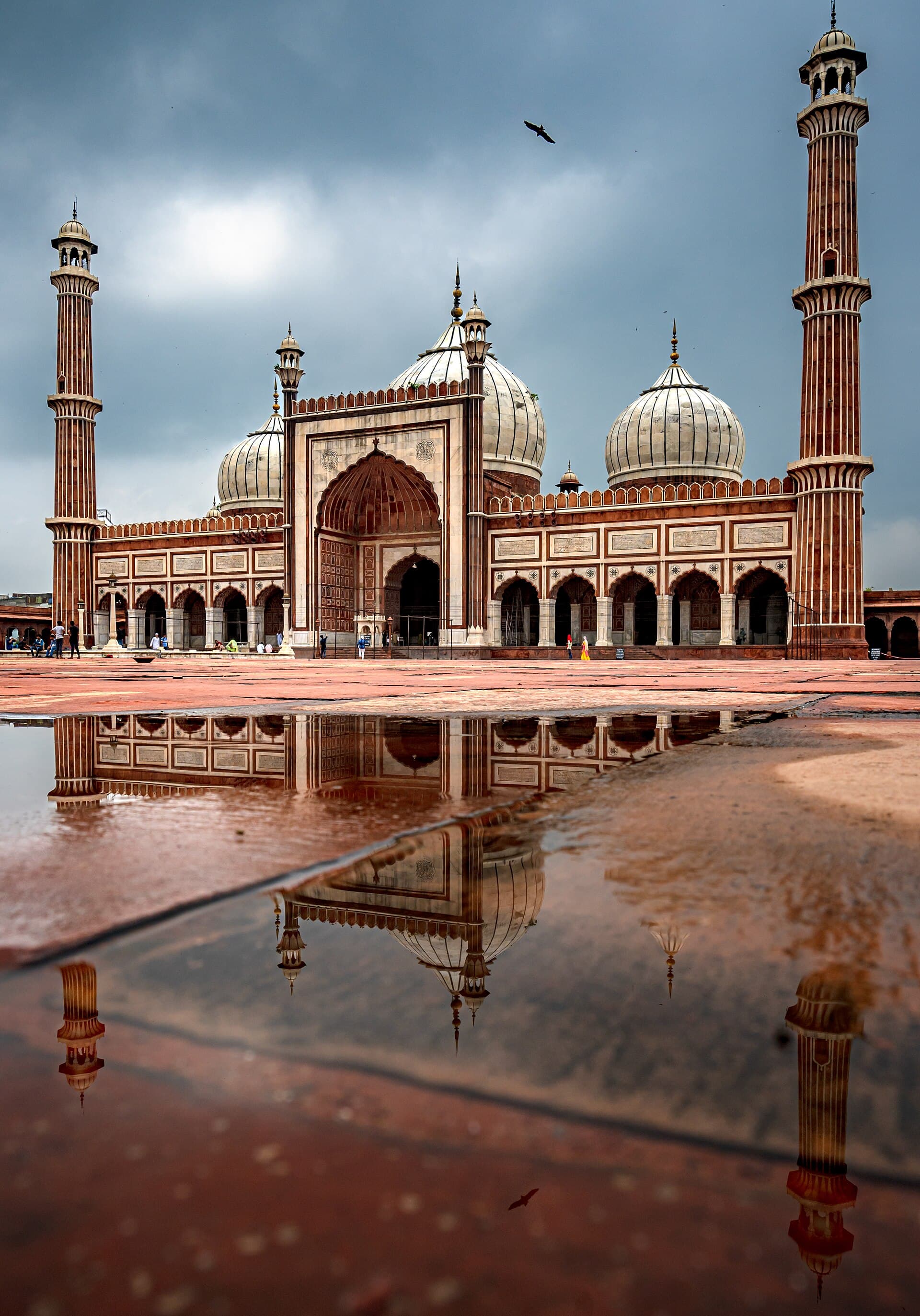
A massive Mughal fort of red sandstone in Old Delhi, commissioned by Emperor Shah Jahan on 12 May 1639 when he moved the Mughal capital from Agra to Delhi; its design is credited to Ustad Ahmad Lahori, architect of the Taj Mahal, and it is a UNESCO World Heritage Site. It was the main residence of the Mughal emperors for almost two centuries, blending Persian and Indian styles. Its best-known halls are the Diwan-i-Am, where the emperor received the public, and the marble Diwan-i-Khas, carved with a famous Persian verse: «If there is paradise on earth, it is here». Nadir Shah plundered its treasures in 1739, and the British demolished many of its marble buildings after the 1857 uprising, but its great walls survived. India's flag was first raised over its main Lahori Gate on 15 August 1947, and the Prime Minister still raises it here every Independence Day. Foreign visitors pay about ₹600, a little less online; it opens Tuesday to Sunday 09:30–16:30 and closes on Mondays, per visitor guides. It sits at the end of Chandni Chowk, easy to combine with the market and the Jama Masjid.
The marble hall.
Independence symbol.
Massive and tall.
Netaji Subhash Marg, Old Delhi
It closes on Mondays and opens 09:30–16:30 on other days; foreign visitors pay about ₹600, per visitor guides.