Counting hall
As it was.
Zhangzhugang — CC BY-SA 3.0 · Zhangzhugang — CC BY-SA 3.0 · Zhangzhugang — CC BY-SA 3.0 · Gisling — CC BY-SA 3.0 · Gisling — CC BY-SA 3.0 · Gisling — CC BY-SA 3.0 · Zhangzhugang — CC BY-SA 3.0 · Zhangzhugang — CC BY-SA 3.0
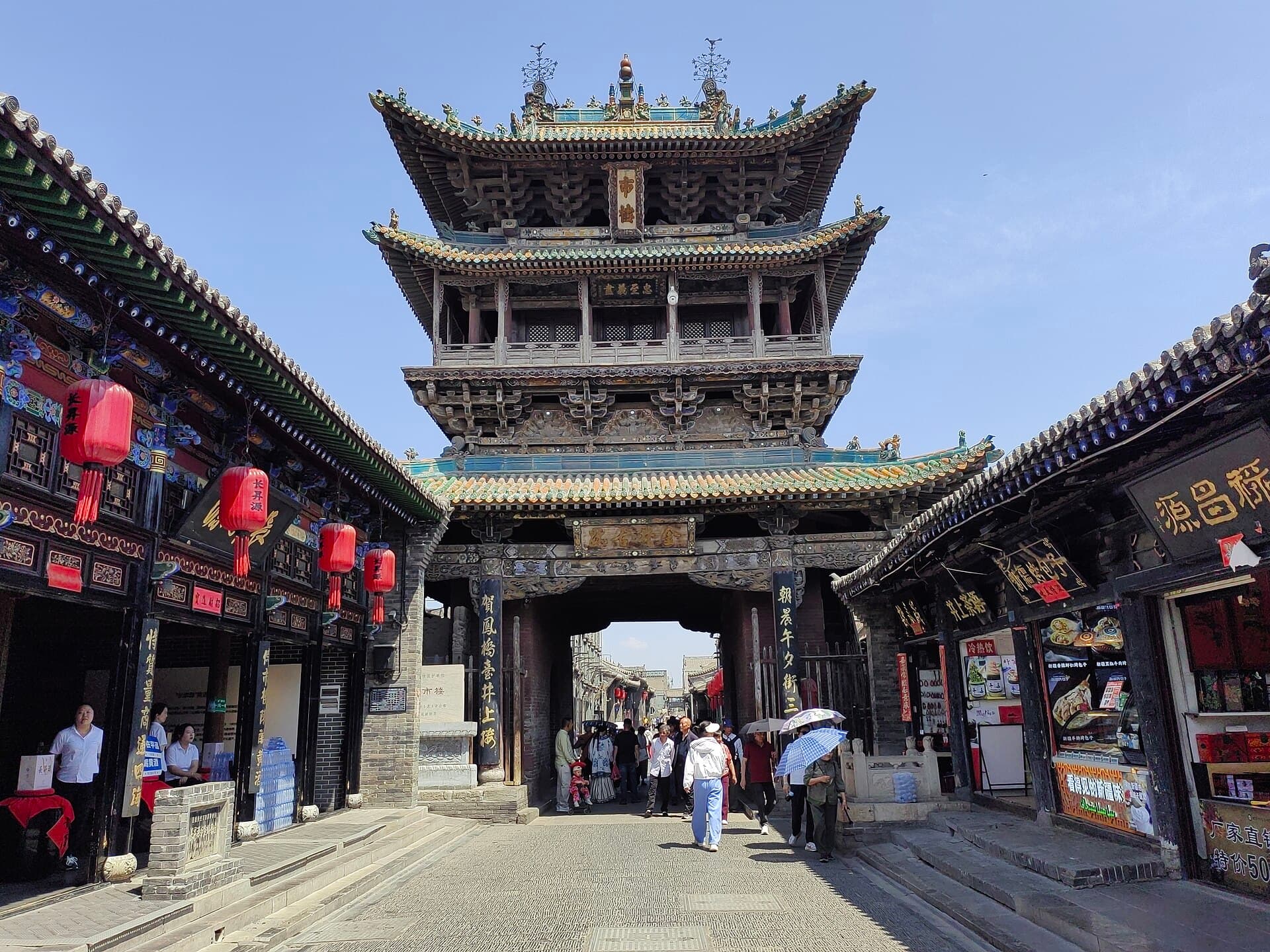
The home of China's first draft bank, whose name means «Sunrise Prosperity»; it began as a dye company, Xiyuecheng, which to move large sums between its branches introduced drafts that could be cashed at any branch, and the idea caught on so well that around 1823 the owner gave up dyeing and turned the firm into a remittance house, though historians debate the exact founding date. At its height its branches reached China's major cities as well as Russia, Mongolia and Japan, and similar banks followed in Pingyao and neighbouring towns until central Shanxi became the de facto financial centre of the empire, before the system collapsed after the 1911 revolution. The building is now a museum keeping its courtyards, counting halls, clerks' offices and silver vaults, with rooms explaining how drafts were written and the secret codes used against forgery, and it became a protected national monument in 2006. The museum is covered by the old-town combined ticket, CNY 125 for about 22 sites, valid three days, per visitor guides.
As it was.
Kept intact.
Against forgery.
West Street, old town, Pingyao
Because it was China's first draft bank, which around 1823 introduced drafts payable at distant branches, making Pingyao a financial centre of the empire in the nineteenth century.