The yellow arch
And clock tower.
Not So Dusty — CC BY 2.0 · Adalberto.H.Vega uploaded and derivative work: MrPanyGoff — CC BY 3.0 · Erik Cleves Kristensen — CC BY 2.0
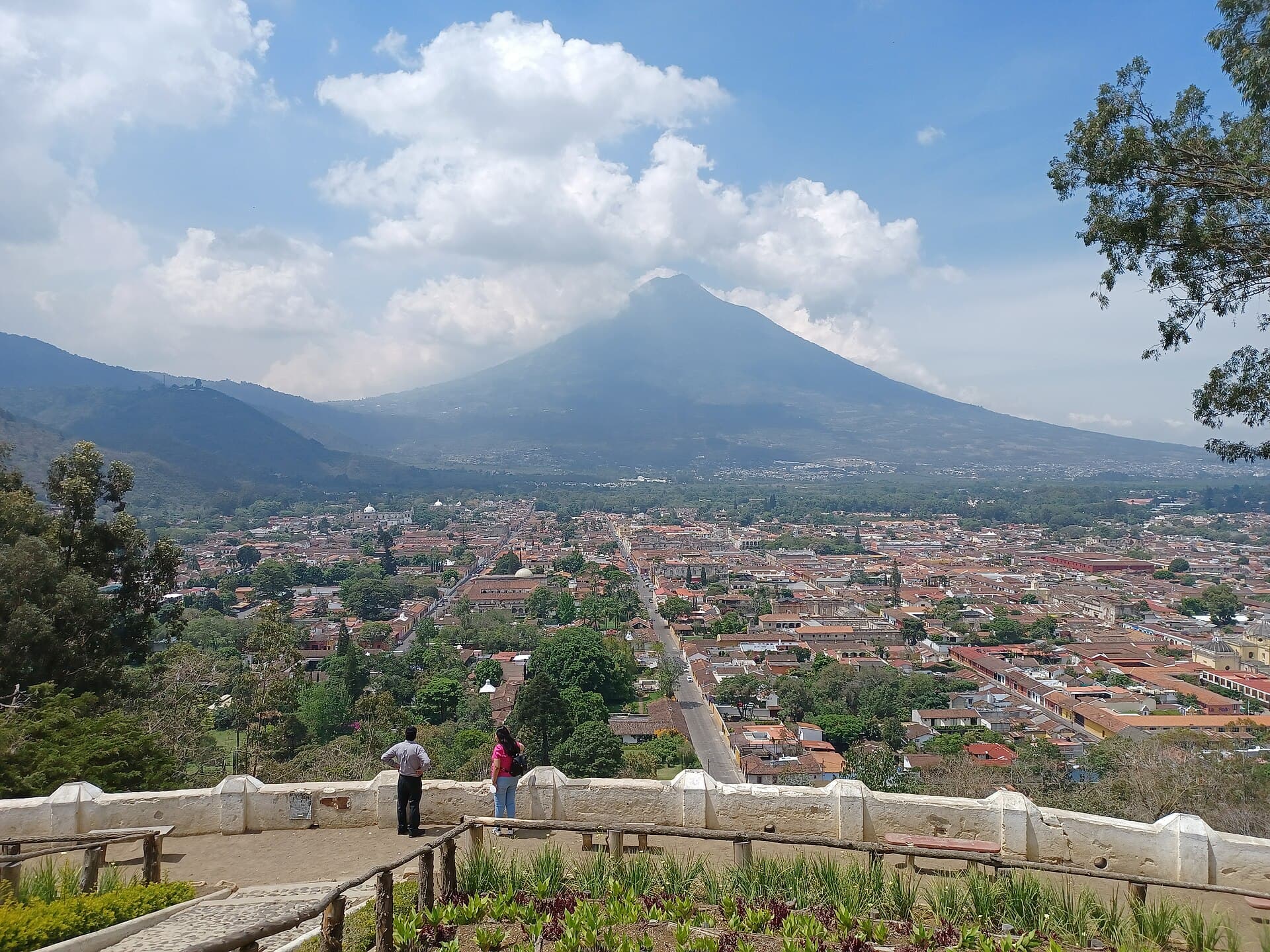
The emblem of Antigua Guatemala, a yellow arch spanning the cobbled main street, topped by a small clock tower, with the green cone of Agua volcano rising behind it on clear days. It was built in the late seventeenth century to join two buildings of a convent so the nuns could cross over unseen from the street, and the clock was added in the nineteenth century. Antigua was the capital of Spain's Central American territory from 1543 until 1773, when earthquakes destroyed it and the capital moved. Its straight streets, colourful houses with iron window grilles, ruined convents and Baroque churches survived, and UNESCO listed it as World Heritage in 1979. Around the arch are cafés, restaurants and textile and craft shops, and a few blocks away lies the central square with its fountain and trees, the arcaded old Palace of the Captains General, and craft and jade markets. The best time to photograph the arch is early morning before the crowds, when the volcano shows clearly. Watch for pickpockets in crowded places, use known taxis or tourist shuttles, and avoid walking alone at night.
And clock tower.
Behind the arch.
Colourful houses.
5a Avenida Norte, central Antigua Guatemala
To join two convent buildings so the nuns could cross above the street unseen; the clock was added in the nineteenth century.