
Wave paving
Black and white stone.
Hiroki Ogawa — CC BY 3.0 · lienyuan lee — CC BY 3.0 · LN9267 — CC BY-SA 4.0 · Kamfutiam Georgez — CC0 · Paolobon140 — CC BY-SA 4.0 · LN9267 — CC BY-SA 4.0 · 竹森聖 — CC BY 3.0 · lienyuan lee — CC BY 3.0
The heart of old Macau, a triangular square of about 3,700 square metres named after the Leal Senado, the municipal council where Portuguese and Chinese met from the sixteenth century; it is part of the Historic Centre of Macau World Heritage Site. Its best-known feature is the paving of black and white stones laid in waves in the Portuguese manner, since it became pedestrian in the early 1990s, with a fountain at its centre. Pastel-coloured European buildings surround it, among them the white Leal Senado Building in classic Portuguese style, the Holy House of Mercy charity founded in 1569 and the yellow seventeenth-century St. Dominic's Church, and from here lanes climb up to the Ruins of St. Paul's. The square is free and always open, per visitor guides. It gets very crowded on holidays and is hung with lanterns for Chinese festivals; the loveliest time is the morning, before the groups arrive.
Black and white stone.
All around.
To the ruins.
Sé, old central Macau
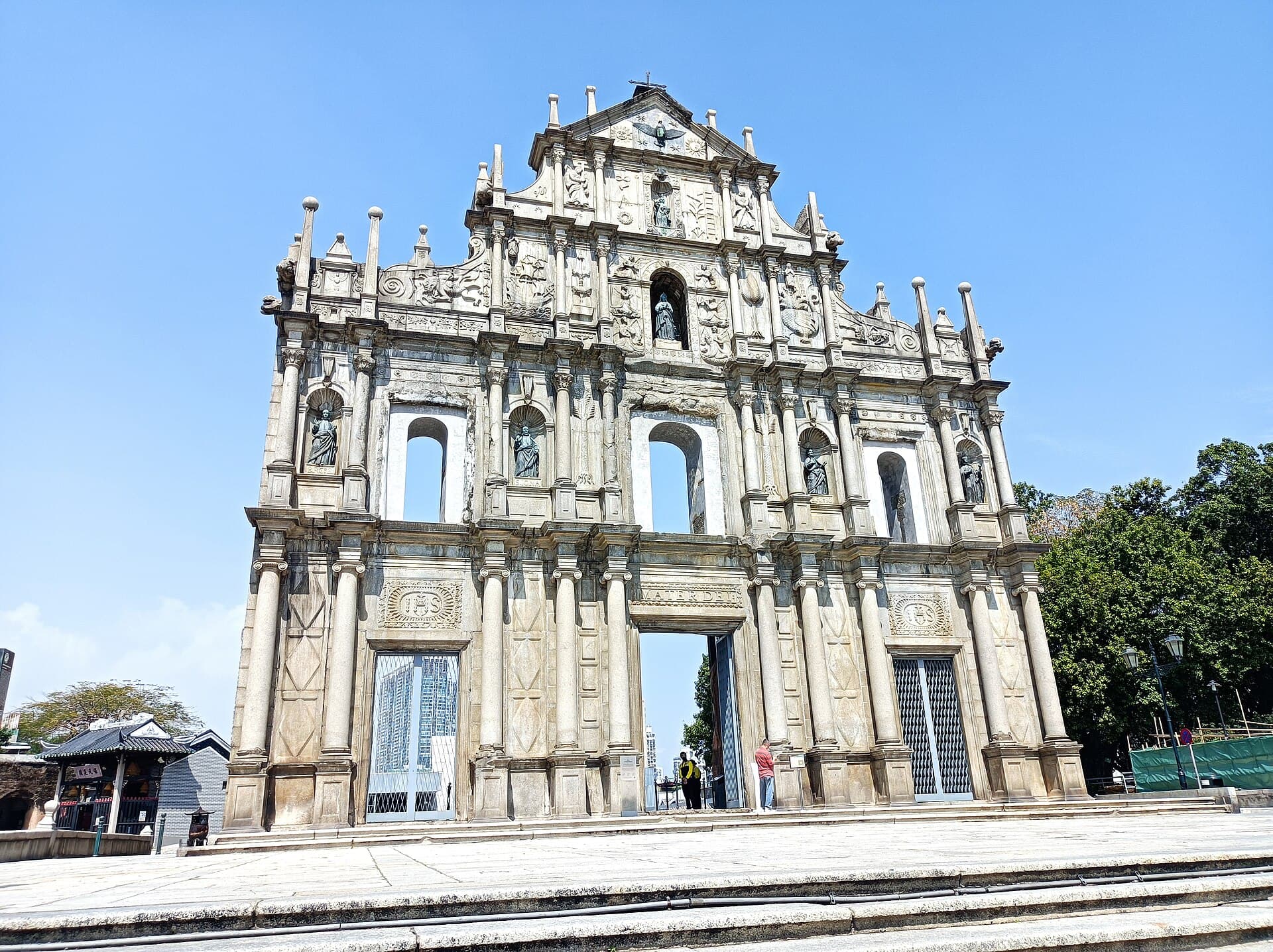 Ruins of St. Paul'sMacau's best-known symbol, a towering stone façade standing alone at the top of 5 minutes walk
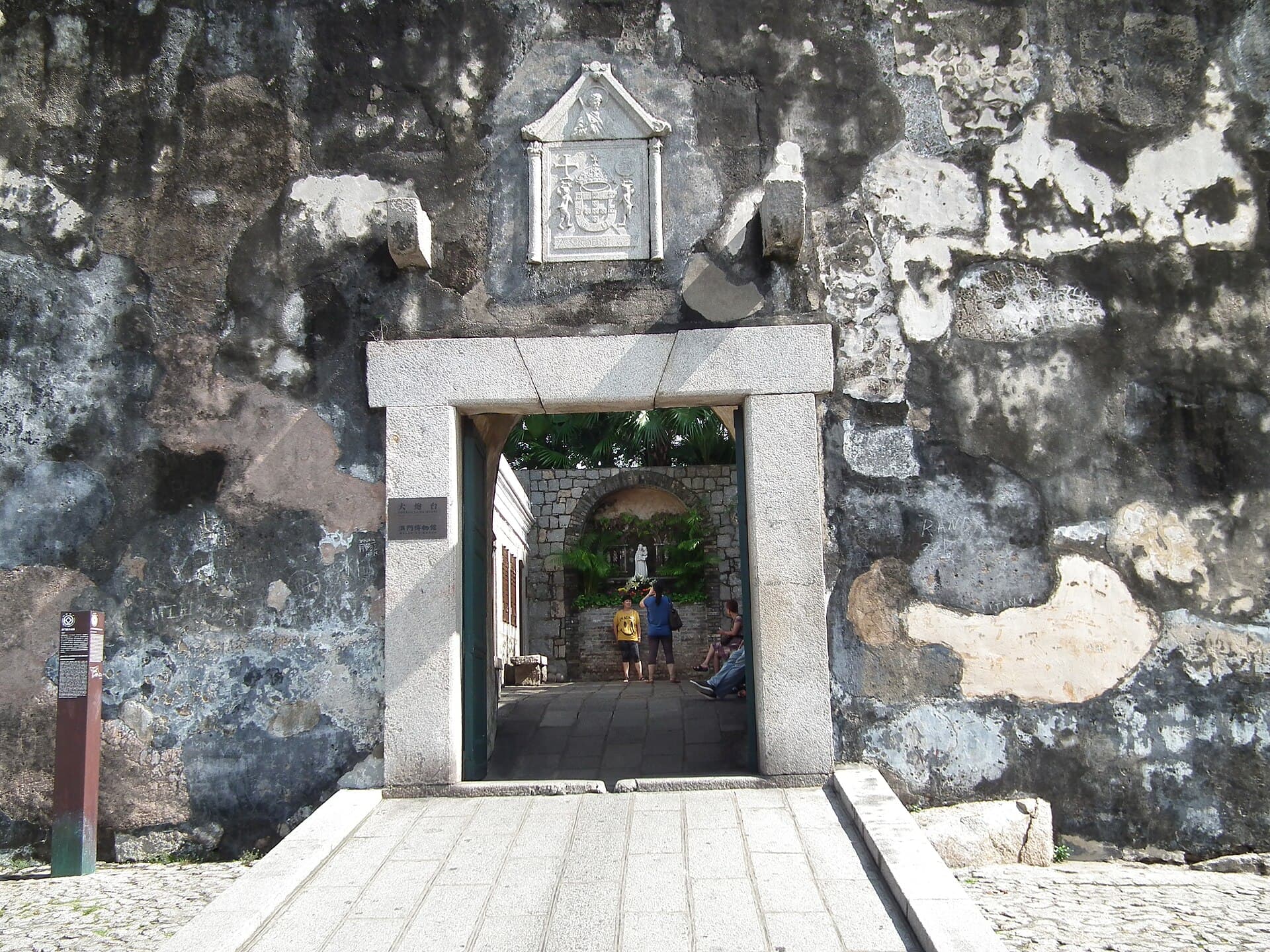 Monte Fort and Macao MuseumMacau's historic military heart, a fort built by the Jesuits between 1617 and 165 minutes walk
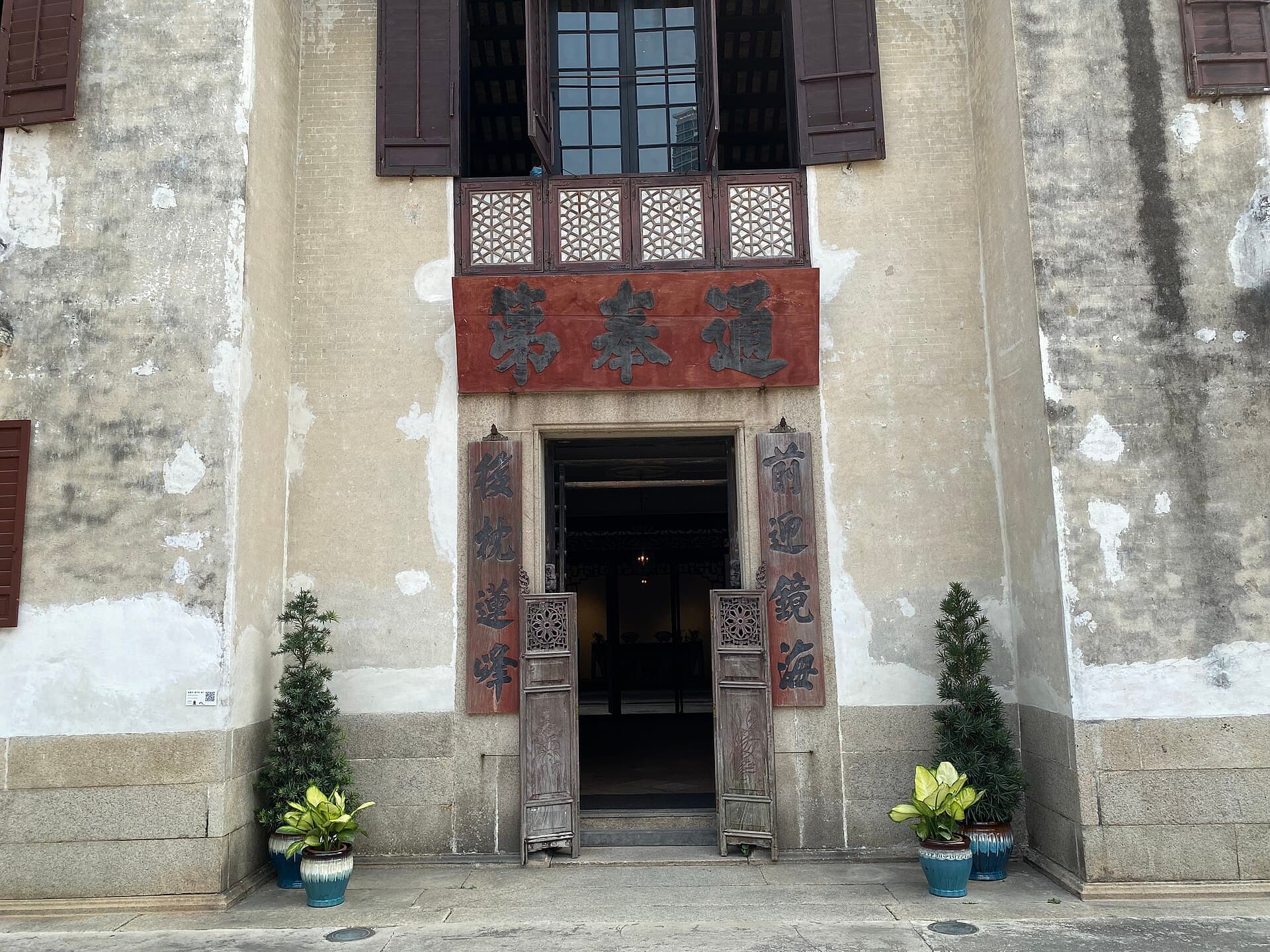 Mandarin's HouseOne of the largest family houses in Macau, a traditional residential compound of10 minutes walk
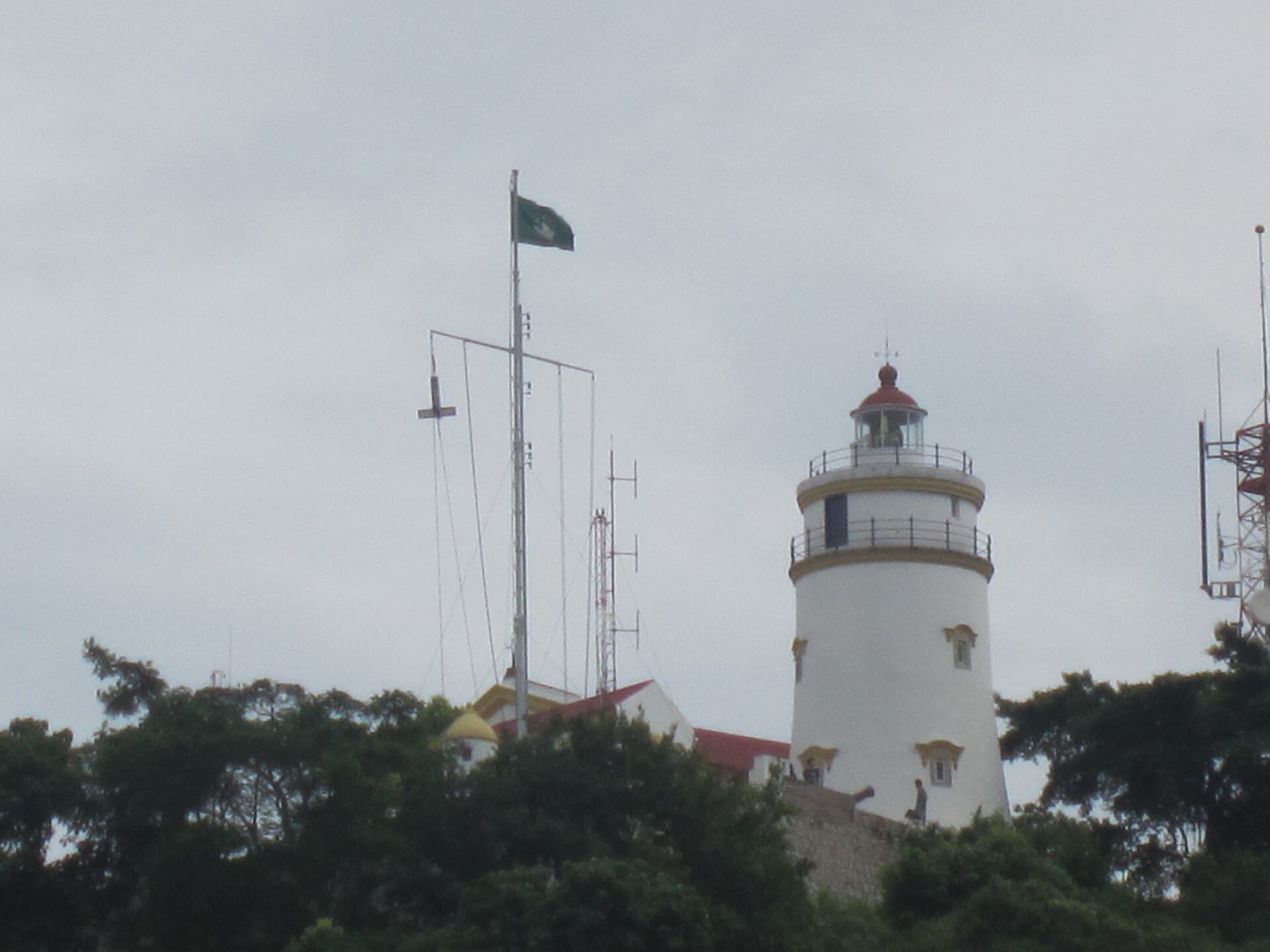 Guia Fortress and LighthouseA fort, lighthouse and small chapel on Guia Hill, the highest point of the Macau13 minutes walk
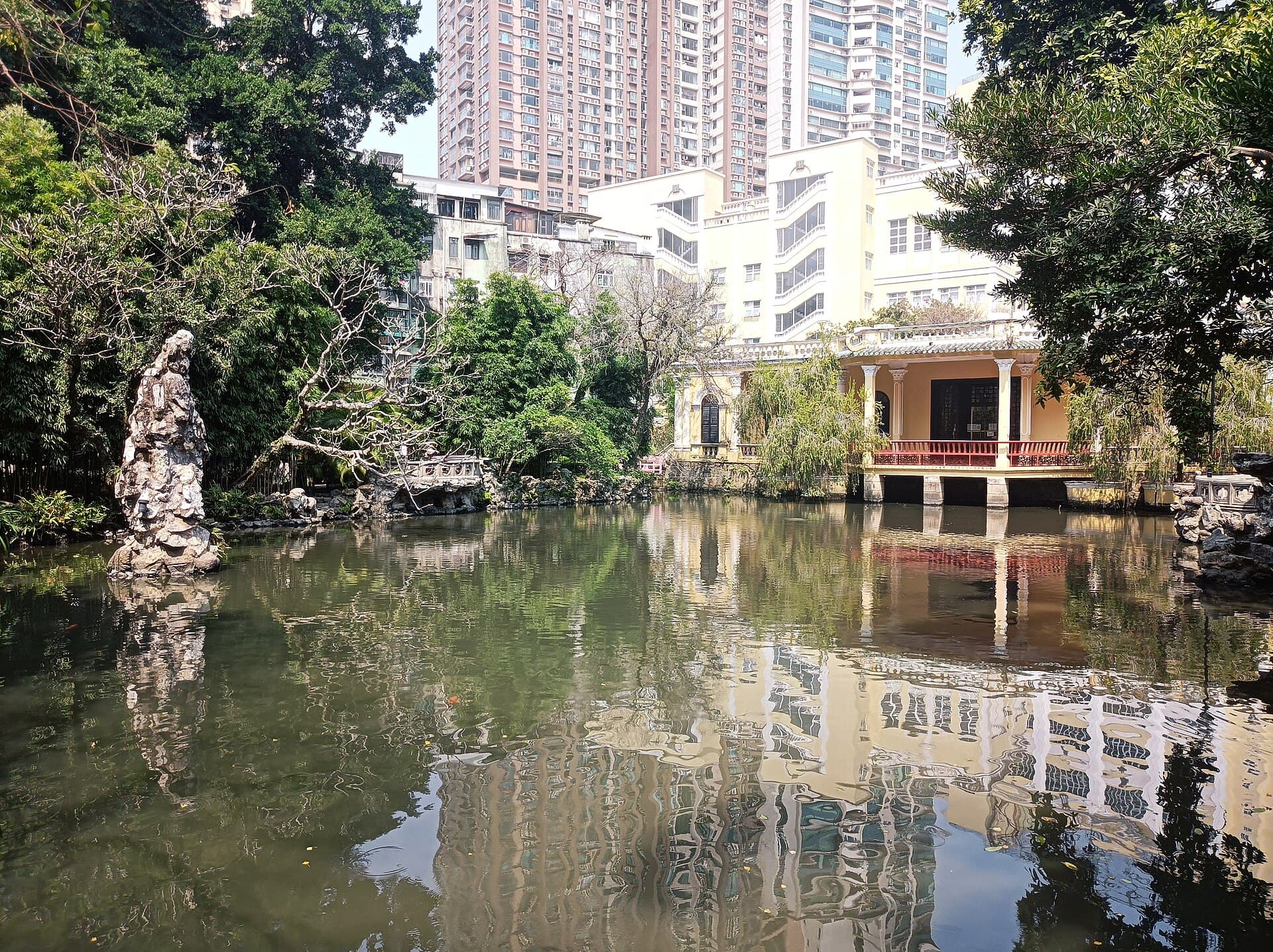 Lou Lim Ioc GardenA quiet classical Chinese garden in the heart of Macau, laid out in 1906 by the 14 minutes walk
A few minutes' walk up lanes lined with shops, and both are free and always open, per visitor guides.