
The birth room
The small upstairs chamber with its low bed where Shakespeare is believed to have been born in 1564.
Stuart Yeates [1] — CC BY-SA 2.0 · Rijksmuseum — CC0 · pcs34560 — Public domain · Martinvl — CC BY-SA 4.0
In 1847 the American showman P. T. Barnum threatened to buy this house, take it apart beam by beam and ship it across the Atlantic to put on display in New York. Britain panicked, a public subscription raised £3,000 (Charles Dickens was among the donors), and the timber-framed house stayed on Henley Street, where it had stood since about 1530. Here, by the most credible account, William Shakespeare was born in 1564 and grew up, while his father John made gloves and dealt in wool from the other half of the building. You start with an introductory exhibition in the Shakespeare Centre next door, then step into the house itself: rooms furnished as a sixteenth-century household would have known them, the glove workshop, and upstairs the birth room with its low bed and small windows. The oddest treasure is the window glass scratched with the names of nineteenth-century visitors, Walter Scott and Thomas Carlyle among them; vandalism was once a legitimate souvenir. Out in the garden, costumed actors perform scenes from the plays and will usually take a request, and for our money that is the best moment of the whole visit, especially with children in tow. Be realistic about the house, though. It is small, the stairs are narrow and steep, and when the coach parties arrive in summer you are nudged from room to room rather than left to linger. The upper floor is no place for a pushchair or a wheelchair, so carry small children and expect the house itself to take around half an hour. Online tickets carry an admission time and you can still buy on the door, but book on the official site ahead of July, August and the Birthday weekend in late April, or you may find the first free slot is mid-afternoon. An adult ticket is £27 on the door and £25 booked online, children aged 3 to 17 pay half and under-threes go free. It covers the nearby New Place gardens, lets you return for twelve months, and can be extended to Anne Hathaway's Cottage for just £5 more, the best-value fiver in town. The house opens daily from mid-March to the start of November, 10:00 to 17:00, then until 16:00 up to 23 December, and shuts through the depths of winter until roughly mid-March. The railway station is a ten-minute walk; driving from London takes about two and a half hours, with pay-and-display car parks a few minutes on foot.
The small upstairs chamber with its low bed where Shakespeare is believed to have been born in 1564.
A pane etched with the names of nineteenth-century visitors, Walter Scott and Thomas Carlyle among them.
Costumed performers act out scenes from the plays, and it is the stop children remember.
Henley Street, Stratford-upon-Avon CV37 6QW
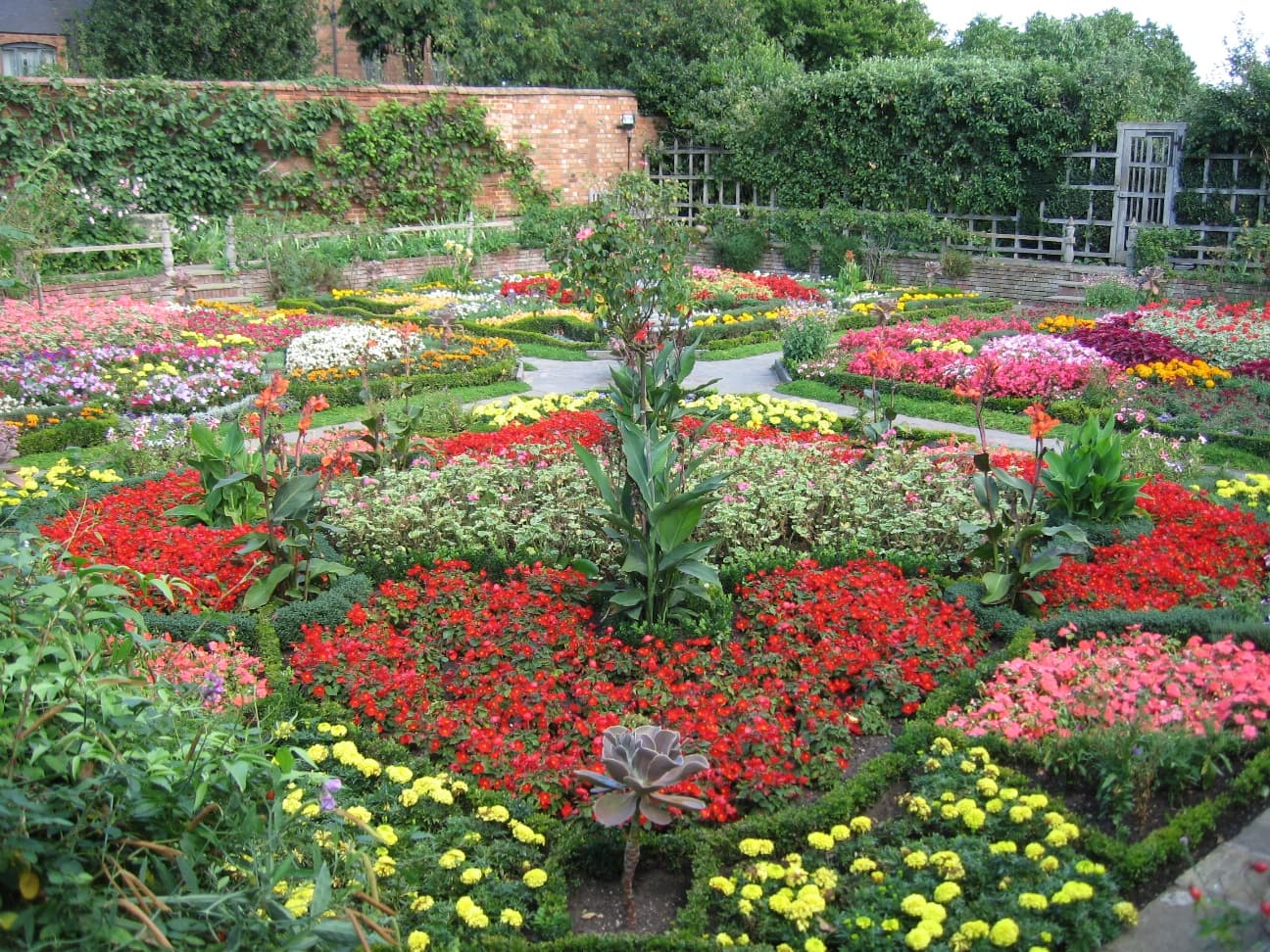 Shakespeare's New PlaceThere is no house. Know that before you walk down Chapel Street: the home Shakes4 minutes walk4.4
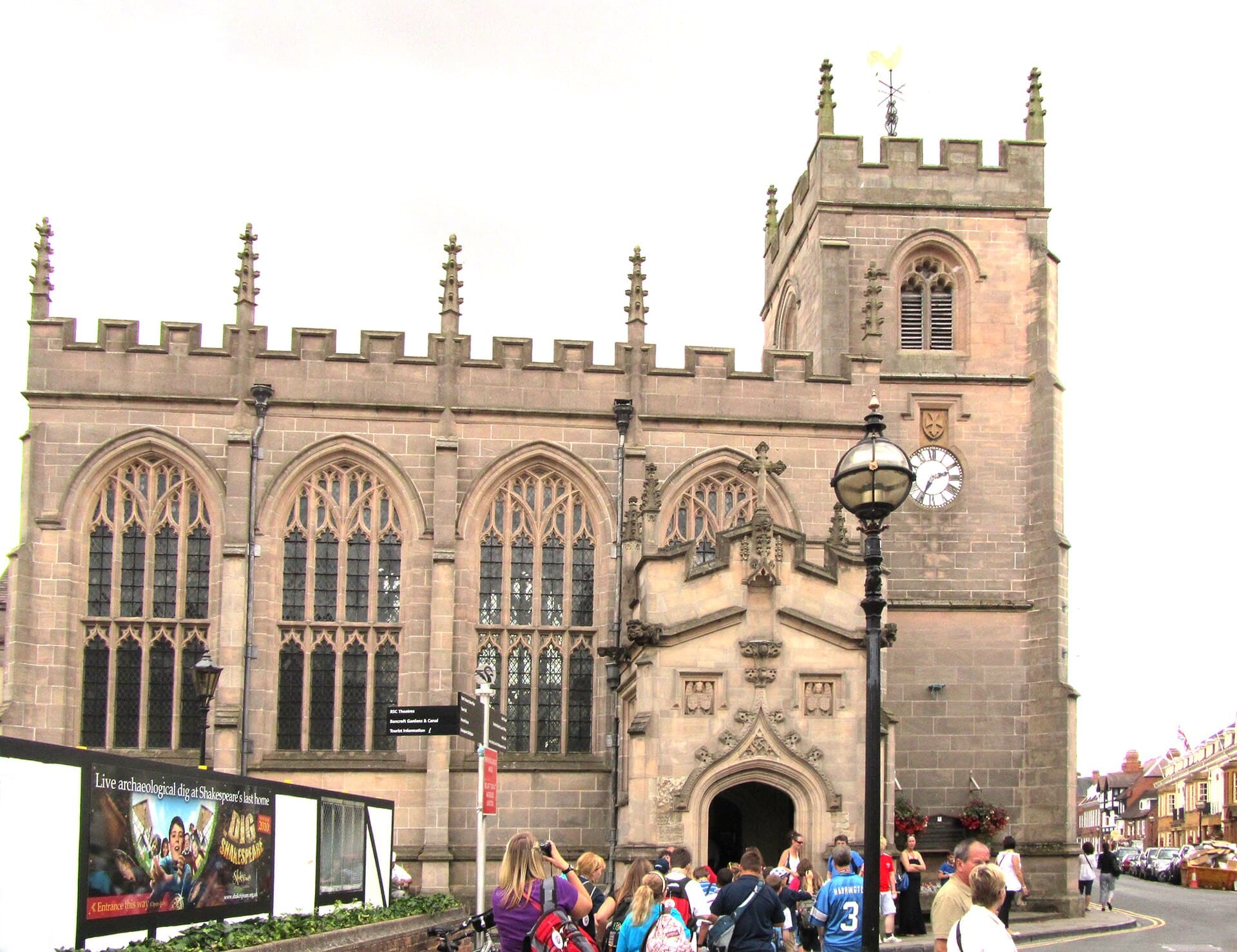 Guild ChapelIn the Stratford corporation accounts for 1563-64 there is a small entry paying 5 minutes walk4.8
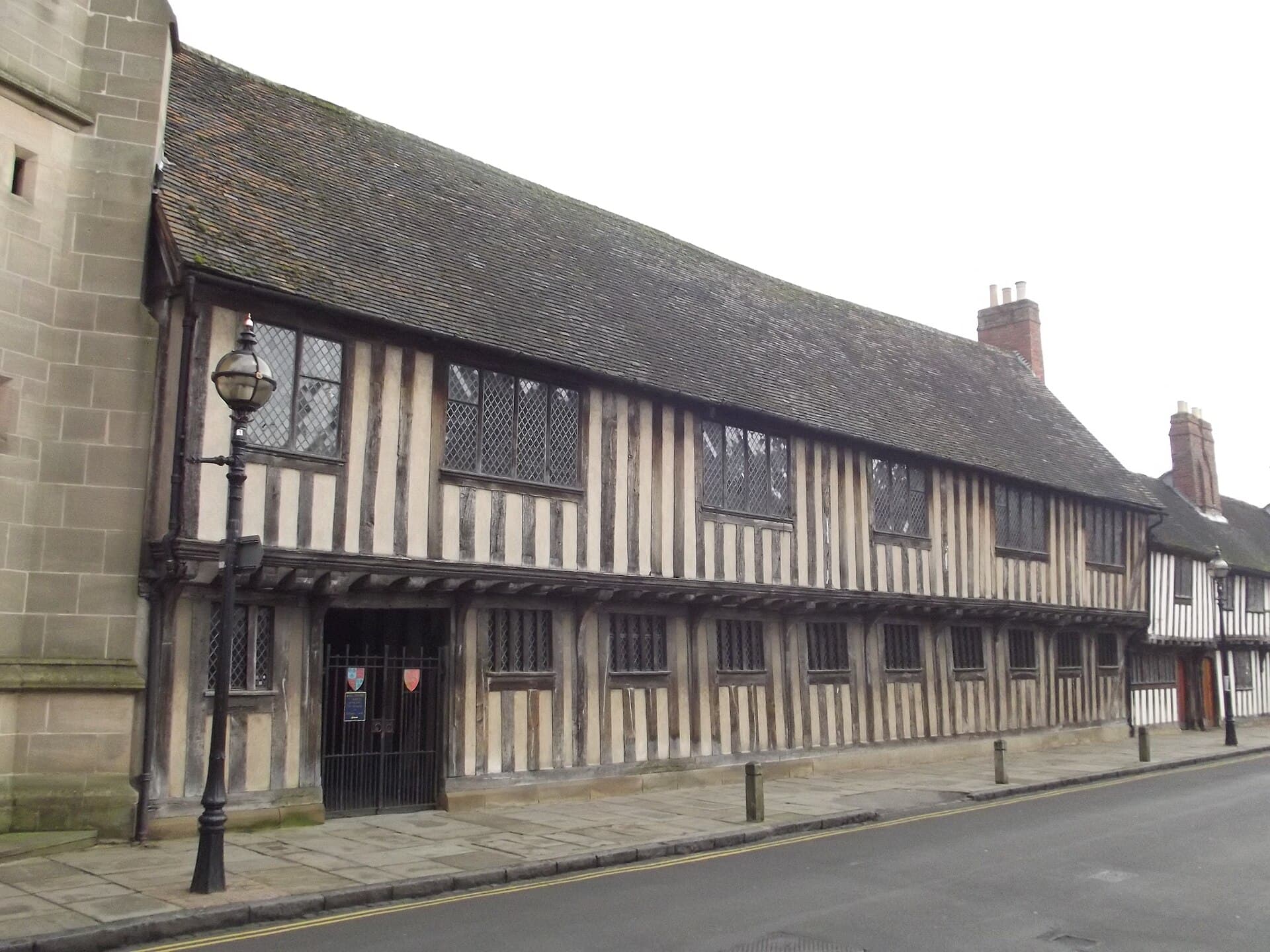 Shakespeare's Schoolroom & GuildhallThis building does not admit visitors before eleven in the morning on any day of5 minutes walk4.8
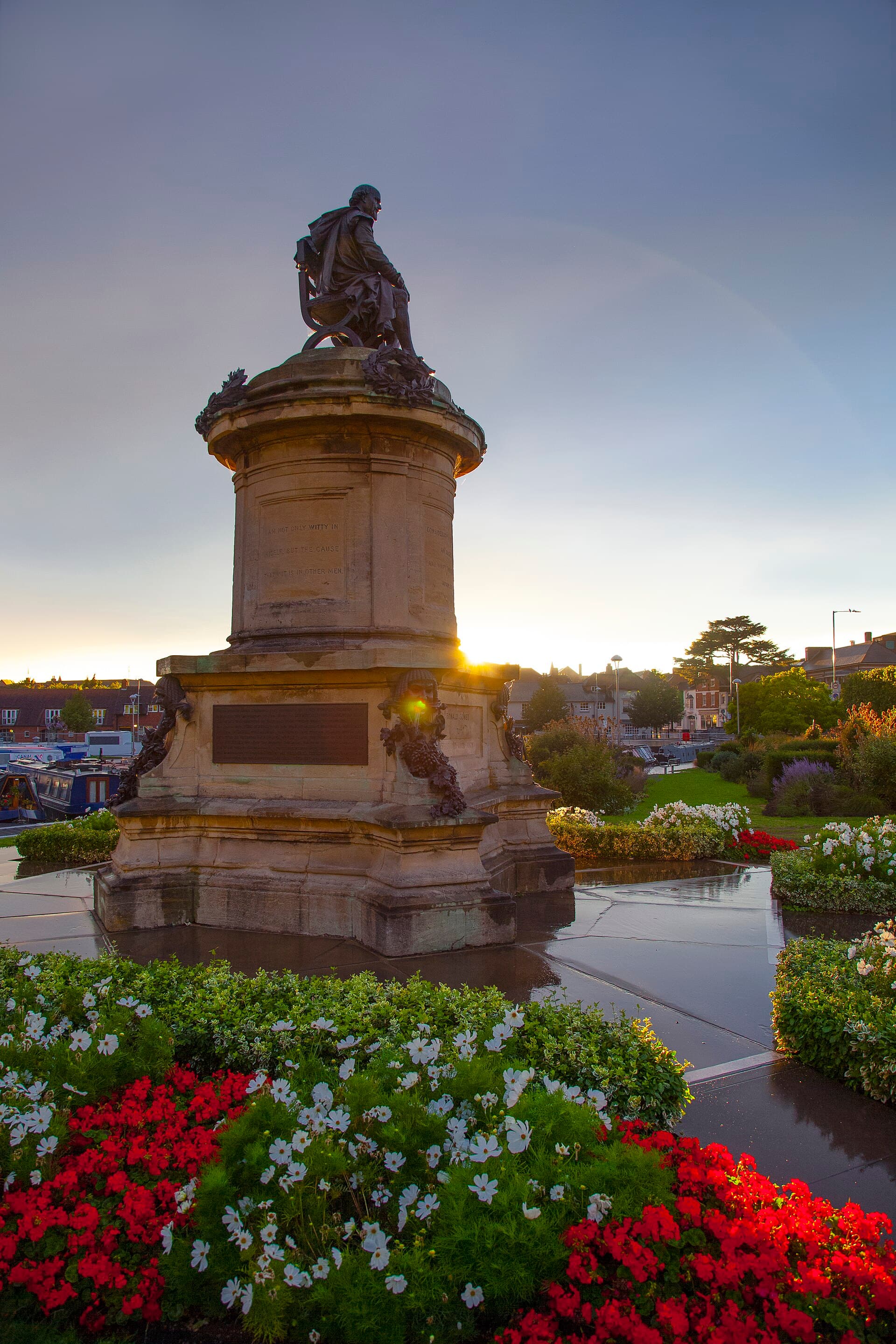 Bancroft Gardens & Gower MemorialShakespeare does not stand on a plinth here; he sits, at ease, on a tall pedesta5 minutes walk4.5
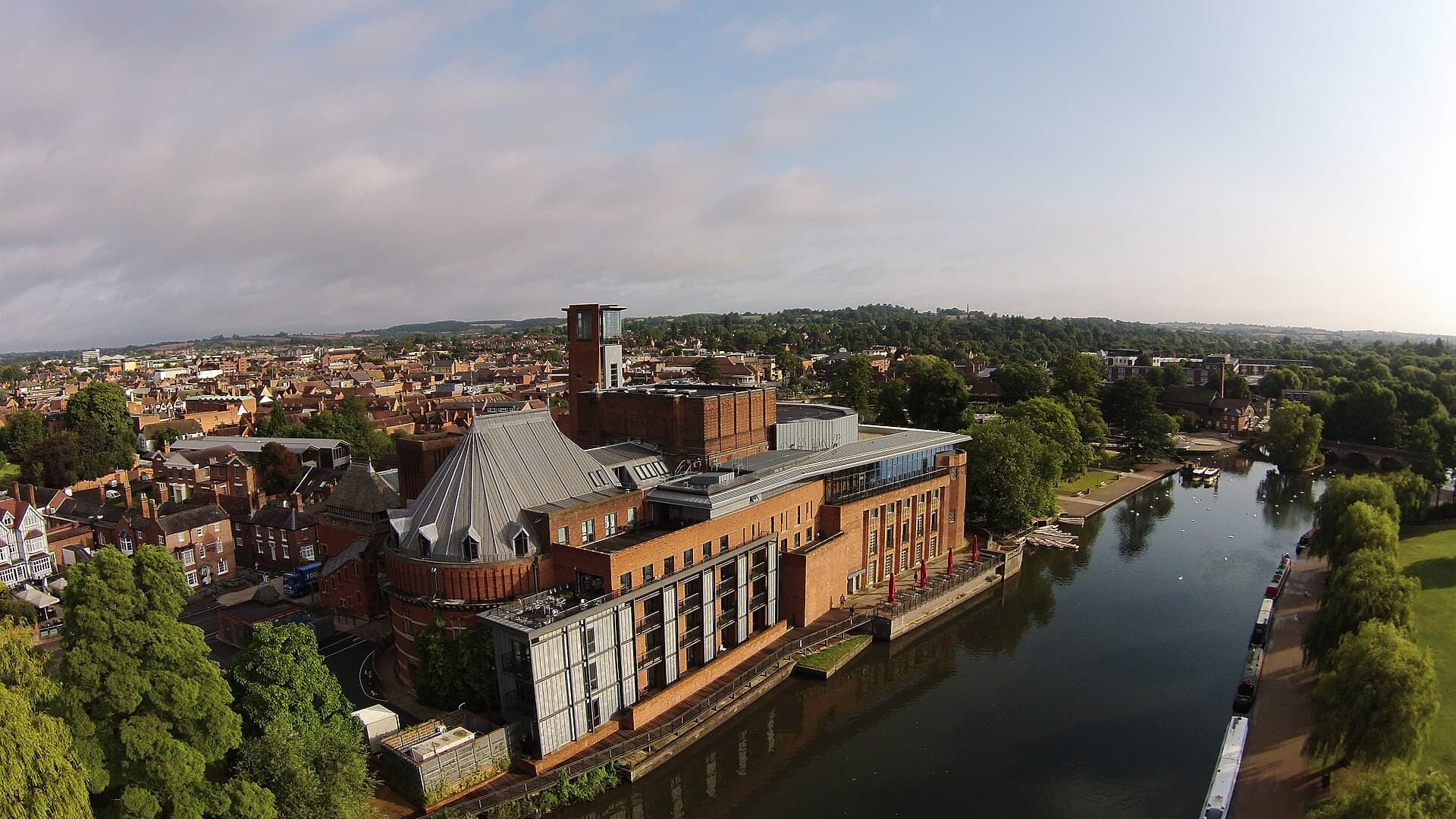 Royal Shakespeare TheatreOne of the best views of Stratford is not from the riverbank but above it: 32 me6 minutes walk4.6
The Henley Street frontage is free and is the prettiest thing about the house, so if you have only an hour, a photo from outside will do. The ticket earns its price if you add Anne Hathaway's Cottage for £5 and come back to New Place gardens on another day, or if you have children who will enjoy the actors in the garden.
Anne Hathaway's Cottage, with its wide gardens, is the roomiest for children and pushchairs, and New Place is an easy open garden. The Birthplace is cramped with steep stairs, so treat it as a short stop and give the cottage the longer visit.