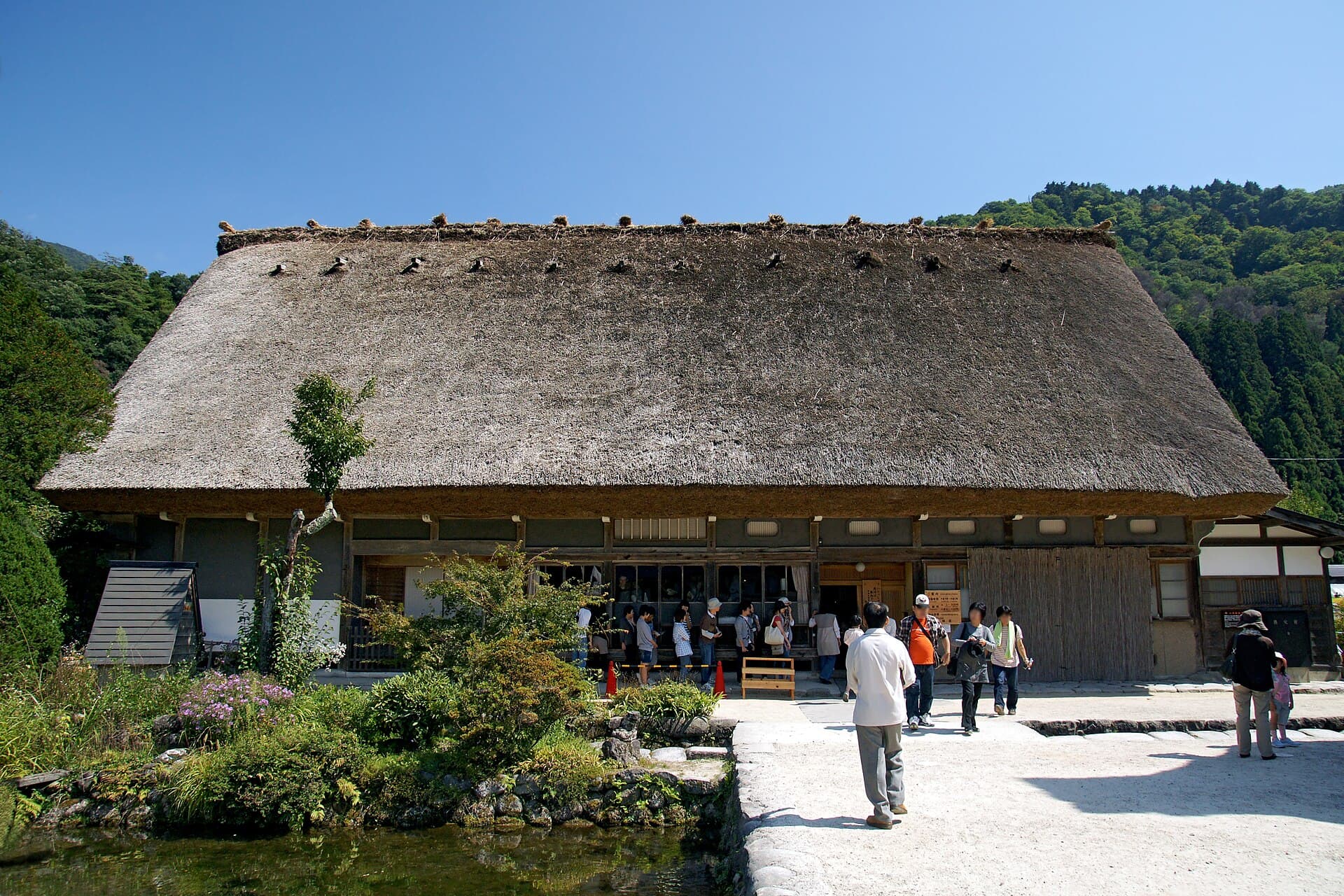
Gasshō houses
Steep thatched roofs.
Emran Kassim — CC BY 2.0 · Shift — CC BY-SA 3.0 · Itoshin87 — CC BY-SA 3.0 · Alexkom000 — CC BY 4.0 · くろふね — CC BY 3.0 · ESU — CC BY 3.0 · ::::=UT=:::: — CC BY-SA 3.0 · z tanuki — CC BY 3.0
The main village of Shirakawa-go, in the remote mountain valley of the Shō River in central Japan, famous for its steep thatched gasshō-zukuri farmhouses. In 1995 it joined the UNESCO World Heritage List with Ainokura and Suganuma in Gokayama as the «Historic Villages of Shirakawa-go and Gokayama». Gasshō-zukuri means built like hands pressed together, which the steep roofs resemble; they were designed to shed heavy snow, and the upper floors were used to raise silkworms. The mountains cut the valley off from the outside world until around the 1950s, which preserved the houses and their traditions. What sets Ogimachi apart is that it is lived in: families still occupy many of the houses, while some are open as museums, such as the Wada House, and the Gasshō-zukuri Minkaen open-air museum holds houses moved there. From the Ogimachi castle-site viewpoint on the hill comes the famous view of the village among rice fields and mountains. Walking around the village is free; some houses charge a small fee. Buses come from Takayama in about an hour, and from Kanazawa and Toyama. The village is lit up on weekend evenings in January and February, and since 2019 the light-up can only be seen with an advance booking. Because people live here, respect their property and stay out of private gardens.
Steep thatched roofs.
The village from above.
And the light-up.
Ogimachi, Shirakawa village, Gifu Prefecture
Yes; the light-up is held on weekend evenings in January and February, and since 2019 it can only be seen with an advance booking.