Upper floors
Where silkworms lived.
663highland — CC BY 2.5 · z tanuki — CC BY 3.0 · Bernard Gagnon — CC BY-SA 3.0 · Takahashi J — CC BY-SA 3.0 · Ippukucho — CC BY 3.0 · fullfen666 — CC BY-SA 2.0 · Unknown — CC BY-SA 3.0 · そらみみ — CC BY-SA 4.0
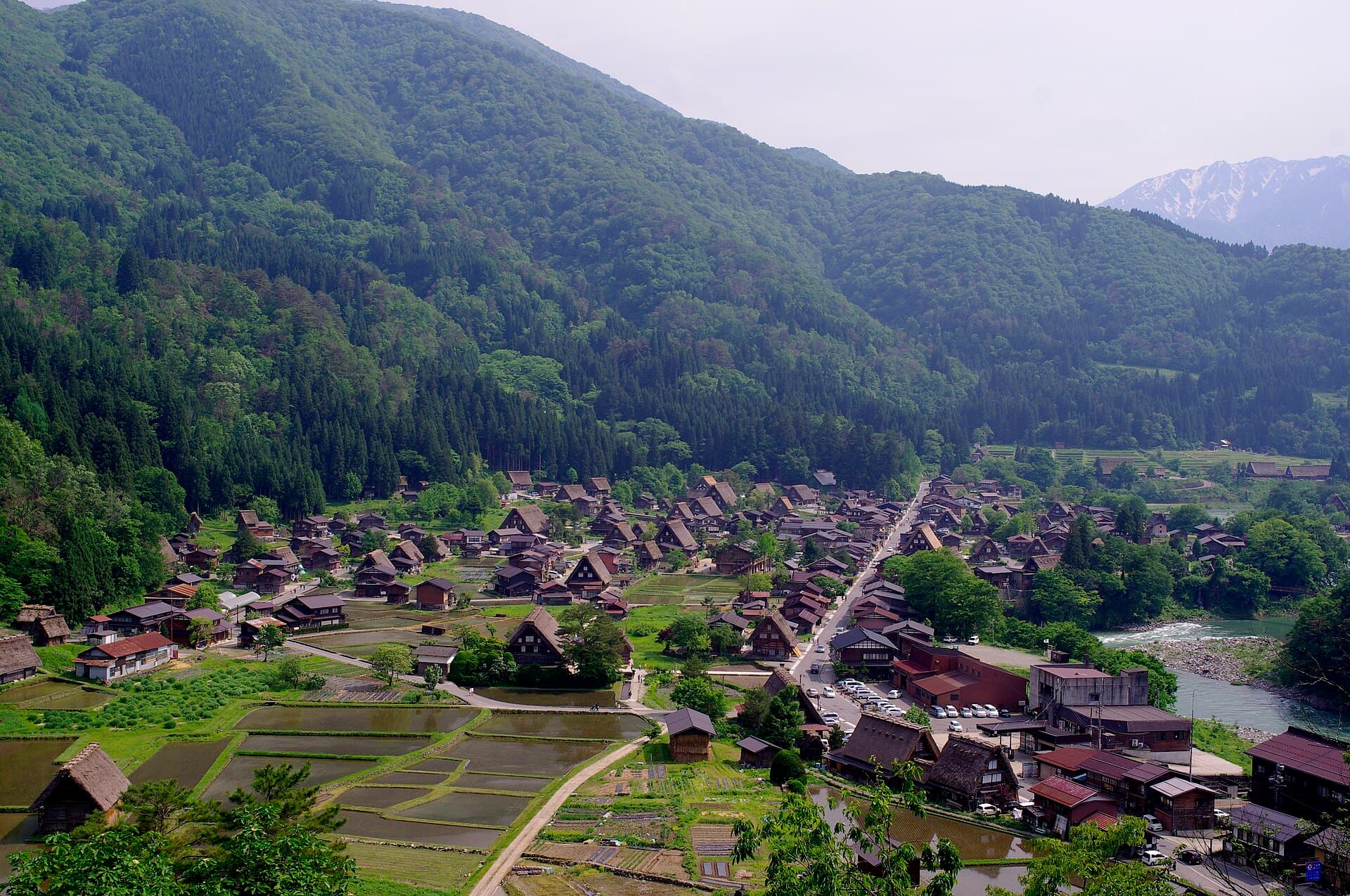
One of the largest gasshō-zukuri houses in Ogimachi and an Important Cultural Property of Japan since 1995, together with its storehouse, outbuilding and grounds. The family still lives here, but parts of the house are open to visitors. The Wada family goes back to 1573, its heads taking the name Yaemon generation after generation. In the Edo period family members served as checkpoint officials and village heads, and the family grew rich trading saltpetre, used to make gunpowder. The present house dates from the late Edo period and was once home to more than twenty people in one large household. The house has three storeys and measures 22.3 by 12.8 metres; the upper floors were used to raise silkworms, with gaps in the floorboards to let the hearth's warmth and smoke rise, which protected the wood and thatch from insects and damp. Up top you can see the rope-bound roof beams, and around the house are a pond for melting snow, stone channels and windbreak trees. Tickets are 400 yen, and it opens 9:00-17:00 with irregular closing days, according to the Shirakawa-go tourist association. It is the house in the foreground of the view from the hilltop viewpoint, a few minutes' walk from the bus stop.
Where silkworms lived.
Bound with rope.
At the heart of the house.
North end of Ogimachi, Shirakawa-go
Yes; although the family still lives there, parts of the house are open 9:00-17:00 for 400 yen, according to the local tourist association.