
Pond and islands
Clipped pines.
Jakub Hałun — CC BY-SA 4.0 · Jakub Hałun — CC BY-SA 4.0 · Jakub Hałun — CC BY 4.0 · Jakub Hałun — CC BY 4.0 · そらみみ — CC BY-SA 4.0 · そらみみ — CC BY-SA 4.0 · そらみみ — CC BY-SA 4.0 · そらみみ — CC BY-SA 4.0
A historic Japanese garden in central Hiroshima, begun in 1620 in the Edo period for the domain lord Asano Nagaakira and designed by Ueda Sōko, his chief retainer and tea master. Its name means «shrunken-scenery garden», as it gathers natural landscapes into a small space. The garden became a villa of the Asano family, and Emperor Meiji stayed there when the Imperial General Headquarters moved to Hiroshima; the family gave it to the prefecture in 1940. Close to the blast, it was badly damaged in the 1945 atomic bombing and served as a refuge for victims, then was restored and reopened in 1951. A broad pond at its centre holds small islands and clipped pines, crossed by wooden and stone bridges including an arched bridge, and a path circles it past streams, small hills, teahouses and lawns, with koi swimming in the pond. Adult tickets are about 260 yen, and it opens 9:00-18:00 from April to September and to 17:00 from October to March, per visitor guides. It is a quiet oasis a few minutes from Hiroshima Station.
Clipped pines.
Over the pond.
In the pond.
Kaminobori-chō, central Hiroshima, by the Prefectural Art Museum
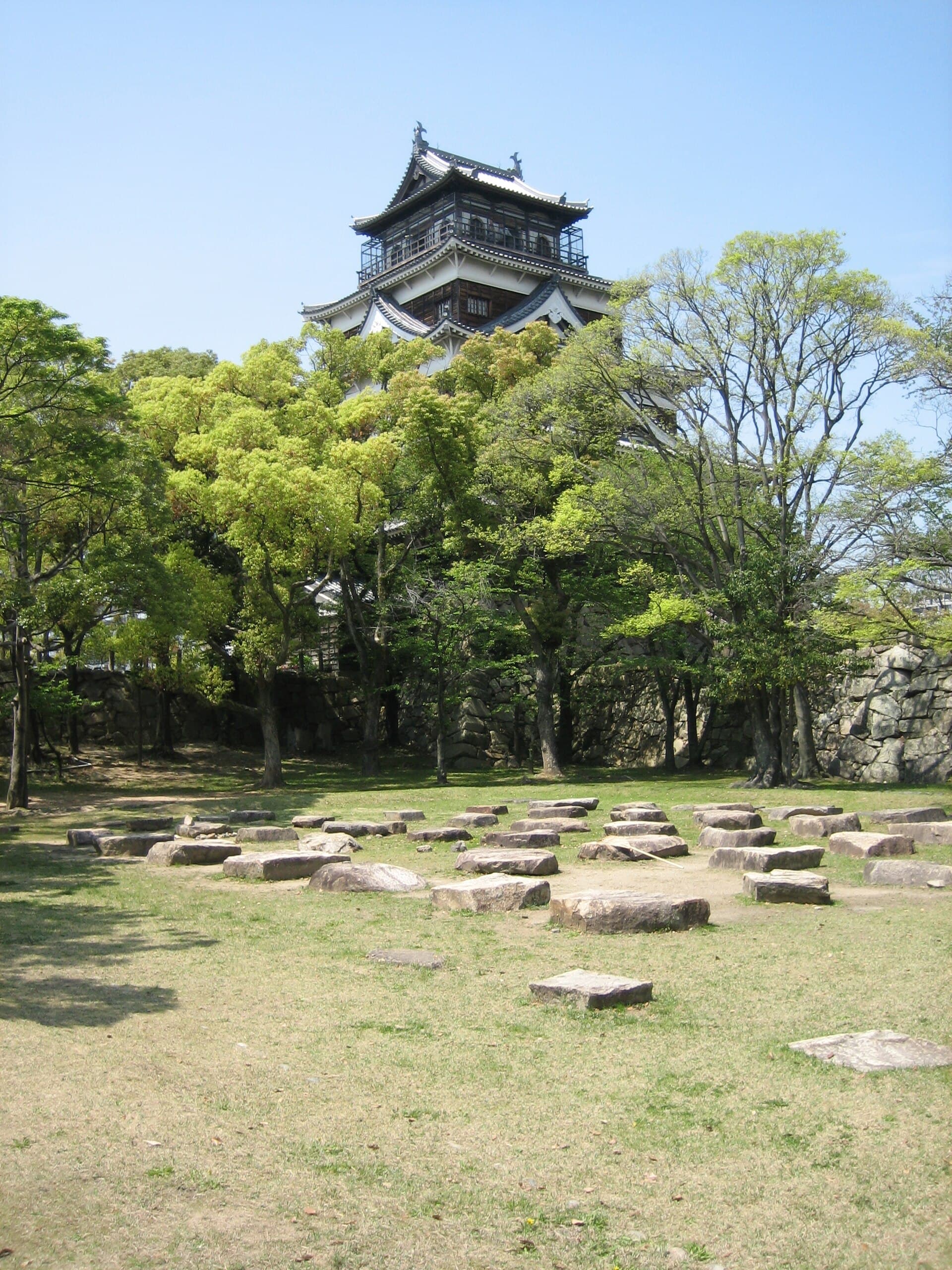 Hiroshima Castle (Carp Castle)A castle built by the warlord Mōri Terumoto between 1589 and 1599 on the delta o10 minutes walk4.1
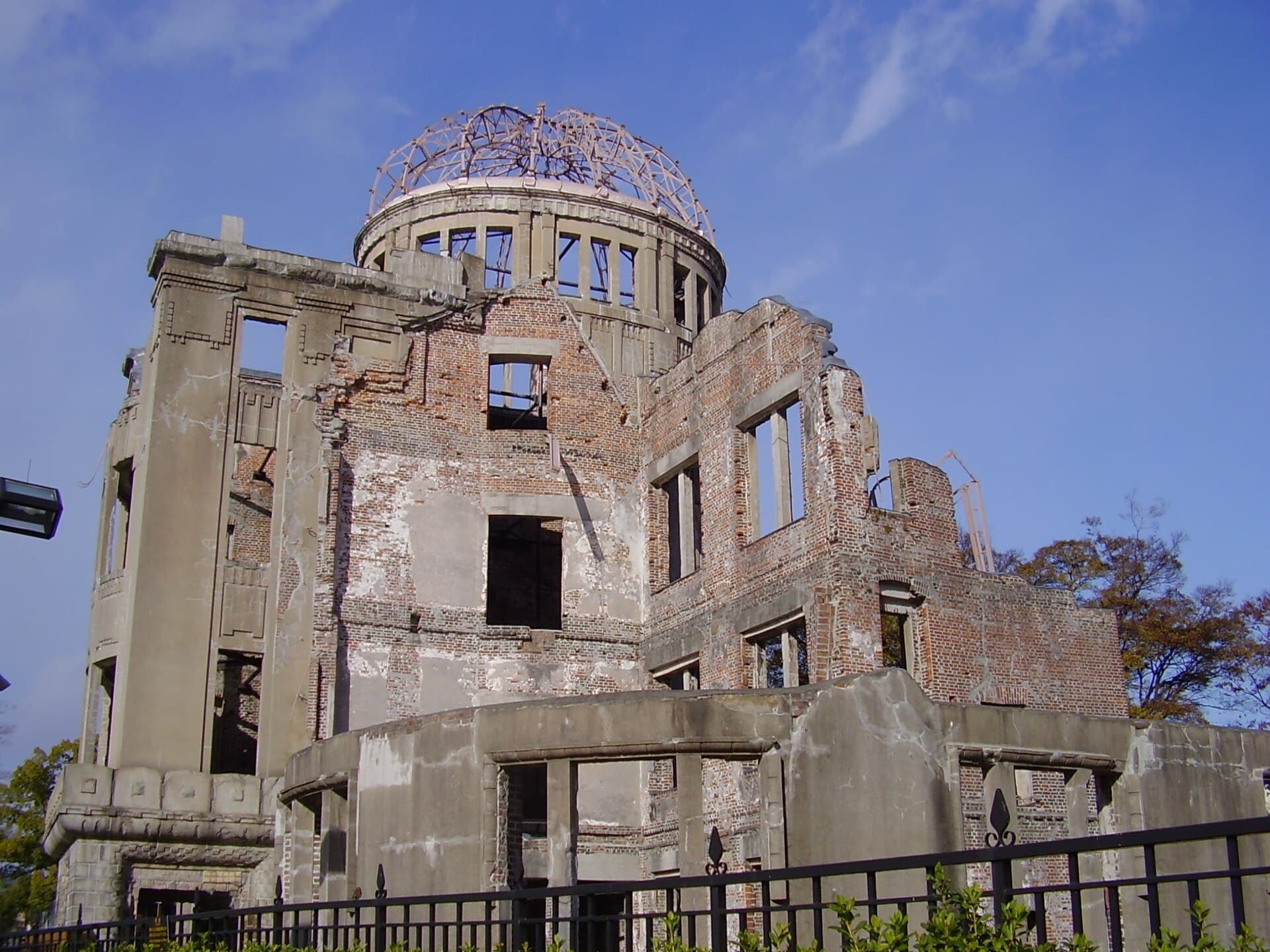 Atomic Bomb Dome (Hiroshima Peace Memorial)A building that remained standing close to where the atomic bomb dropped on Hiro18 minutes walk4.6
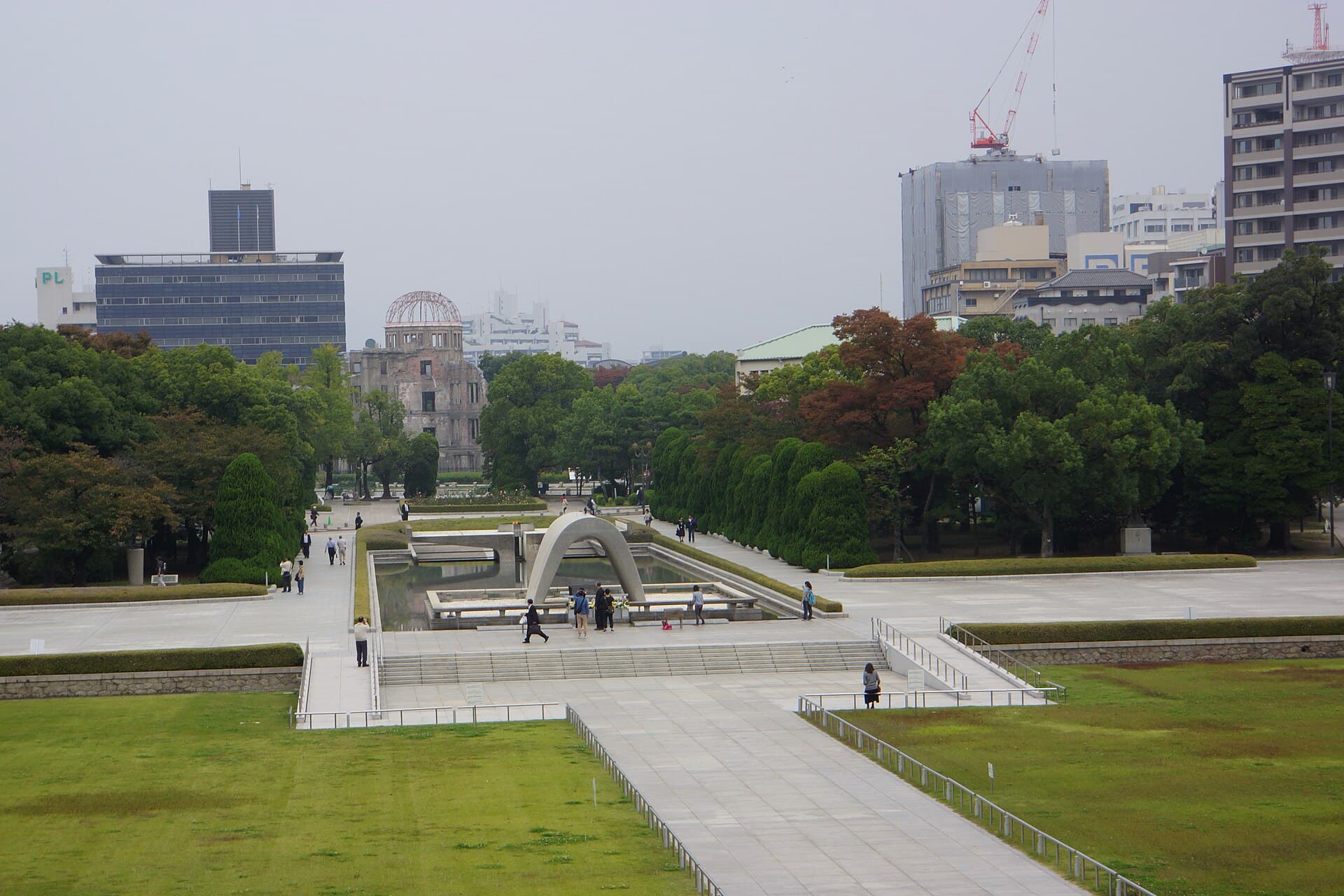 Hiroshima Peace Memorial Park and MuseumA memorial park at the heart of Hiroshima, dedicated to the city's legacy as the21 minutes walk4.8
«Shrunken-scenery garden»: it gathers landscapes of hills, lakes and streams into a small space, and it was begun in 1620.