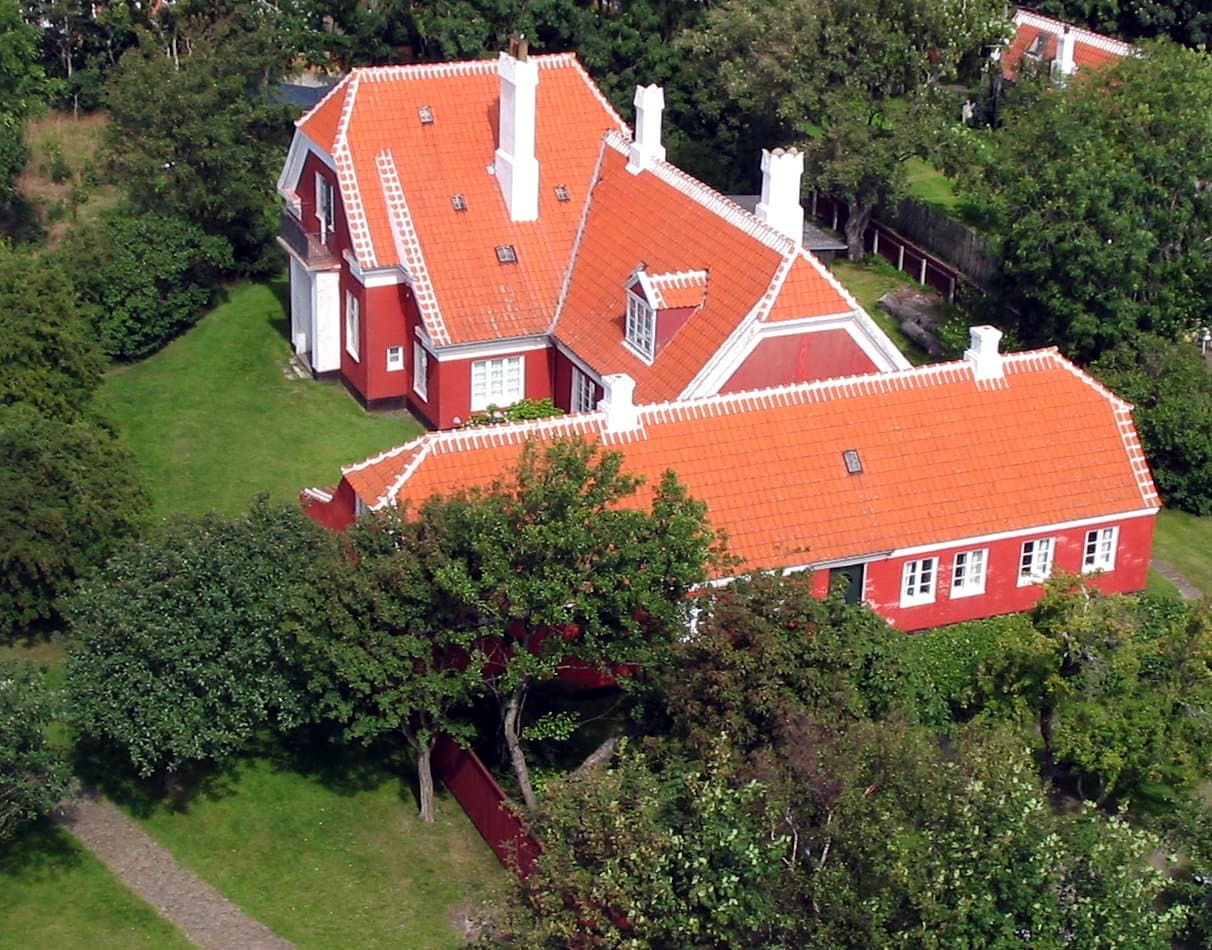
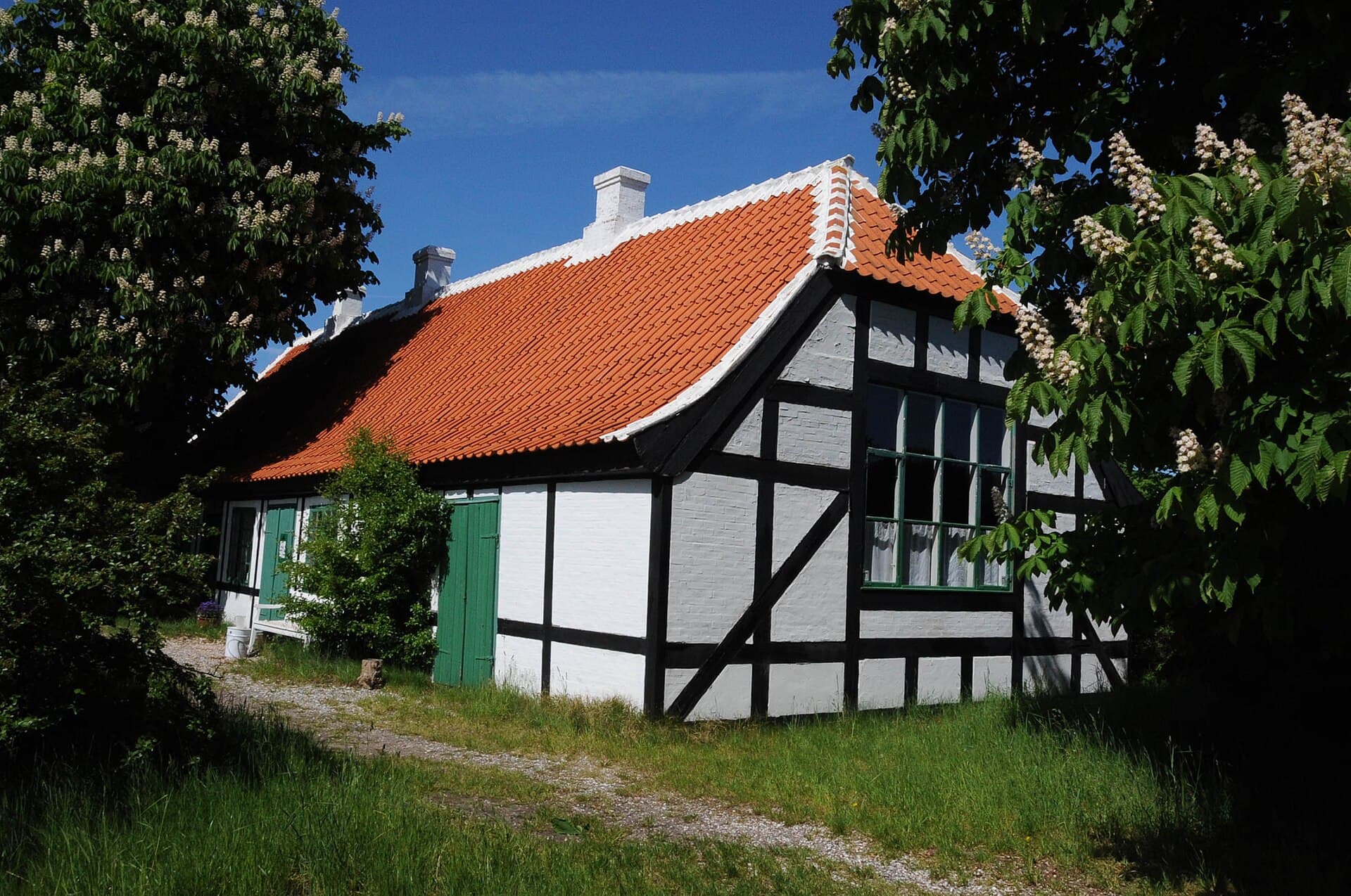
The Brøndum room
The original dining room, reassembled as it was.
Zejo — Public domain · Villy Fink Isaksen — CC BY-SA 4.0 · Skagens Kunstmuseer from Denmark — CC BY-SA 2.0 · Skagens Kunstmuseer from Denmark — CC BY-SA 2.0
The museum holding the work of the **Skagen Painters**, the most famous artistic group in Danish history. The story begins in the 1870s. Skagen was then a poor, isolated fishing village at the far north with no road reaching it by land. Painters began arriving for one reason — **the light**. The pale sand and the two surrounding seas reflect light from every direction, so the day has **no harsh shadows** and the sunset is very long. That light specifically is what they came for. They stayed at **Brøndum''s Inn** — and the museum today is built around its original dining room, reassembled as it was with its paintings still hanging. The leading figures were **Peder Severin Krøyer**, **Anna Ancher** and her husband **Michael Ancher**. Their subjects were not romantic scenes but daily life: fishermen hauling a boat, women waiting on the shore, children on the sand, and blue evenings. Note: **Anna Ancher** was the only one of them born in Skagen, and her work on domestic interiors and women is now regarded as the most important the group produced.
The original dining room, reassembled as it was.
Krøyer''s «blue hour» paintings on the shore.
Rooms, light and women — the group''s most important work.
Brøndumsvej 4, Skagen
Not a poetic phrase but a physical effect with three causes. First, Skagen is **a narrow peninsula with water on three sides**, so light reaches it reflected off the sea surface from several directions rather than only from above. Second, **the sand is very pale** and acts as a further reflector from below. The result is **diffuse illumination with no hard shadows** — faces and bodies lit from every side, which is hard to find anywhere else. The third cause is **latitude**: Skagen is far north, so the sun sets at a very oblique angle and the «blue hour» after sunset lasts a long time rather than minutes. ⚠ That last effect is precisely what **Krøyer** painted in his best-known works — women walking on the shore in a blue light that is neither day nor night.