The dark passage
A long vaulted corridor.
Jaume Ollé — CC BY 3.0 · IssamBarhoumi — CC BY-SA 4.0 · Habib M'henni — CC BY-SA 4.0 · Habib M'henni — CC BY-SA 4.0
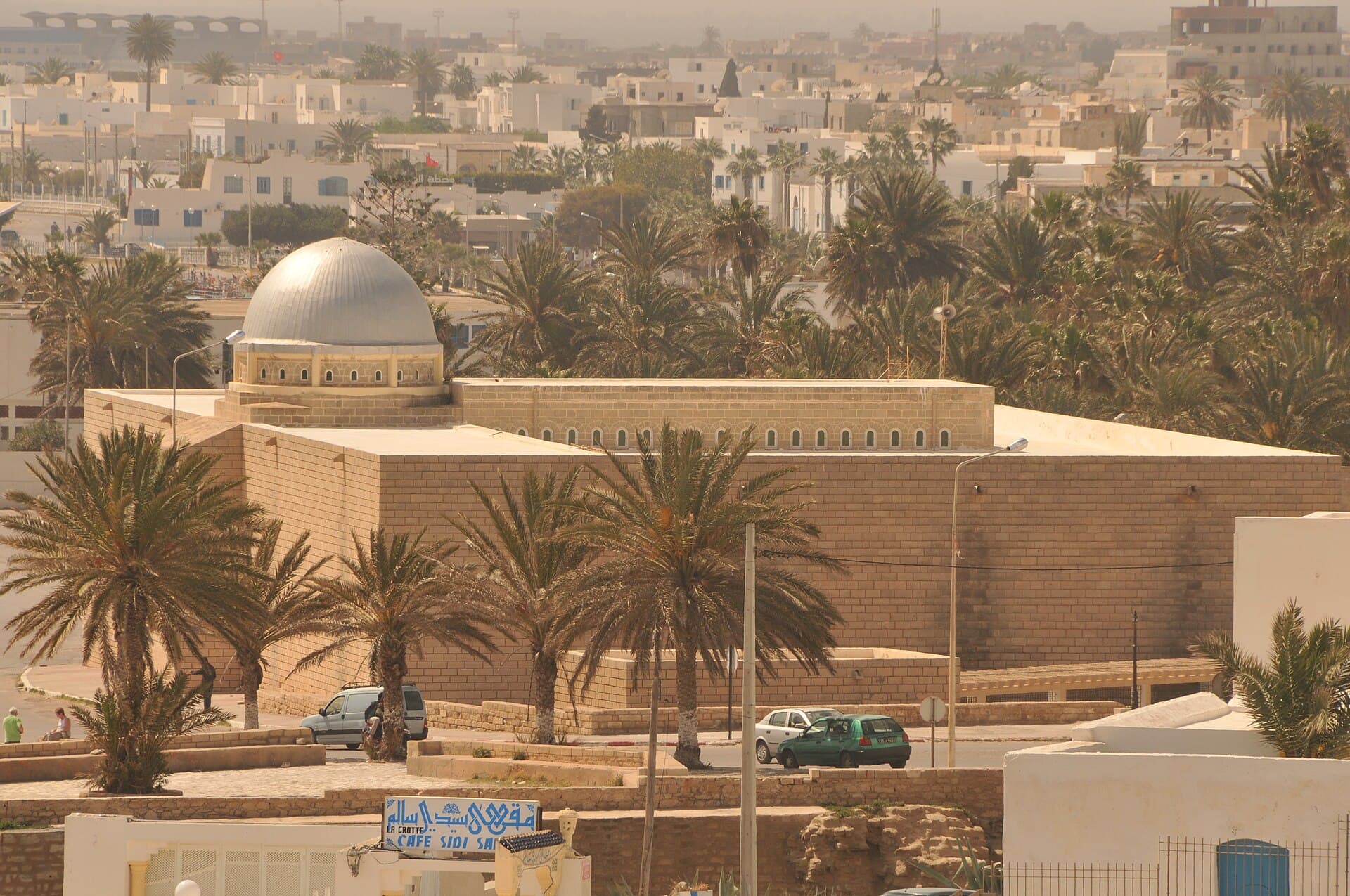
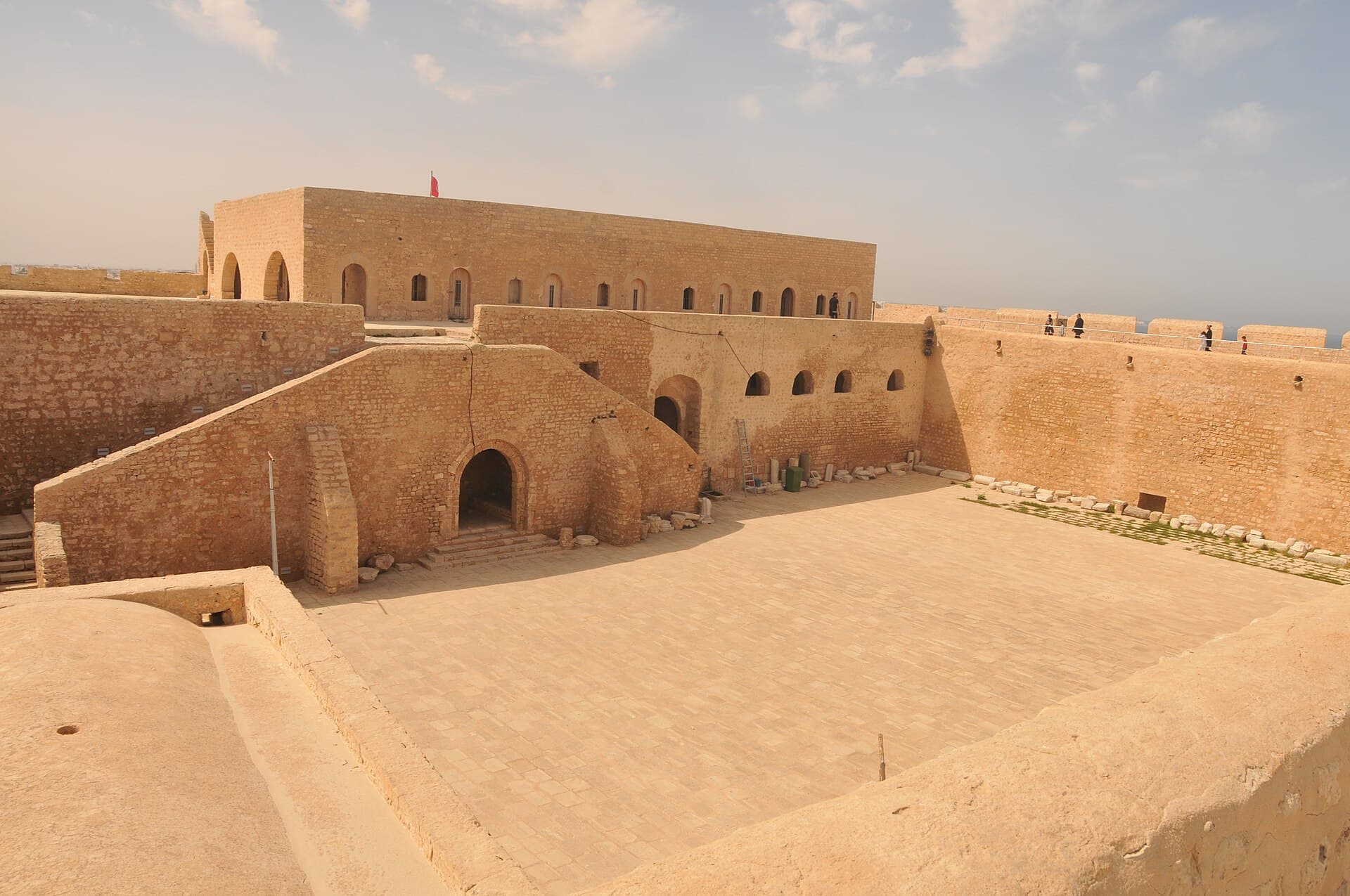
The massive gate into Mahdia's medina and the most striking survivor of the walls of the Fatimid capital that the caliph Abdallah al-Mahdi founded in the tenth century on a narrow peninsula jutting into the sea. Its name means the dark vestibule: a long, dim vaulted passage cutting through a huge stone tower that guarded the city's only landward entrance. Parts of the walls were destroyed in the sixteenth century during the wars along this coast, and the gate was rebuilt afterwards. Walk through and you come out into the quiet lanes of the medina and Place du Caire with its cafés under the trees. Mahdia is known for silk weaving, and in small workshops you can watch weavers at their wooden looms. Walking through the passage is free, and you can climb onto the roof of the gate for a view over the town for a small fee, per visitor guides. The small Mahdia museum is next door (8 TND, closed on Mondays).
A long vaulted corridor.
Cafés under the trees.
Wooden looms.
Entrance to the medina, Mahdia
The dark vestibule, after the long vaulted passage that runs through the gate.