
The winged altarpiece
Its wings open and close with the calendar, so it changes by season.
Maros M r a z (Maros) — CC BY 2.5 · Ville Miettinen — CC BY 2.0 · Jan Starec — CC BY-SA 3.0 · Of — Public domain
The largest church in Slovakia, and **the easternmost Gothic cathedral in Europe** — beyond it no cathedral in this style exists until Ukraine. It was built between about 1378 and 1508 on the site of an earlier church that burned, and holds around five thousand people. It is 60 metres long and 36 wide, with two unequal towers over the crossing — one of which was never finished. Its most valuable holding is the **high altar** of 1474-1477: one of the largest surviving winged altarpieces in Europe, carrying **48 panels** telling the story of St Elisabeth of Hungary and the life of Christ. Its wings open and close with the church calendar, so what you see depends on the season. Beneath the church is a **crypt** holding the remains of **Ferenc Rákóczi II**, the prince of Transylvania who led a rising against the Habsburgs, brought here from Turkey in 1906. Note: **the north tower can be climbed** (about 160 steps) for a view along the whole of Hlavná square.
Its wings open and close with the calendar, so it changes by season.
The prince of Transylvania who led a rising against the Habsburgs.
About 160 steps, and a view along the length of Hlavná.
Hlavná 26, Košice
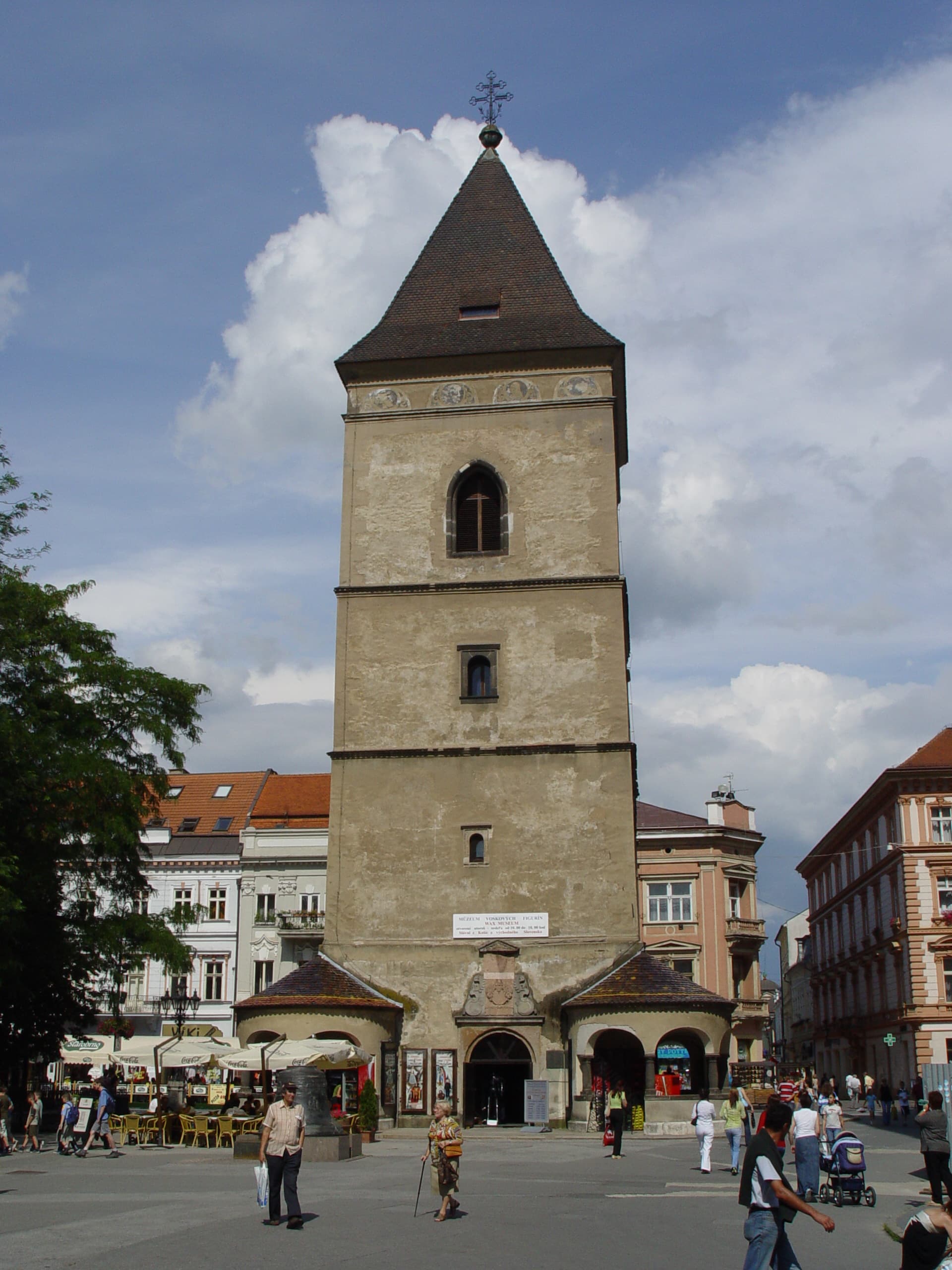 Urban''s TowerA detached bell tower standing directly beside the cathedral, built in the fourt1 minute walk4.7
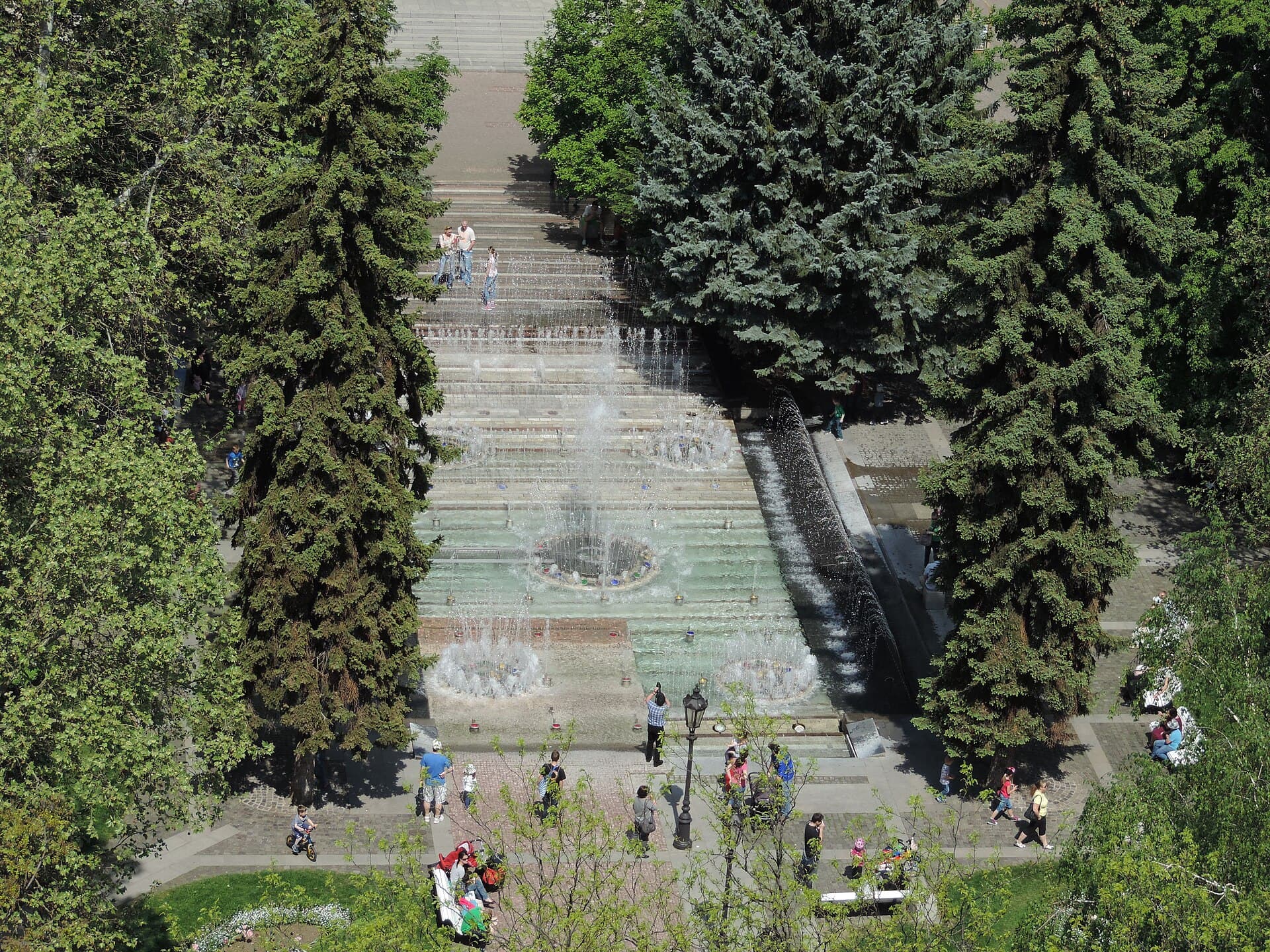 The Singing FountainA fountain in front of the State Theatre whose water moves in time with music, a1 minute walk4.8
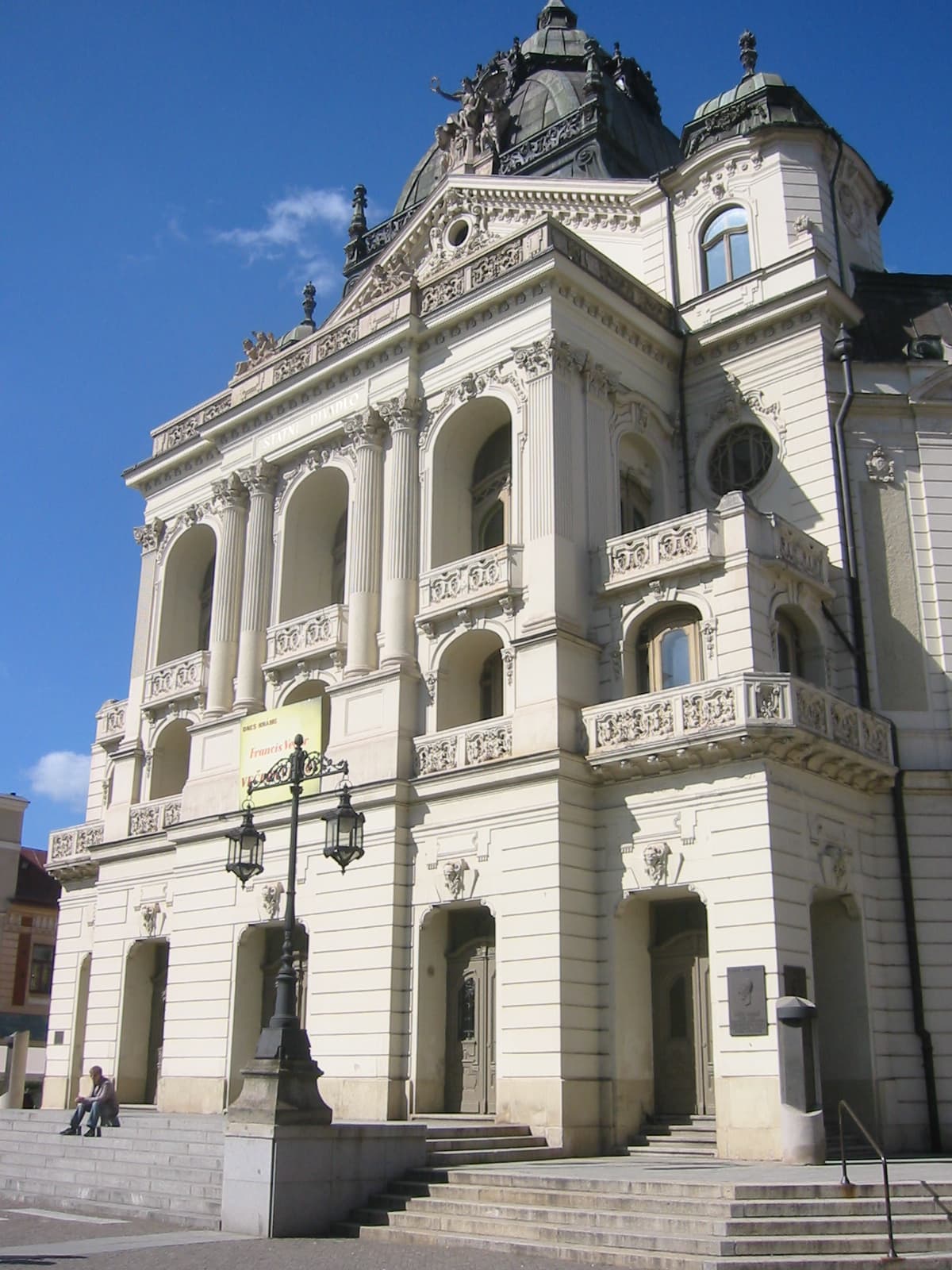 State Theatre KošiceA neo-Renaissance building standing squarely in the middle of Hlavná square, div2 minutes walk4.7
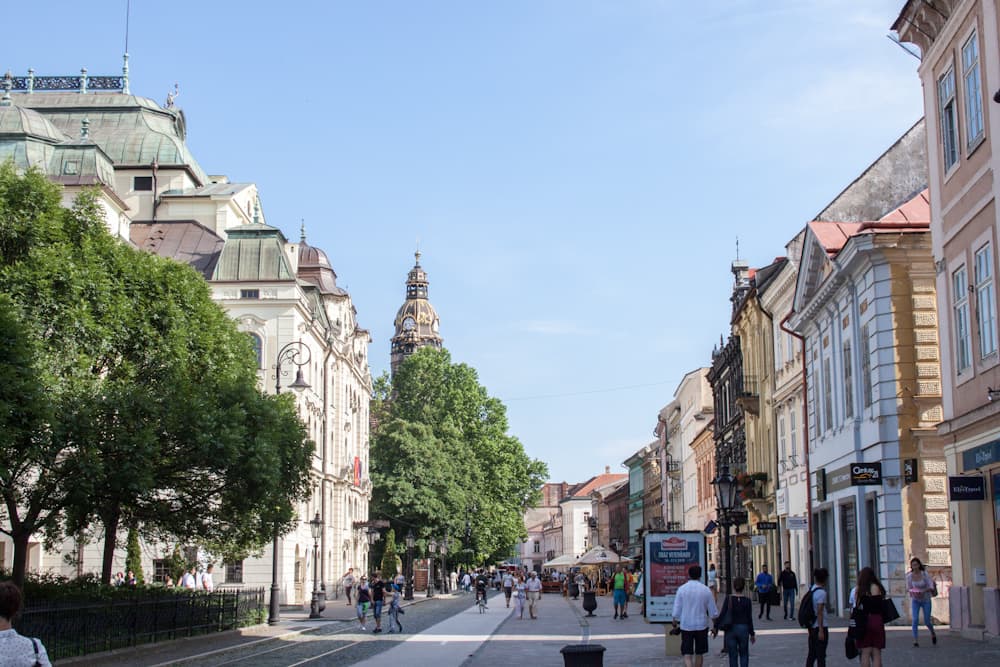 Hlavná StreetKošice''s main street, and in truth a **spindle-shaped square**: it begins narro3 minutes walk
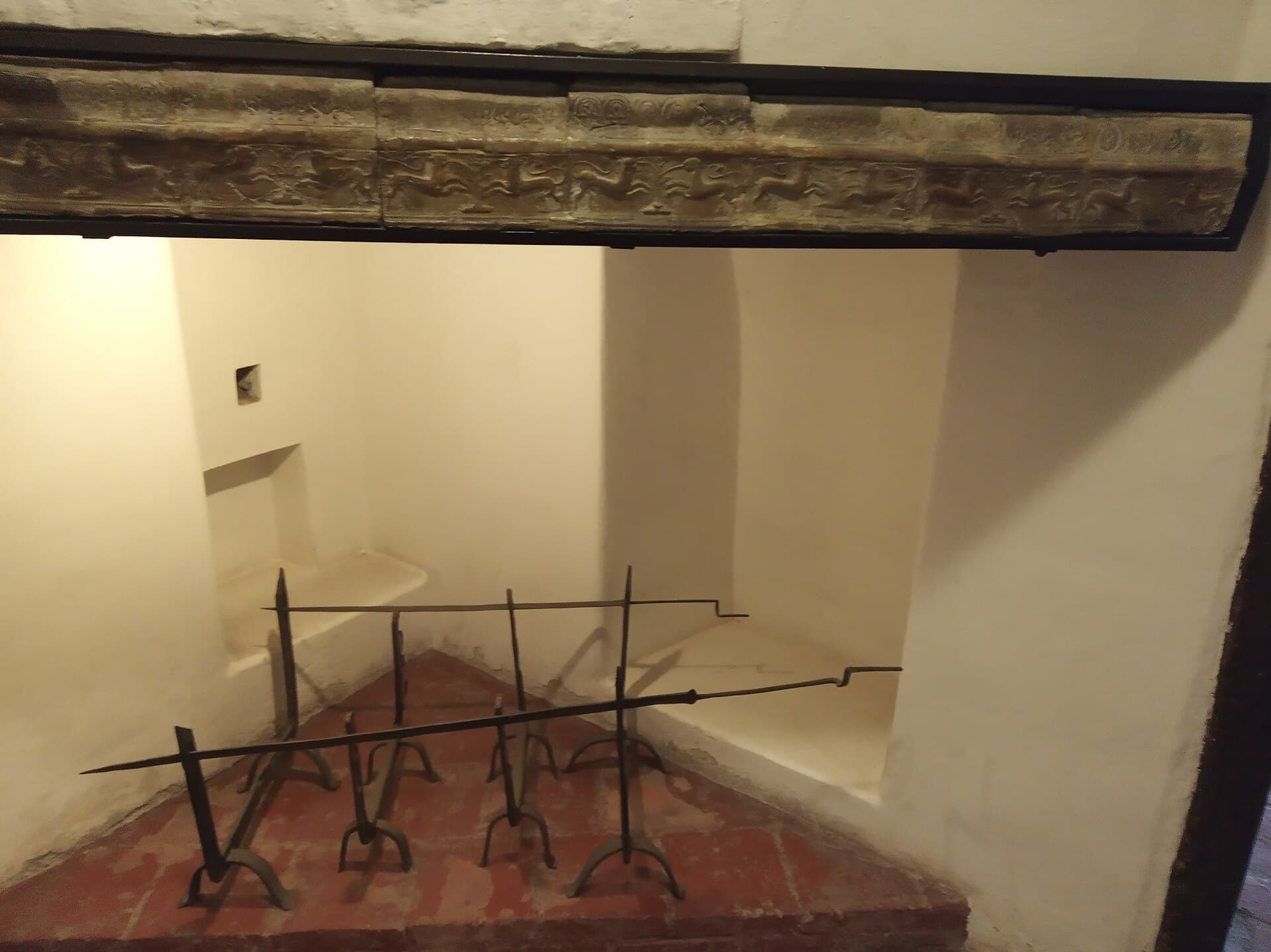 Mikluš PrisonTwo fifteenth-century Gothic houses merged into one building, which served as **4 minutes walk4.7
Because it was not a small provincial town but **one of the most important cities of the Kingdom of Hungary**. In the fourteenth and fifteenth centuries Košice (Kassa) was a major trading junction on the route linking Poland to the Balkans, and **the second or third richest city in the kingdom**. Its money built the cathedral. And in **1369** King **Louis I** granted it a coat of arms of its own — making it **the first city in Europe** to receive armorial bearings by royal decree, arms having previously belonged only to individuals and families. ⚠ St Elisabeth herself was not local: she was a thirteenth-century **Hungarian princess** known for her work with the poor, and became one of central Europe''s best-known saints.