
The choir windows
Glass from the twelve-twenties.
CEphoto, Uwe Aranas — CC BY-SA 3.0 · Rolf Heinrich, Köln — CC BY 3.0 · CEphoto, Uwe Aranas — CC BY-SA 3.0 · Nils Thorben — CC BY-SA 3.0
The youngest of Cologne's twelve Romanesque churches, and that is precisely what distinguishes it. It was consecrated in twelve hundred and forty-seven, a single year before the foundation stone of the Gothic cathedral was laid. It is therefore the last thing the city built in the Romanesque manner, finished just as the next style was beginning a few hundred metres away. Its real treasure is glass. The choir windows, made in the twelve-twenties, are the oldest large scheme of stained glass surviving in Cologne in its original setting, and they survive because they were taken out and hidden before the bombing. The rest of the church was less lucky: part of the tower collapsed in eighteen thirty, the war destroyed most of the fabric, and restoration was not completed until the nineteen-eighties and nineties. Down in the crypt is an old well, the Kunibertspuetzchen, attached to a Cologne folk tale that unborn children waited in its water until they were fetched; women came to the well on that account. The church sits at the northern end of the old town near the Rhine, and its opening is irregular, so check before you make the walk.
Glass from the twelve-twenties.
A crypt well wrapped in a folk tale.
Kunibertskloster 6, 50668 Cologne
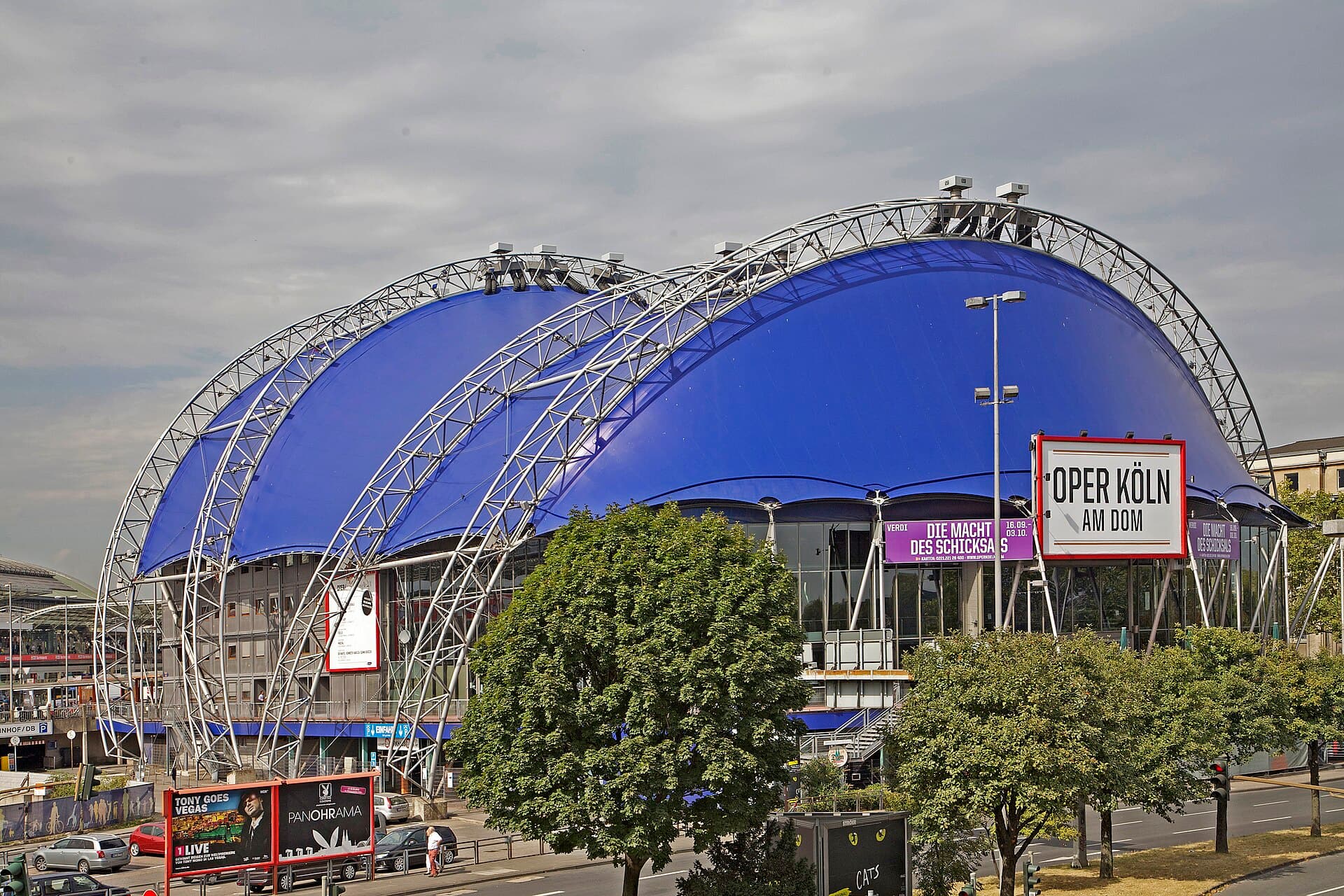 The Musical DomeThe Musical Dome is a performance venue on the Rhine bank directly north of the 5 minutes walk4.7
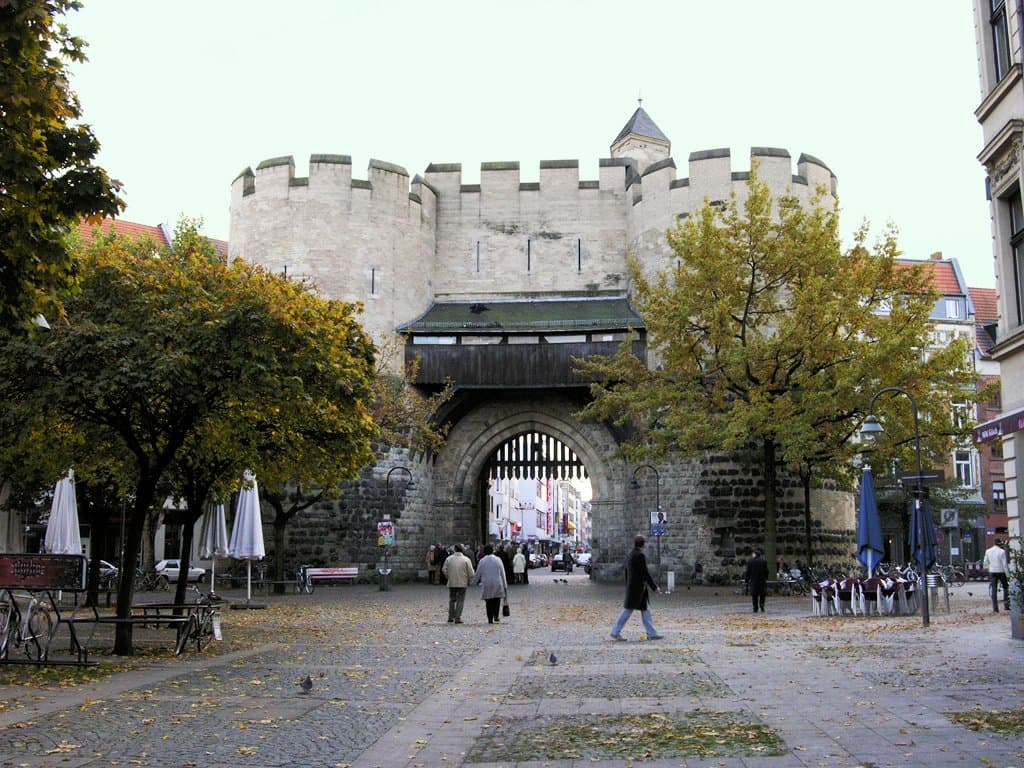 EigelsteintorburgThe Eigelsteintorburg is one of the few surviving gates of Cologne's medieval wa6 minutes walk4.6
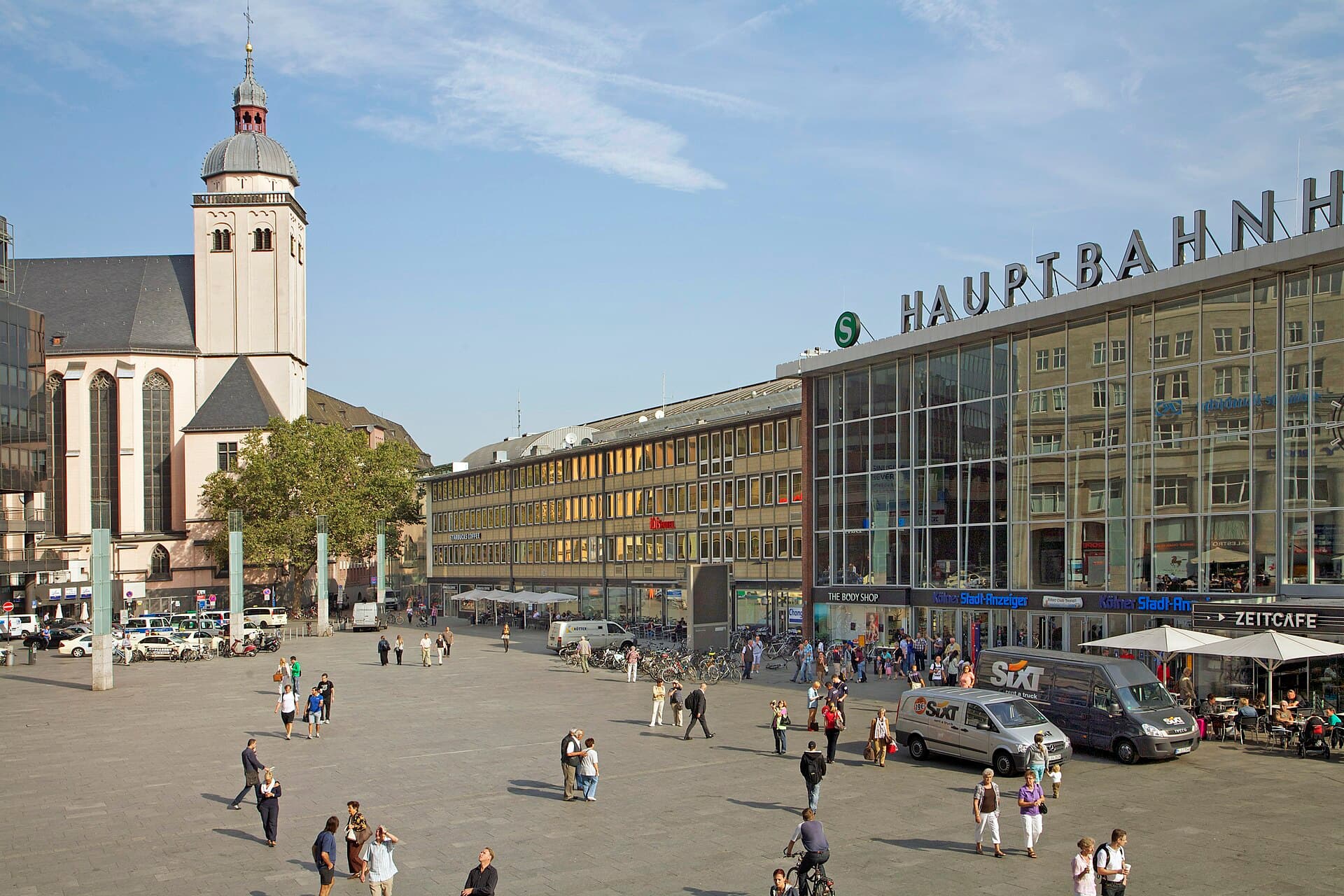 Cologne Central StationCologne Central is among Germany's busiest stations, but what makes it striking 7 minutes walk3.8
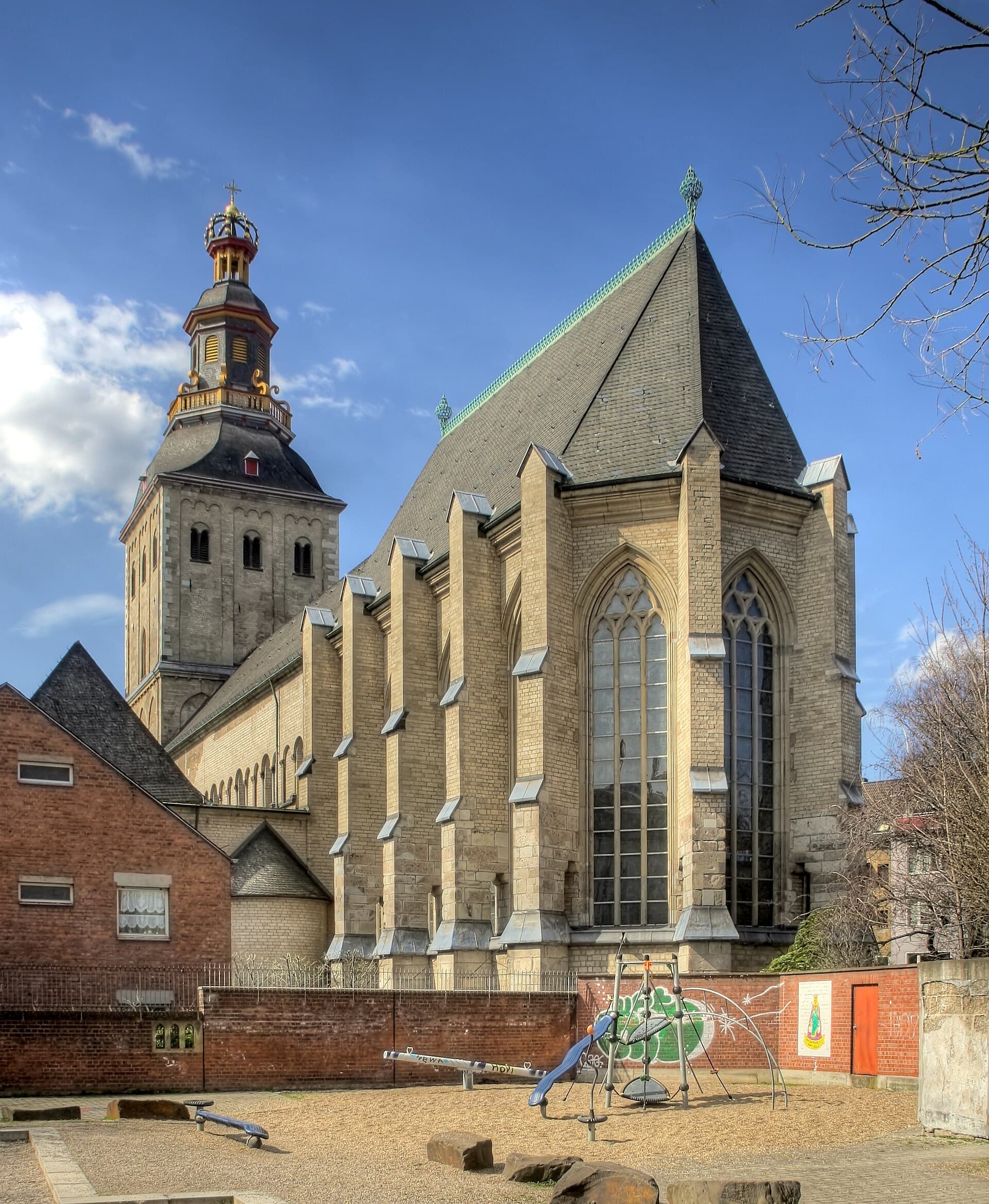 Basilica of St. UrsulaSt. Ursula is one of Cologne's twelve great Romanesque churches and home to the 8 minutes walk4.7
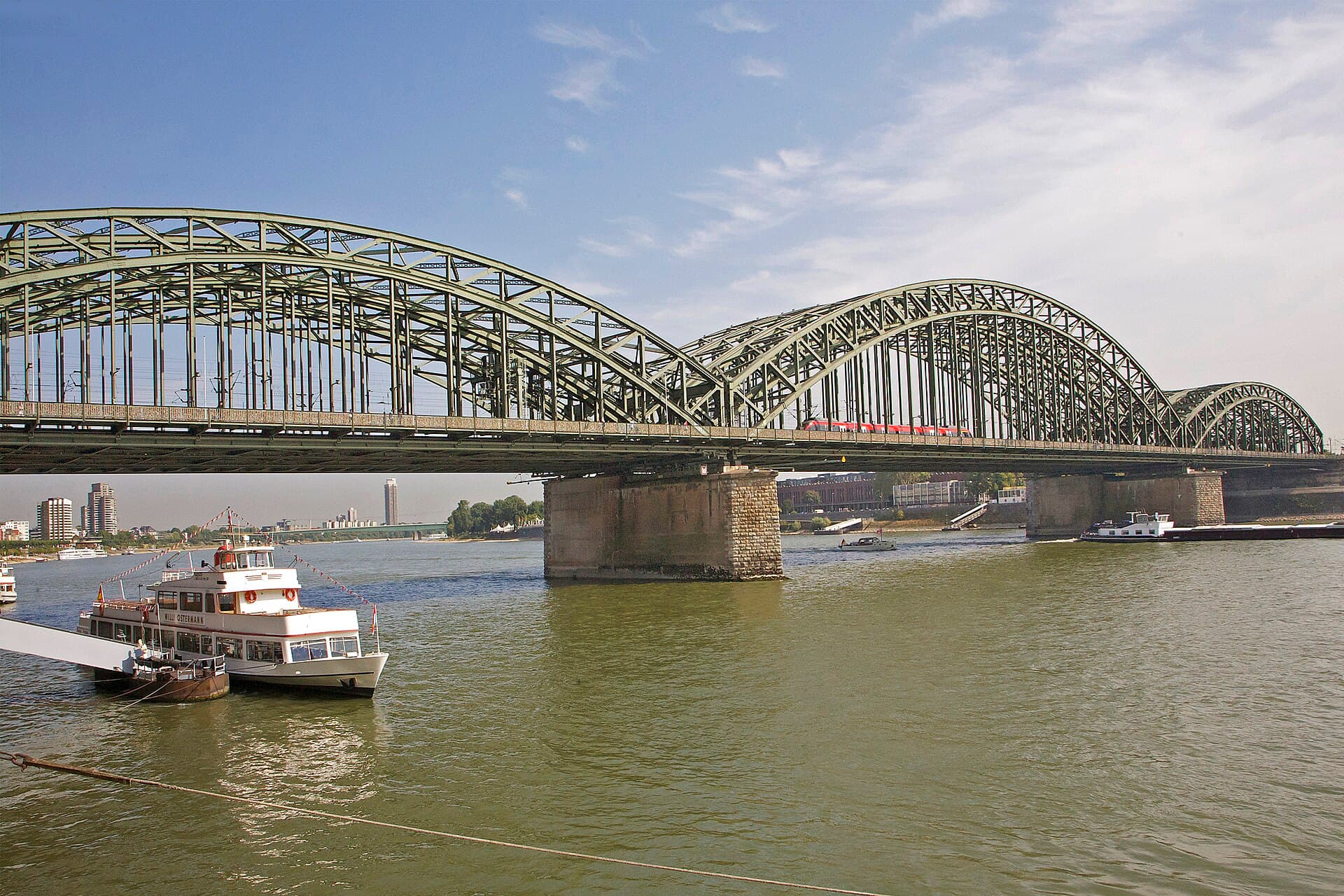 Hohenzollern BridgeThe Hohenzollern Bridge is a railway bridge over the Rhine directly behind Colog8 minutes walk4.7
The word is Cologne dialect for a little well, and it refers to a well in the church crypt. Local tradition held that unborn children waited in its water before they came into the world, so mothers and women hoping for a child visited it. Today the story is better known than the well itself, so expect a piece of the city's imagination rather than a spectacle.