The facades
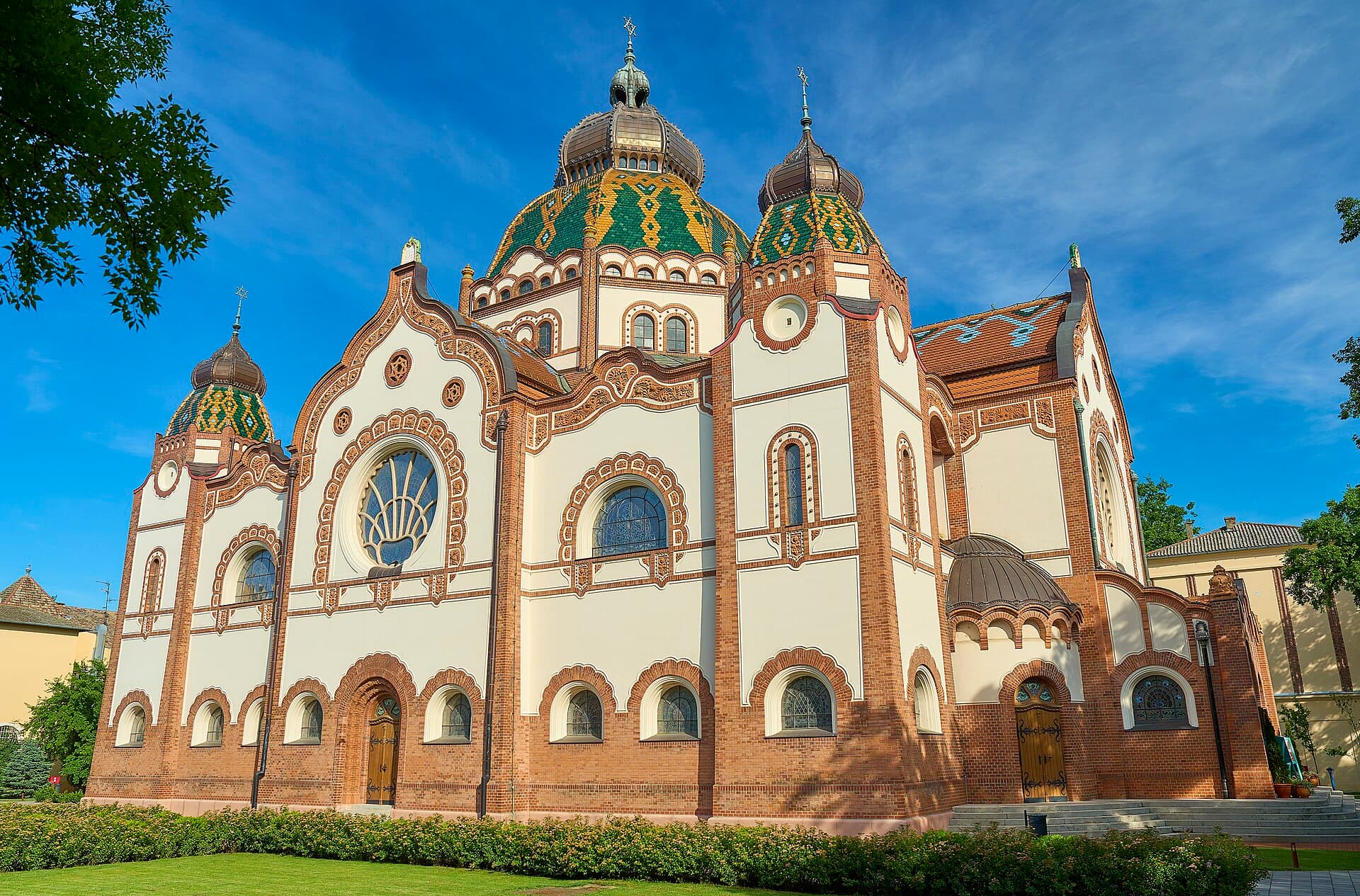
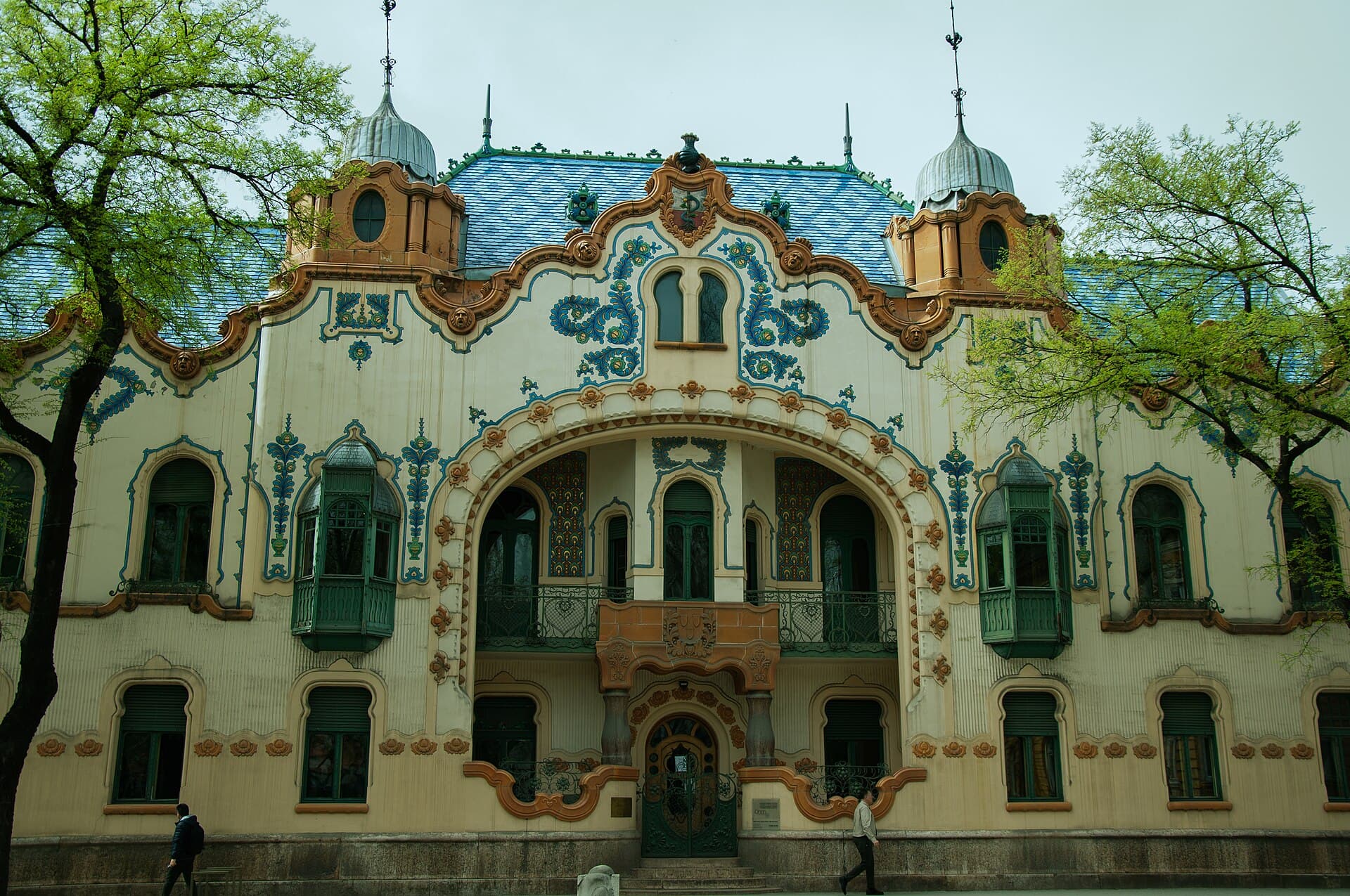
Plant ornament and Hungarian folk motifs.
Mister No — CC BY 3.0 · Mary Mavier — CC BY-SA 4.0 · Mary Mavier — CC BY-SA 4.0 · Miluša Snidová — CC BY-SA 4.0 · Mary Mavier — CC BY-SA 4.0
Subotica City Hall is the best known building in this city in Serbia's northern province of Vojvodina, and a leading example of the Hungarian branch of Art Nouveau in the region. It still houses the local government, combining everyday administration with its role as a major attraction in the city centre. It was built between 1908 and 1912, when the area belonged to Austria-Hungary, to designs by the Budapest architects Marcell Komor and Dezső Jakab, who won a competition the city announced in 1906. It is the third town hall on this site, after those of 1751 and 1826. In 1990 it was classed as a cultural property of exceptional importance in Serbia. The facades carry plant ornament and shapes drawn from Hungarian folk art, and a tower rises 76 m above the building. Guides describe an inside tour of about 40 minutes through the murals and halls, with the option of climbing the tower for wide views over the city. The building stands in the pedestrian centre, 300 m in a straight line from the synagogue and 400 m from Raichle Palace, so one walk covers the finest buildings. Take your time photographing the facade from the square in the midday light. Lake Palić is 7.5 km away if you want to spend the rest of the day there.
Plant ornament and Hungarian folk motifs.
Wide views over the city.
Murals on the guided tour.
Freedom Square, central Subotica, Vojvodina
Guides mention a paid tour, usually at noon. Confirm the time and price at the tourist office.
The Budapest architects Marcell Komor and Dezső Jakab, who also designed the city's synagogue.