The full surround
38 metres of painting encircling you until the frame vanishes.
Wocher, Marquard Fidel Dominicus (1760 - 1830) — Public domain · Marquard Wocher — Public domain · Marquard Wocher — Public domain · Marquard Wocher — Public domain
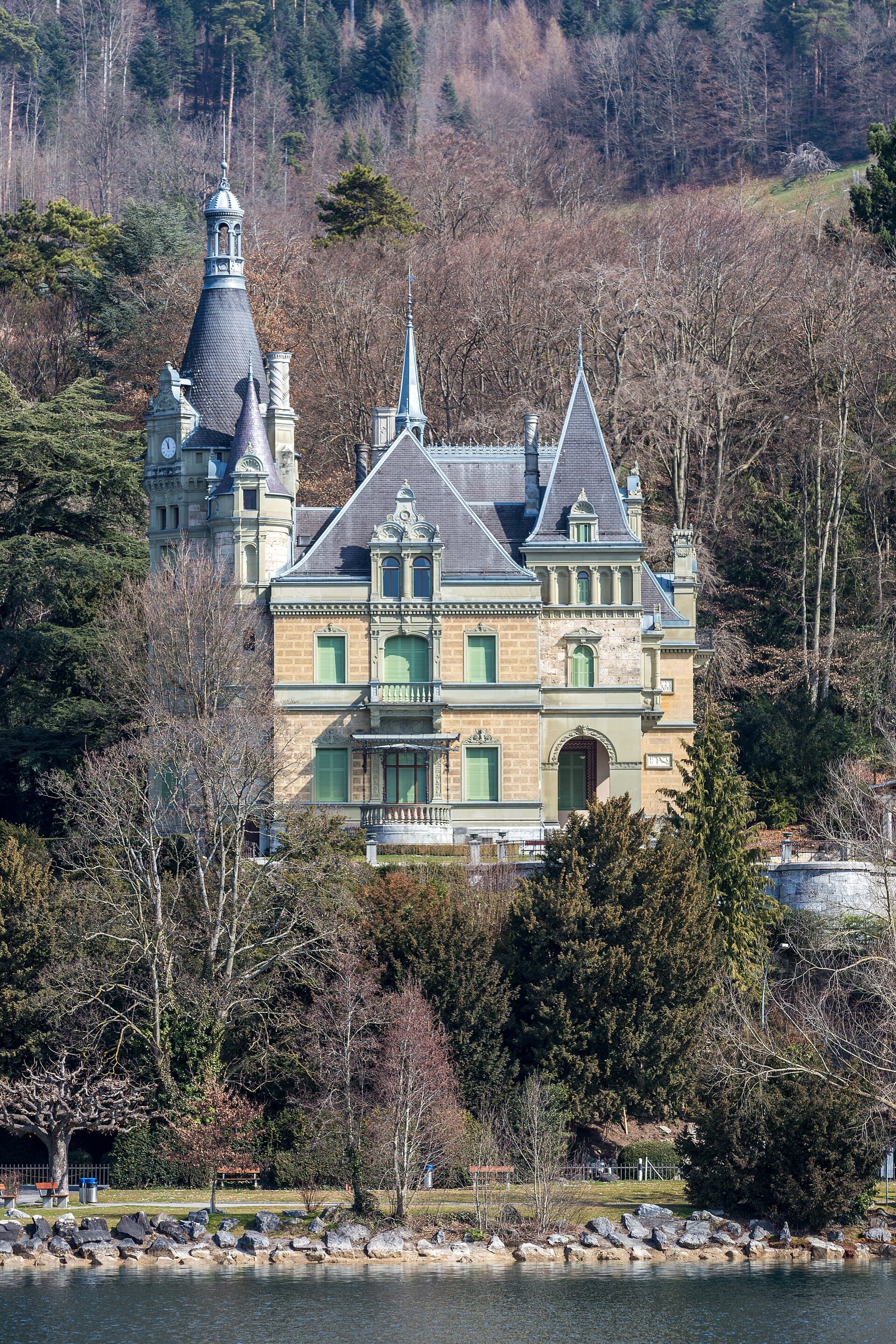
The Thun Panorama is **the oldest surviving circular panorama in the world**: a vast round painting 38 metres long and 7.5 metres high, made by the artist Marquard Wocher between 1809 and 1814, showing the town of Thun and its mountains exactly as they were that year with astonishing documentary precision — every house, every person, every washing line. Before photography and cinema, the "panorama" was Europe's great form of visual entertainment: you entered a circular building and stood at its centre, and the painting surrounded you on every side until the sense of a frame dissolved and you felt you were genuinely standing in the painted town. Of the dozens of panoramas made in the nineteenth century only a few survive, and this is the oldest. It is displayed in a modern rotunda built for it (1961) in the Schadau park on the lakeshore, next to the small Schadau castle. A short, strange and enjoyable visit that rounds out a day in Thun.
38 metres of painting encircling you until the frame vanishes.
A precise record of every house and person in town.
Schadaupark, 3600 Thun
Both are historic circular panoramas and both reward a visit: **Thun** is older (1814), smaller and civic in subject — everyday life in a town. The **Bourbaki** in Lucerne is larger (1881) and dramatic in subject: the defeated French army crossing into Switzerland in 1871, with a sound-and-light presentation and three-dimensional foreground. If you see only one: the Bourbaki is more spectacular in production, Thun purer and historically older.