The library hall
And its fire-guarding pond.
Zhangzhugang — CC BY-SA 3.0 · Zhangzhugang — CC BY-SA 3.0 · Shizhao — CC BY-SA 3.0 · Zhangzhugang — CC BY-SA 3.0 · Zhangzhugang — CC BY-SA 3.0 · Gisling — CC BY 3.0 · Gisling — CC BY 3.0 · Zhangzhugang — CC BY-SA 3.0
A library and garden built in 1561 under the Ming by Fan Qin, a keen reader who had passed the top imperial examination in 1532 and served in the Ministry of War; he filled it with rare books and classics, its design shaped the libraries built after it, and it is one of the oldest surviving private libraries in China. Its name, «One Sky Pavilion», comes from an old commentary on the Book of Changes and was linked in old Chinese belief to the element of water, chosen to protect the library from fire, and a pond and rock garden surround the building. At its peak it held more than 70,000 volumes, only 13,000 remained by the 1940s, and donations have since raised the number to about 300,000; in the 17th century the scholar Huang Zongxi became the first outsider allowed upstairs into its book store. Tickets cost CNY 30, and the site is open from 8.30 am to 5.30 pm from May to October and until 5 pm the rest of the year, per visitor guides. Moon Lake lies next door.
And its fire-guarding pond.
Around the library.
Through the centuries.
10 Tianyi Street, Haishu District, Ningbo
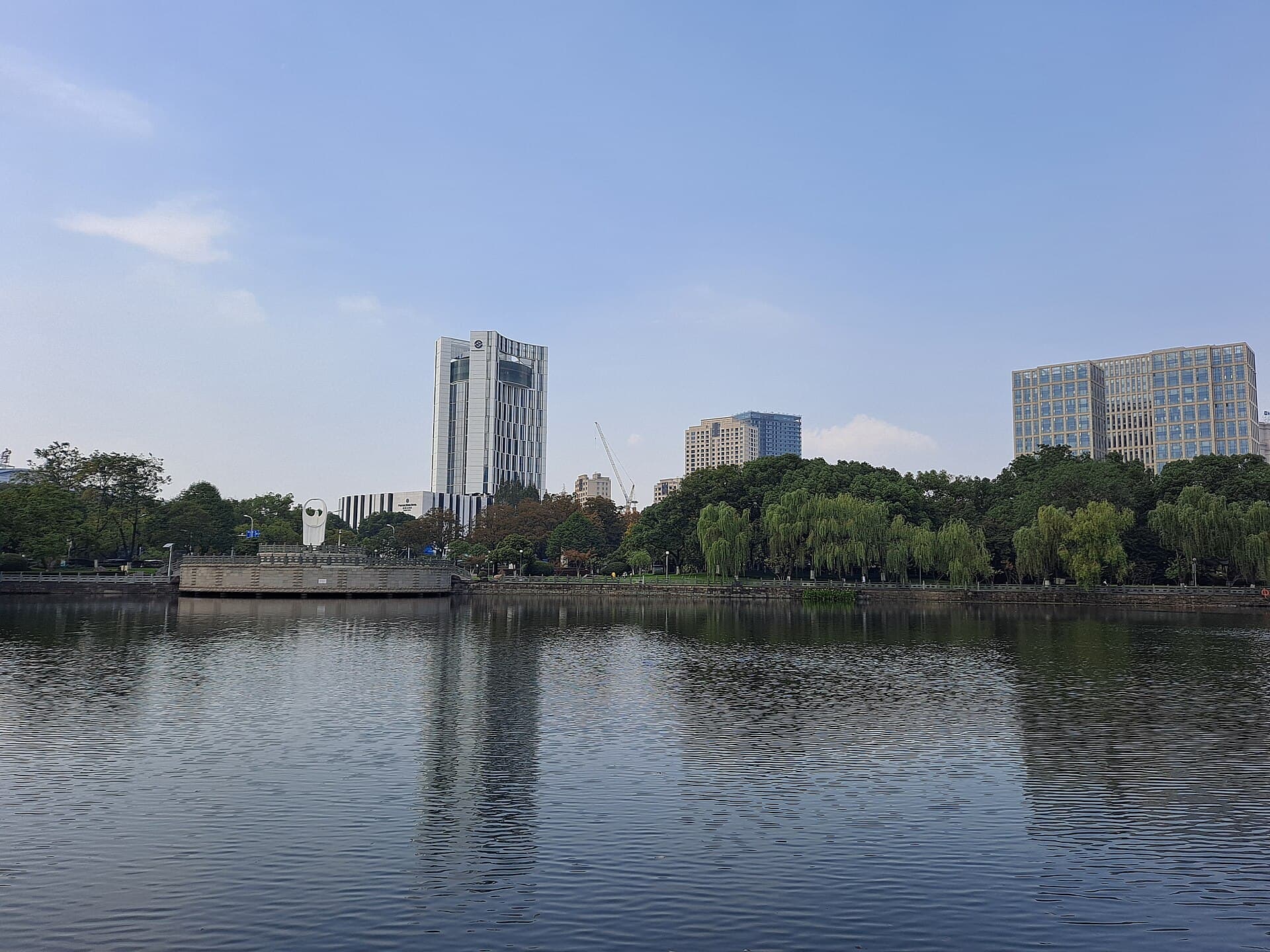
Yes, the lake is right next to the library and free to stroll around, so both fit in half a day.
Ningbo cooking is mostly seafood but also uses pork; the city has restaurants run by Hui Muslims under the halal sign, and elsewhere ask about ingredients.